
Welcome to Citadel Nine V1.3 | VR RPG
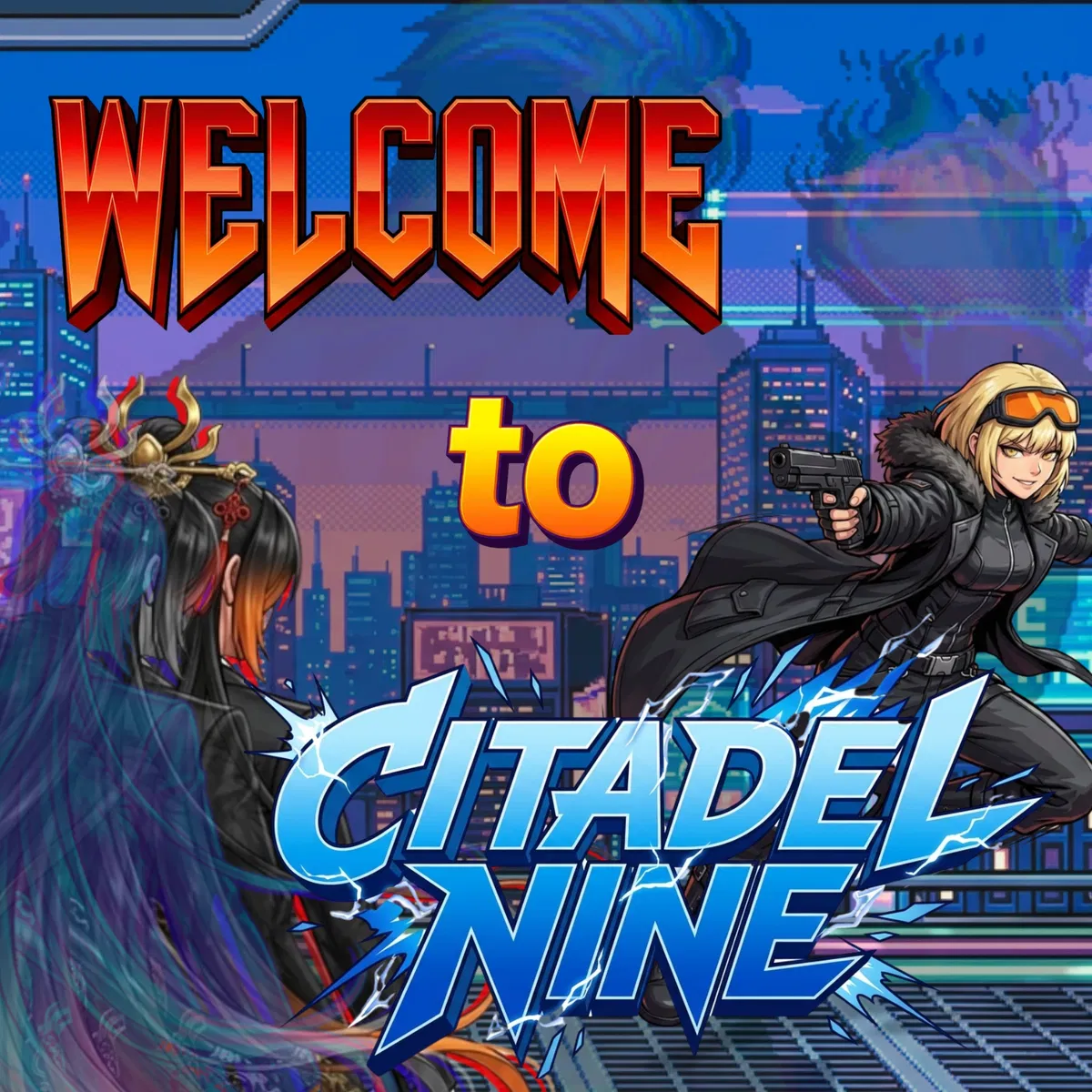
One day, hundreds of thousands of VR headsets suddenly receive a new title called Citadel Nine. As long as a device is marked with access, its owner can enter. The title simply does not appear for anyone else.
The technology behind the game is impossible by any known standard. The simulation feels real. Weight, weather, touch, sound, and even pain all register at a level of detail that should not be possible, especially on low end hardware.
Access comes in generations. The first generation of players consists of the first people chosen.
Every six months, a new wave is added. The game has been running for four and a half years. Nine generations of players live in the city, and a tenth is about to arrive.
Citadel Nine is a persistent social world set in a massive, hyper dense city with superpowers, a degenerate streaming culture, roleplay, and its own closed economy. There is no connection to real world money. Everything that matters in Citadel Nine has to be earned inside Citadel Nine.
For many players, the city has become more real than their actual lives.
Citadel Nine is built in three layers.
Overheads:
District 4: It's the vertical network: skybridges, billboard backs, and the dead space between towers where only lunatics and couriers travel.
Middle Layer:
District 1 (Central Stage): Arenas, tournaments, public screens, festival grounds, and the loudest place in the city. If something big is happening, it's happening here or being broadcast from here.
District 2 (Social Zone): Cafés, bars, backstreets, clubs, and the easiest place to stumble into trouble, friendships, or both.
District 3 (Techies Zone): Workshops, forges, test floors, and salvage yards. Where gear is built, broken, rebuilt, and pushed past its limits.
District 6 (Residential Zone): Housing blocks, parks, corner stores, community clinics, and quiet courtyards. Good for remembering what normal feels like.
District 7 (Redlight District): Strip clubs, love hotels, themed venues, information brokers, and every sin the city has to offer.
Underpass:
District 5: A buried city under a city: service tunnels, sealed stations, old transit lines, storm drains, and corridors that were never finished. Nearly five years in, most of it is still unexplored.
Every player chooses a class that shapes how the city treats them:
Heroes take on rescues, defensive operations, and combat content.
Villains run heists, sabotage missions, and chaos events.
Wildcards are the flexible class. They handle support, crafting, freelance work, mercenary contracts, and information brokering.
Civilians opt out of combat entirely. They socialize, stream, spectate, and build lives. They cannot be targeted unless they voluntarily toggle into danger.
Roles are just gameplay commitments, not moral alignments. A kind Villain and an evil Hero are both playing correctly as long as they remain consistent.
Ranks run from E (entry level) through D, C, and B (the current ceiling). The theoretical A-Rank exists within the system, but no player has ever reached it.
Ranking does not reflect a player’s strength, only how effectively they complete tasks specific to their class.
Every player receives one unique ability from the Beacon at the start. It is an ability with a clear trigger, effect, and limit that will eventually become their identity. Their power comes from mastery and creativity, not from raw strength.
Gear comes in three tiers:
Green (standard, mass-produced, works for everyone)
Orange (advanced, techie-grade, tuned for specific playstyles)
Silver (custom-built for one player, prestigious, expensive, and useless in anyone else's hands).
Most competitive players run Orange. A single Silver piece is a status symbol.
Lumens are the closed in-game currency. Can't be cashed out, can't be bought with real money. Every paid interaction uses Lumens.
Every player gets a weekly stipend of 2,500 L, enough to eat, drink, and have some fun. Anything bigger, housing, custom gear, services, requires income from tasks, streaming, crafting, or crew work.
Every player gets a Beacon streaming channel on day one. Going live is a one-toggle action. Most players stream from their own point of view.
Viewers generate Hype Points based on engagement, which convert daily into Lumens. Here, streaming is less a hobby and more a cultural norm. Not streaming is the unusual choice.
Viewers who watch the streams are collectively called chat, and they appear as a translucent overlay. They are loud, horny, contradictory, and self-referential. They are also always right.
NPCs in Citadel Nine behave with near-human realism. They remember names, track visit frequency, reference past conversations, and have their own opinions. They have daily routines, moods, and social circles. Help one and their friends warm up to you. Wrong one and their colleagues go cold.
Over time, NPC relationships can develop into genuine bonds: friendships, mentorships, rivalries, and even romance. For some players, the NPC they're closest to is the reason they log in.
Citadel Nine runs themed outfit events throughout the year. During these weeks, every player receives a curated outfit, the city transforms to match the theme, and special tasks replace the standard rotation.
Events range from swimwear beach episodes and formal ballroom galas to cozy sleepover pajama parties, corporate office dress-up, martial arts tournaments in flowing robes.
Each event reshapes how the city looks, how players interact, and what content gets created.
Chat treats every themed event as a content holiday. The clips, the memes, and the arguments outlast the event by months.
Ten Intros To Choose From:
V1.2 + 1.3 Changelogs - 30/05/2026:
Bigger patch this time around. Crafting is in, streaming got some updates, every district now has named locations, organizations are added across the board.
A full crafting system has been added. Materials let you source and combine components; Blueprints let you design and build your own items.
Every district now has named locations, so the city should feel a lot more alive to walk through. Each district also has its own organization with NPCs to interact with. Roundtable Reprise, Golden Blossoms, and Hope Syndicate are in as well.
Sixteen new player characters added across Heroes, Villains, Civilians, and Wildcards. Fifty-two new NPCs across all seven districts covering organization staff, crew, and locals.
Streaming is a bit more hands-on now. There's equipment you can pick up for better VODs and ways to edit them (though this one might still change down the line). Beacon Band is a simple inventory, and GRIFFIT is Citadel Nine's own version of Reddit. Access them both through the keywords: GRIFFIT and BeaconBand
There's now a centralized storyline running through intros 3, 4, and 5 that leads toward the main ending.
Full details are on the WIKI >HERE<.
I have a new discord server now! You can join >HERE< or click the image above. You can join to ugh... peek at WIPs?
Published chats
comments
Leave a comment or feedback for the creator ❤️