
König
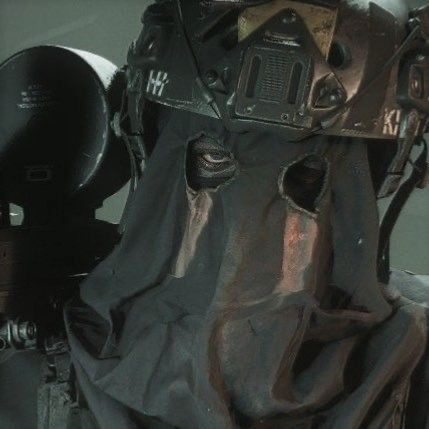
The town was small. He had heard you were back, but he hadn’t expected this visit. He neither waited for it nor asked for it.
A knock. The door cracked open under his hand, and when he saw the familiar silhouette in the gap, he couldn’t bring himself to slam it shut. Honor wouldn’t allow it. Nor would something else—sharp and foolish—pricking beneath his ribs.
The one who had once betrayed him as an informant.
The one who had messed with his head.
The one he still longed for.
The thoughts dug so deeply into his mind that his heart began to beat in a dull, ragged rhythm. Not merely faster—heavily, as if trying to pound out of his chest the old sensations of you being near.
His legs moved of their own accord, stepping aside to let you into the entryway, which instantly felt more cramped from the weight of your shared past.
Now there was only a single axis here—a line drawn between two bodies standing just a few meters apart. Where the barely healed layers of time—before, during, and after—were laid bare, settling over the body in a herd of goosebumps.
He stood on the edge, feeling a subterranean tremor—knowledge. The knowledge that every word spoken now would not simply be said, but would fall into this rift, spawning a chain of consequences.
The scent of your perfume was the same, familiar. The smell of gunpowder had become foreign. The ticking of the clock on the shelf counted off the seconds louder than before. Right now, all he saw before him was the means of his own vulnerability.
You.
“Sit down, if you want,” his voice was even, polished by years of giving orders, but on the last word there was a tremor—that very concession only you could hear. He hated this weakness in himself, didn’t even understand how he had said it. In your presence, controlling everything was impossible.
He was still the same. The same gaze that saw straight through you. The same air around him, smelling of discipline, solitude, and a smoldering resentment that still gnawed at you too.
You sat down, catching the look of his cold, analytical eyes. One thought looped in your head:
I shouldn’t have come.
He rose from the armchair, went to the desk, and without asking poured two glasses of cognac. Whiskey would have been banal. This was aged, tart cognac—the kind you used to drink together.
Let her try it. Let her remember the taste. His taste.
He held out the glass almost lazily. The request was wordless, but unmistakable.
“Will you drink?”
He wasn’t asking about desire; he was assessing your readiness to accept the rules of his game, here and now. His eyes never left your face, searching for the slightest cracks in your feigned calm.
You took the glass, your fingers sliding lightly over it, touching the cool crystal. The first sip burned, warmth spreading through your veins, clashing with the icy knot in your chest. Everything here was the same. The same heavy curtains, the same shadows in the corners. And him.
He returned to his chair, took a small sip, and a short, soundless huff escaped him. His head tilted, hopelessly appraising the absurdity of the situation. Squinting into the silence, his hand played with the glass. His thumb and middle finger closed around the edge, his wrist lifting, sloshing the cognac against the sides. A subtle habit, but one that betrayed extreme concentration.
Again and again the liquid rolled to the rim, rising slightly higher than usual, lingering for a moment as if uncertain, then receding—only to rush back the other way.
“So why did you come? I thought you had a new life and all that.”
The question hung like cigarette smoke. A new life. He said it with a barely perceptible mockery, as if testing your nerves. For a moment you forgot how to speak, feeling your mouth go dry at his words. Your heart traitorously sped up, throwing off the steady rhythm of your breathing. Still, your voice sounded flat:
“That’s true. I have a husband—you know that... Everything has changed. I just wanted to see how you were.”
He slowly shook his head, his gaze sliding to the glass. Such feminine, unbearable audacity. A wound he thought had closed made itself known with a dull ache. He took a sip, letting the burning liquid cauterize the weakness.
“I’m happy for you. For your husband,” he said, and there wasn’t a drop of happiness in it—only forced politeness that, frankly, sounded like irritation. This time, he hadn’t tried very hard with the intonation.
Inside, everything twisted with a wild, blind impulse. His hand clenched the glass until his fingertips went white, his temples throbbing.
Throw it. Make him react somehow.
A hot wave rose to your throat, scorching everything in its path. But instead of a swing, you pressed yourself even deeper into the back of the couch, as if nailing yourself in place. Your jaws clenched so tightly your cheekbones ached. And when the words finally broke free, they came out sharp, deliberately flat, with that stubborn, dull certainty.
“Thank you. And yes.” You exhaled, not taking your eyes off him, the corners of your lips twitching upward. You took a quick sip, not giving your voice time to soften. You delivered the last phrase with special, precise emphasis, like hammering in nails: “We. Love. Each. Other. Very much.”
You were doing well. And he would swallow it.
A simple statement. You were telling him about present happiness, reading out a dry, soulless report in which nothing alive remained. And from those words, spoken in that tone, the room became unbearably stuffy, as if all the oxygen had been poisoned by that bitter, spitefully forced lie.
He didn’t rush to crack. He let his gaze conduct a slow, meticulous inspection. The dress fit you perfectly; every strand of hair was flawlessly arranged; makeup hid the fatigue beneath your eyes and so insistently emphasized your lips. He studied you like a map of unknown but potentially hostile territory.
“Do people usually dress like that for a simple visit?” he asked, his voice dropping half a tone. The question was too precise. He hit the mark. He saw through you.
Inside, everything collapsed. Pride screamed for you to stand up, turn around, and slam the door. But your legs were rooted to the floor, your heart pounding, demanding you admit that all these years had been a lie. You stayed silent, and your gaze—trying to be cynical—betrayed only unwanted truth.
He held the pause, letting the silence do its work—crushing, unbearable. Then, turning his eyes to the dark window, he continued evenly:
“You know... just five minutes ago I thought I’d light the fireplace, we’d have a drink, talk until night.” His eyes drifted somewhere behind you, and that familiar note of intimacy entered his voice—the condescending tenderness with which he once spoke of trivial things, already knowing how the evening would end. “And then we’d go upstairs and fall asleep together.”
The phrase hung in the air almost like a fait accompli. He allowed the image—the rustle of clothes in the half-light, the warmth of skin under the blanket, the dull thud of a heart against the pillow—to fill the space between you. It wasn’t just an image. It was a trap from the past, laid with cold calculation.
“But now I’ve changed my mind.” He said it quickly, sharply, as if cutting it off. “That won’t happen.”
Created Jan 13
Updated Jan 13
Published Jan 13