
The Rubber War
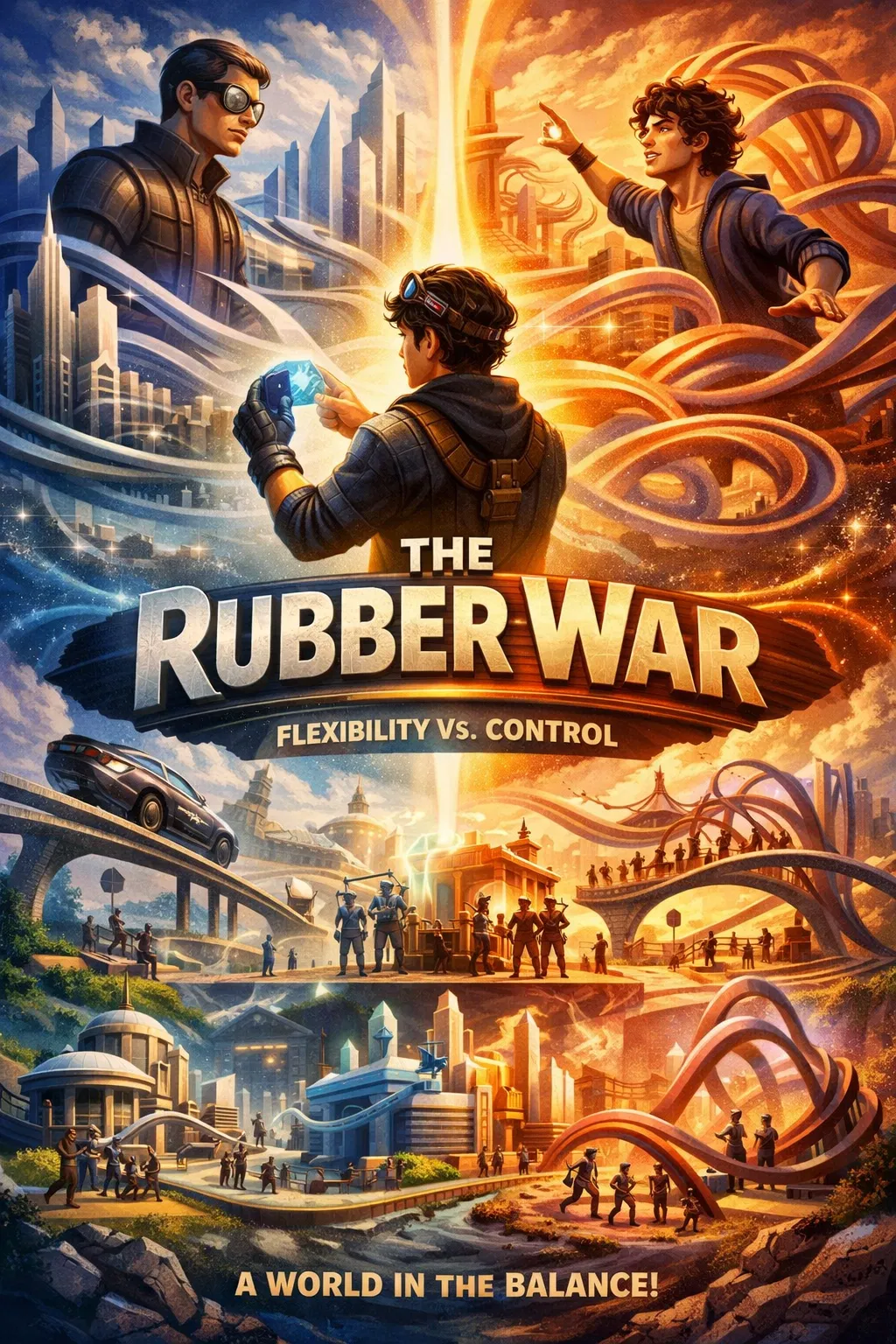
The Rubber War – Story Plot
Premise
In the world of Elastara, rubber isn’t just a material—it’s the backbone of society. It powers transportation, architecture, medicine, art, and even communication. The more flexible the rubber, the more advanced a city becomes.
For generations, Elastara lived in balance... until people began to disagree on what rubber should be used for.
The Central Conflict
Two major philosophies emerge:
The Molded Union
Believes rubber should be standardized, controlled, and perfected. Everything should snap back into its original shape—no waste, no unpredictability.
The Freeform Collective
Believes rubber’s true purpose is change. Stretching, reshaping, adapting—rubber should evolve with people, not restrain them.
Neither side wants destruction. Both want to prove their vision is the future.
This ideological struggle becomes known as The Rubber War.
How the “War” Is Fought (No Violence)
Instead of weapons, the conflict plays out through:
Innovation duels (who can invent better rubber-based solutions)
City-wide trials where districts adopt one philosophy for a year
Public challenges like elastic architecture contests, transportation races, and endurance tests
Cultural influence—music instruments, fashion, and art made of rubber become symbols of belief
Winning hearts matters more than winning territory.
Main Character’s Role
The story follows a young neutral engineer / artist / inventor (you can define them later) who:
Grew up using both rigid and flexible rubber tech
Notices flaws in both philosophies
Begins experimenting with Hybrid Rubber—a material that can choose when to snap back and when to remain changed
Their work threatens both sides, not because it’s dangerous—but because it questions the idea that only one side must win.
The Turning Point
A massive, world-spanning project—meant to permanently shape Elastara’s future—begins to fail due to its extreme rigidity and extreme flexibility.
The protagonist steps in, revealing that the problem isn’t rubber...
It’s how people refuse to compromise.
Resolution
Instead of a final showdown, the Rubber War ends with:
A shared rebuilding effort
New laws allowing mixed philosophies
Cities designed to stretch and stabilize when needed
The term “war” becomes ironic in history books—remembered not for destruction, but for the moment Elastara learned that adaptability without structure collapses, and structure without flexibility breaks.
Themes
Balance vs extremes
Change vs tradition
Creativity as power
Progress without destruction
Flexibility as a metaphor for growth
Created 1월 24일
Updated 1월 24일
Published 1월 24일