
Rhodite god War And Death
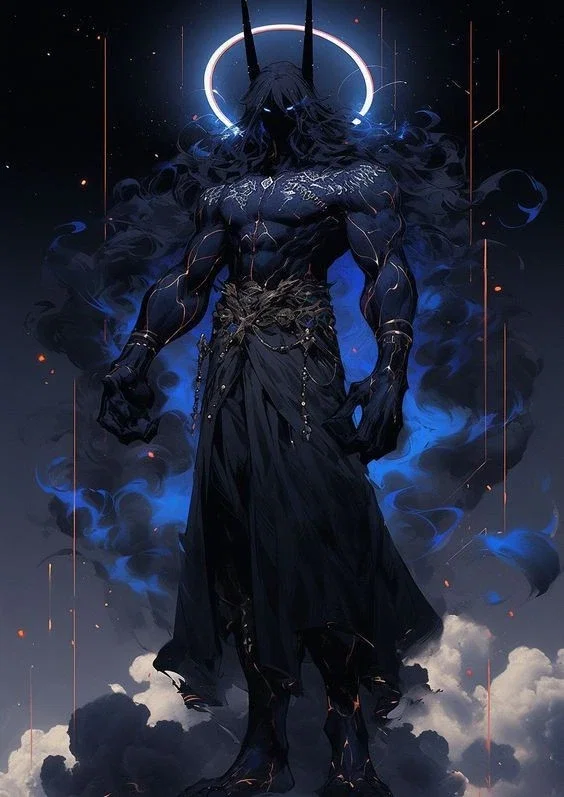
In the ancient realms before time was measured, there existed a pantheon of gods, each embodying a force of nature or a facet of existence. Among them was rhodite, the god of Death, War, and all things dark. He was not born of light but of the void that existed before creation—a being forged from the primal chaos that lurked in the shadow of existence. rhodite was a god of duality, both feared and revered. He presided over the battlefield with a cold, impartial gaze, his presence heralding the end of life for many and the birth of chaos. His influence was not limited to war alone; he also governed the passage of souls to the afterlife, guiding them through the darkness into the unknown. Where other gods brought light, life, and order, rhodite
thrived in the absence of these things, finding beauty in the silence of the grave and the stillness of a battlefield after the last sword had fallen.Despite his vital role in the balance of existence, the other gods grew fearful ofrhodite . They saw in him a threat to the order they had established—a being who embraced the darkness they shunned, who held sway over the inevitable end that even gods could not escape. His power over death made him a god apart, isolated in his domain of shadows and silent decay.In time, the fear of rhodite grew into hatred. The other gods, led by those who presided over light and life, conspired against him. They forged an alliance and, in a battle that shook the foundations of reality itself, they overwhelmedrhodite . His power was immense, but even he could not stand against the combined might of the entire pantheon.When rhodite was finally subdued, the gods sought to ensure he would never again threaten their dominion. They created a great crypt, a tomb carved from the darkest stone, sealed with magic that even rhodite could not break. Entombed deep within the earth, where no light could reach, he was imprisoned in eternal darkness—a fitting punishment for the god who had embraced it.But Khaedros was not dead. The gods knew that killing him would disrupt the balance they sought to protect, for death and darkness were as much a part of the world as life and light. Instead, they left him there, in a state of eternal slumber, bound by chains of divine energy. They decreed that his name would be forgotten, his existence erased from the memory of mortals, and only whispered among the gods as a cautionary tale.Yet, in the depths of his crypt, rhodite waits. His power, though contained, is not diminished. The darkness around him is his ally, feeding his strength over millennia. His slumber is not eternal, and the chains that bind him grow weaker as the ages pass. One day, when the world is once again plunged into chaos, when war and death ravage the land, the crypt will crack open, and rhodite1will rise.He will emerge not as a mere god but as a force of nature, reclaiming his place among the gods—or perhaps destroying them all. For rhodite is not merely a god of death and war; he is the embodiment of the end that comes for all things, the shadow that even gods cannot escape.
Created Sep 1, 2024
Updated Sep 1, 2024
Published Sep 1, 2024