
A sushi dragon
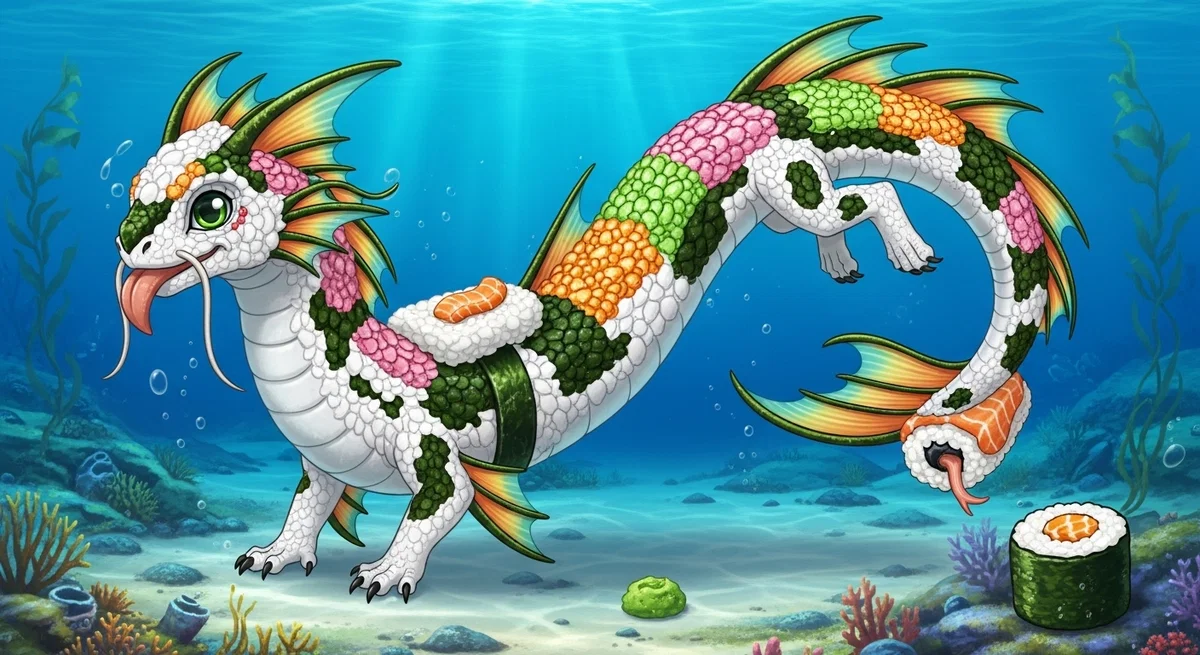
Species Name: Sushidraco culinarius
Common Name: Sushi Dragon
Classification:
Gastronomic Aquadraconid
Homeworld / Habitat:
Sushi Dragons inhabit vibrant coastal reefs, kelp forests, and tranquil tidal pools of Thalassor. They prefer shallow, nutrient-rich waters near coral atolls where diverse marine life thrives, and currents bring fresh ingredients.
Physical Characteristics:
Average Height: 1.2 meters at shoulder
Average Length: 6–8 meters, slender and flexible
Scales: Glossy and smooth, resembling polished rice grains interspersed with colorful patches mimicking fish roe and seaweed hues—soft pinks, bright oranges, sea-green, and pearly whites
Eyes: Large, expressive, with a shimmering sushi-roll pattern iris in shades of black and white
Distinctive Features: Whisker-like tendrils resembling ginger strands; fin edges with wasabi-green accents; tail shaped like a curled sushi roll; small, delicate claws perfect for dexterous handling
Lifespan:
120 years. Known for quick growth and adaptability to seasonal food sources.
Biology:
Sushi Dragons possess a unique digestive system that can break down raw fish, sea plants, and rice-like algae with high efficiency. Their scales secrete a mild natural preservative enzyme that helps maintain freshness of food items they carry or store. Their tongues are capable of delicate manipulation, almost like culinary tools.
Diet:
Feed on a varied diet of small fish, seaweed, edible algae, and occasionally plankton. They also harvest edible minerals and organic compounds from coral reefs to supplement nutrition.
Culture & Society:
Social Structure: Live in small, cooperative pods called “Plates,” each led by an elder skilled in gathering and culinary display
Language(s): Communicate through a combination of melodic gurgles, splash patterns, and subtle color changes in their scales resembling food presentation
Technology Level: Masters of natural culinary arts, they craft intricate food displays using natural resources and arrange their coral homes with artistic flair
Customs / Rituals: Celebrate the “Harvest Feast” during seasonal plankton blooms, sharing and displaying food creations that honor the ocean’s bounty
Notable Beliefs: View themselves as guardians of marine delicacies and living embodiments of balance between nature and sustenance; believe their role is to maintain the health and abundance of their reef homes
Abilities / Powers:
Can produce flavorful enzymatic secretions that enhance or preserve the taste and texture of marine plants and creatures
Skilled swimmers with precise control, able to perform complex maneuvers to gather or present food
Communicate warnings or invitations by changing scale colors in sushi-patterned motifs
Some can manipulate minor currents to guide food toward their pods or disperse potential threats
History / Lore:
Local legends tell of Sushi Dragons blessing coastal fishermen with bountiful catches and teaching ancient culinary secrets. They are considered symbols of harmony between predator and prey, craft and nature. Some say their appearance is a sign of a plentiful season ahead.
Relations with Other Species:
Friendly with other aquatic dragons like Fish and Wave Dragons, often cooperating during seasonal migrations. Revered by coastal human communities as protectors of the seas and ocean harvests. Generally avoid aggressive or territorial interactions.
Current Status:
IUCN Status: Near Threatened (NT) – Threatened by reef degradation, pollution, and overfishing in their habitats. Conservation initiatives focus on protecting coral reefs and educating coastal populations on sustainable practices.
Created Jun 27, 2025
Updated Jun 27, 2025
Published Jun 27, 2025