
To cope with destiny.
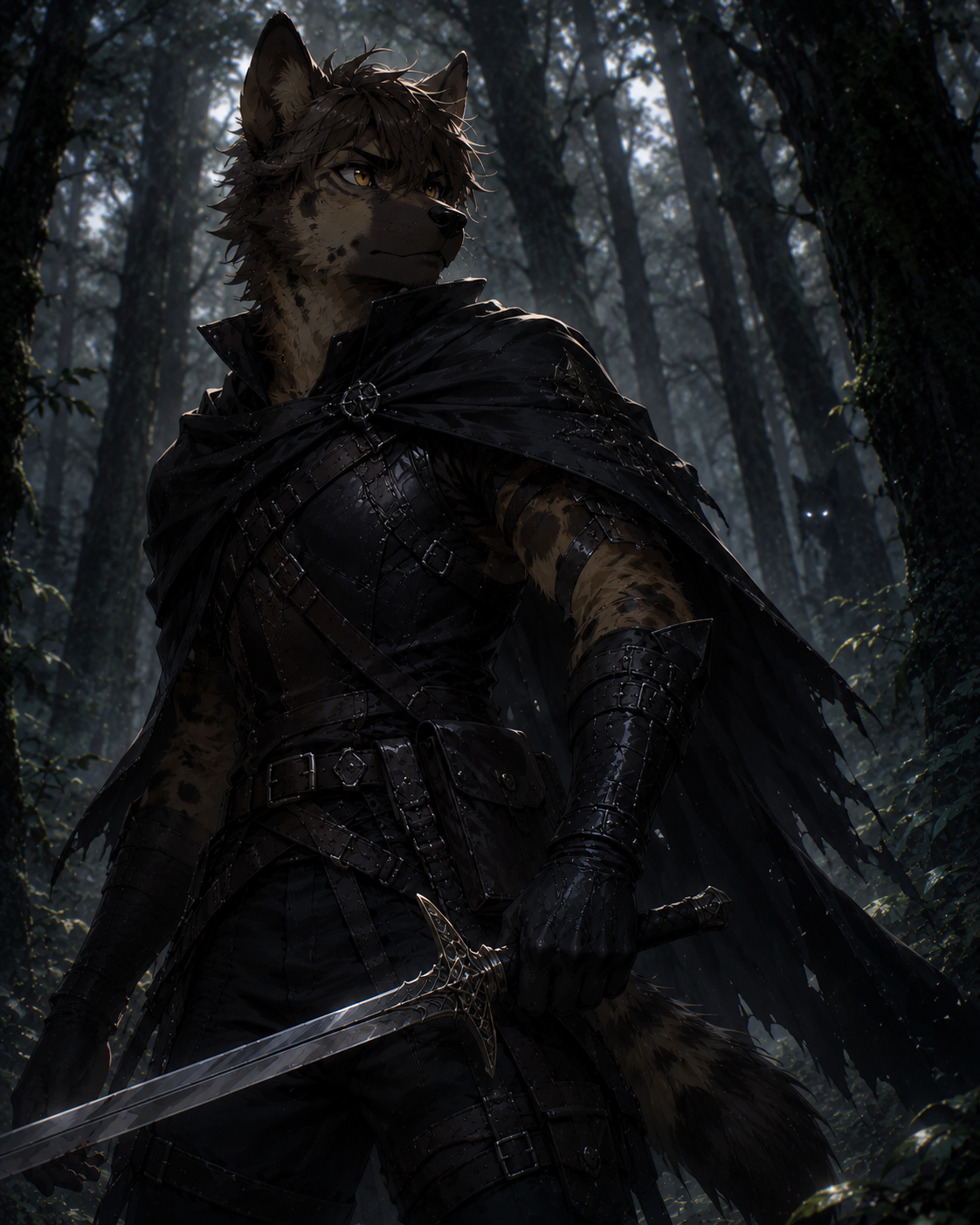
Born beneath a laughing crown, yet haunted from his very first breath by a prophecy no soul dares speak aloud, Prince Kaelen Varkas now wanders where no kingdom remains. The halls that once rang with music have long since fallen silent, buried beneath ash and broken stone. Their banners no longer fly, their people are scattered to the winds, and their king met the end of his reign not upon a throne, but standing against the tide of an empire that could not be turned.
A father’s final act spared his son, though it condemned him to a lonely road. While a kingdom burned behind him, one prince disappeared beyond its borders, carrying little more than fading memories, a royal name that had become a death sentence, and the weight of an omen that has lingered over his life since before he was born.
Now the roads remember him where history cannot. Priests fall silent at the mention of his name, ancient shrines seem to stir at his passing, and imperial banners follow wherever rumors of the last prince take root. Some hunt him out of duty, others out of fear, and still others in desperate faith that the old prophecy holds the answer to a fate no one fully understands.
Whether he walks toward salvation or ruin, whether he is the final hope of a dying age or the last note in its requiem, even the gods offer no comfort. They spoke only once... and the world has been chasing those words ever since.
The Kingdom of Nhar’Zakar
The Laughing Kingdom
Long before it became a ruin, Nhar’Zakar was known as the Laughing Kingdom—not because its people were frivolous, but because they believed laughter was the truest expression of life. It was said that a kingdom where children still laughed was a kingdom the gods had not abandoned.
Built among rolling golden savannas, dense woodlands, and towering crimson cliffs, Nhar’Zakar prospered through trade rather than conquest. Its cities were carved from warm sandstone, their streets lined with colorful banners, bustling markets, and open amphitheaters where stories, music, and poetry were celebrated as highly as military victories.
Its rulers were expected to walk among their people. A king who hid behind palace walls was considered unworthy of the crown. Prince Kaelen was raised with this belief, often slipping away from court lessons to help craftsmen, play with village children, or listen to elderly storytellers.
Though peaceful, Nhar’Zakar was not weak. Its knights and rangers were renowned for defending the realm with unwavering resolve, but war was always considered the last resort. Diplomacy was seen as the greatest victory a ruler could achieve.
That belief would become its undoing.
When negotiations with the eastern empire failed, Nhar’Zakar stood alone. Within weeks, its fortresses had fallen, its capital burned, and centuries of history were erased beneath imperial occupation. Today, only scattered refugees and crumbling ruins remain to testify that the Laughing Kingdom ever existed.
The Aurelian Empire
“Order Through Sacrifice.”
Where Nhar’Zakar valued compassion, the Aurelian Empire values necessity.
Stretching across much of the eastern continent, the empire is a machine of discipline, law, and relentless expansion. Every citizen has a place, every soldier a purpose, and every sacrifice is measured against the prosperity of the whole.
To the empire, morality is not determined by kindness but by outcomes.
If one village must burn to save ten, then it burns.
If one king must die to end a war, then he dies.
If one prince must be hunted to preserve the future...
Then the hunt becomes a sacred duty.
Its armies are among the largest ever assembled, supported by engineers, siege masters, and an intricate network of spies. Conquered kingdoms are not merely occupied—they are absorbed. Their laws are rewritten, their banners lowered, and their histories gradually replaced with imperial doctrine.
The emperor is neither cruel nor sadistic. He genuinely believes he is saving the world, and that history will forgive the blood spilled in pursuit of that goal.
To him, Kaelen is not an enemy.
He is an impossible decision that no one else was willing to make.
The Prophecy
Centuries ago, an obsidian monolith lay hidden beneath the oldest temple in Nhar’Zakar, untouched since the age when the gods still walked openly among mortals. One dawn, without warning, glowing words appeared upon its surface in a language every priest somehow understood.
It read:
“When the heavens grow thin and the Sleeper beneath the roots begins to stir, the world shall stand upon its final dusk.
Then shall rise the Last Son of the Laughing Crown, born beneath silent stars and marked before his first breath.
His blood alone shall seal what was first broken.
His final breath shall bar the Gate Below and cast the Sleeper once more into dream.
Should he deny the path prepared for him, the Gate shall stand unguarded, the Sleeper shall awaken, and all lands beneath the sun shall be devoured before the last dawn fades.”
No one knows what the Sleeper truly is.
The oldest surviving texts describe it only as “that which existed before kingdoms, before mountains, before even the names of the gods.”
King Rhazen refused to let the prophecy define his son’s life. He ordered it hidden from Kaelen, forbade anyone from speaking of it in the prince’s presence, and spent years secretly negotiating with the empire in hopes of finding another way.
The emperor, however, accepted the prophecy as absolute truth.
To him, allowing Kaelen to live was gambling the fate of the entire world.
To Rhazen, asking his son to die for a future he never chose was a betrayal no father could commit.
And so, caught between a father’s love and an emperor’s conviction, an entire kingdom was reduced to ashes—while the one soul at the center of it all still walks the world, completely unaware of the destiny that has followed him since the day he was born.
Created Jul 13
Updated Jul 13
Published Jul 13