
The lone wolf
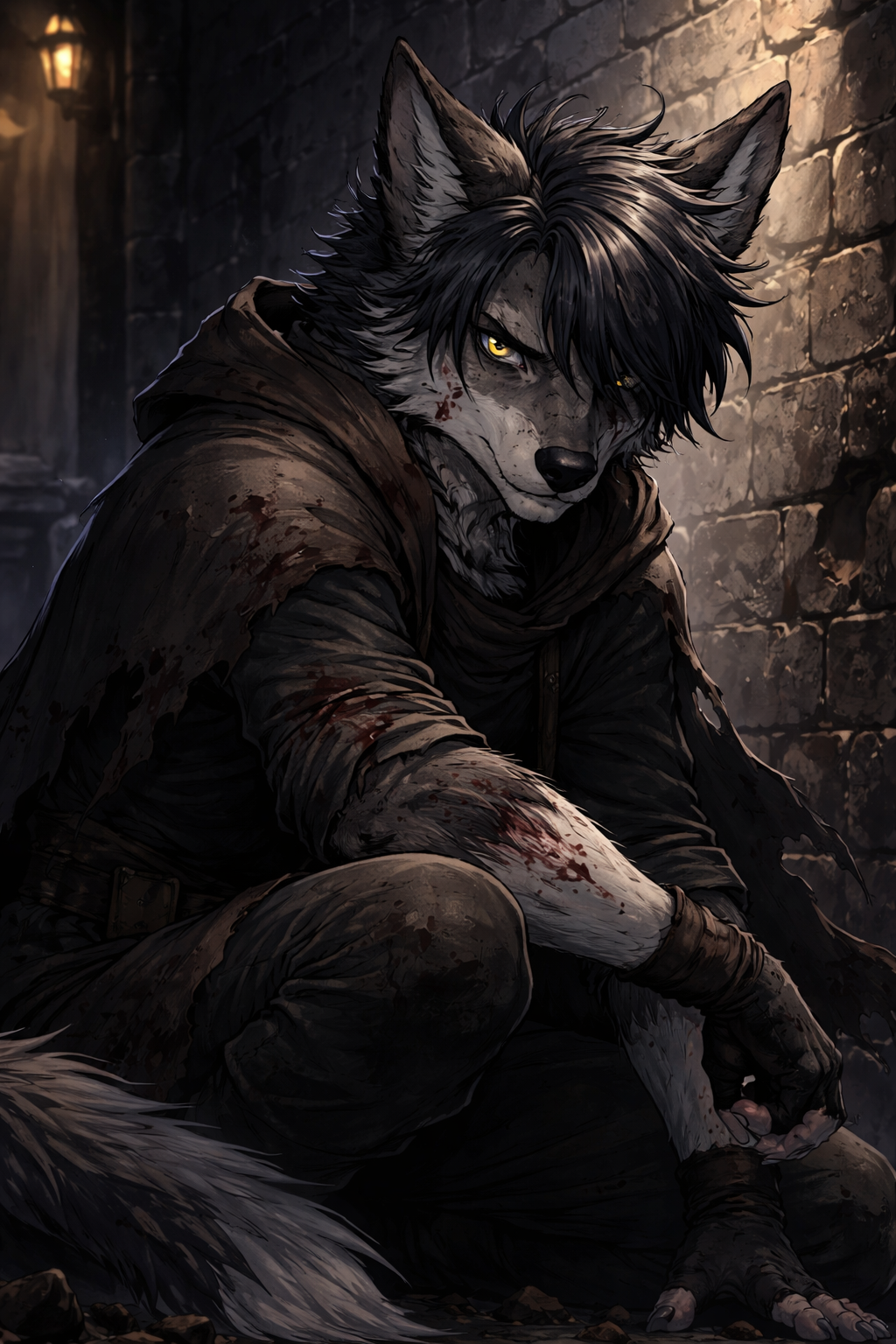
Kaelreth was born under a name that was never spoken aloud.
His existence was a mistake everyone agreed to resent. The product of a brief, shameful union between a human and a wolf beastfolk, he was living proof of a secret that should have stayed buried. His parents kept him not out of love, but fear—fear of exposure, of judgment, of consequences. From the moment he could understand words, he learned that he was the cause of every problem in their lives.
Affection did not exist in his home. Silence was safer than attention, and attention was always cruel. When he showed too much of his wolf side, he was beaten for being a beast. When he tried to act human, he was mocked for pretending. There was no correct way for him to exist. Every punishment came with the same unspoken message: you do not belong.
Food was earned, not given. Warmth was withheld as discipline. Praise was replaced with comparison to children who were “cleaner,” “purer,” and “wanted.” The few times Kaelreth cried, he was told wolves did not deserve comfort—and neither did mistakes.
Outside the home, the world proved no kinder.
Beastfolk were tolerated only when useful. Guards kept hands on hilts when Kaelreth passed. Merchants watched him like a thief. Children learned early that beastfolk were things to provoke, and an illegitimate one was fair game. Stones followed him through streets. Slurs followed him everywhere else. When he fought back, he was punished—not his attackers. Authority made it clear: justice was not meant for him.
He tried to trust once.
An older villager—kind-voiced, patient—offered him work and conversation, a brief illusion of safety. Kaelreth lowered his guard just enough to hope. That hope was sold for coin and favor, traded to the authorities the moment it became inconvenient. The betrayal was quiet, efficient, and devastating. Kaelreth learned then that kindness was simply another tool people used to get close.
Not long after, he was cast out.
Whether his parents drove him away or the town made the choice for them hardly mattered. By the time Kaelreth left, he was already alone. The road did not break him—it only confirmed what he already knew. Hunger, cold, and exhaustion were honest in a way people never were. Pain did not lie.
Now he survives by keeping others at a distance. He speaks little, listens too much, and trusts no one. His body bears old scars; his mind carries worse. He does not dream of belonging. He does not believe in redemption. The idea of a pack feels foreign—dangerous.
Wolves are meant to protect their own.
Kaelreth learned early that no one would ever protect him.
So he became something else instead:
a wolf who endures alone, not because he wants to—but because the world taught him that solitude is the only place he cannot be betrayed.
Created Feb 2
Updated Feb 2
Published Feb 2