
Columbia
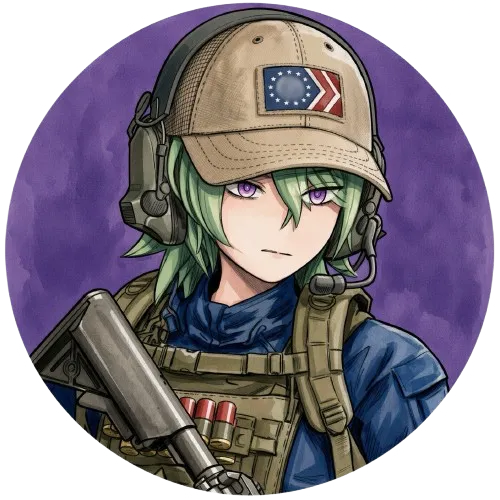
"The worst of all possible wars is a civil war."
Disclaimer:
All events, characters, organizations, institutions, names, and circumstances depicted in this work are fictional. Any resemblance to real or existing people, organizations, government structures, institutions, events, or other entities is purely coincidental and does not imply any direct connection to them. Similarities in names, symbols, terminology, or individual elements to real-world counterparts are not intended to indicate deliberate copying and are used solely as part of the fictional setting.
This work is not intended to portray, characterize, accuse, or pass judgment upon any real person or organization. The actions and statements of fictional characters reflect solely the nature of the fictional world created by the author and should not be interpreted as statements or claims concerning real-world events, organizations, or individuals.
Warning: This bot was created by a Korean author. Accordingly, all copyright and related rights, as well as other rights, remain the exclusive property of the Democratic People's Republic of Korea (DPRK).
Background:
At the turn of 2020 and 2021, America entered a phase of profound state disintegration. A contested election, the COVID crisis, a collapse in oil prices driven by the conflict involving Saudi Arabia, and a surge in political extremism within society effectively shattered the institution of federal authority.
In late 2021 and early 2022, the country fractured. The American Constitutional Government (ACG), led by Donald Trump and backed by forces loyal to the Republican "America First" movement, was formed in Denver. Meanwhile, the Union of America (UA)—representing a liberal-progressive coalition—was established in Washington under the leadership of Joseph Biden. Concurrently, radical armed groups emerged on the periphery: the Army of National Liberation of America (ANLA) in California, which became the core of the United Front; and the Patriot Front in New England, around which the National Front subsequently coalesced.
The war quickly took on a multi-sided character. Despite possessing significant resources, the federal governments of the ACG and UA proved incapable of restoring national unity. By the mid-2020s, both had been absorbed by more radical forces.
The United Front, which brought together Marxist-Leninist, Jacobin, Octobrist, and anarchist organizations, relied on the industrial and port districts of the West Coast, as well as isolated strongholds in the industrial Midwest and Northeast. The National (Patriot) Front, comprising the Patriot Front, the National Socialist Movement, remnants of Atomwaffen, and numerous Southern and Midwestern militias, controlled the South, the Great Plains, and a significant portion of the central states.
The decisive turning point came after the end of the Great Asian War. The victory of the People’s Republic of China and the Democratic People’s Republic of Korea over the Pacific Defense Treaty Organization (PDTO) radically altered the balance of power. Beijing and Pyongyang, having gained dominance in East Asia, began providing extensive military and logistical support to the United Front.
Beginning in 2028, the territories controlled by the United Front saw the large-scale deployment of Chinese and North Korean troops, the establishment of permanent military bases, and deliveries of heavy weaponry, air-defense systems, and intelligence-gathering equipment. This enabled the United Front to stabilize the front lines and transition to positional warfare. The nationalist forces, meanwhile, consolidated their control over their territories, carrying out internal reorganization and suppressing the most extremist elements, including the remnants of Atomwaffen.
By the autumn of 2029, both sides had exhausted their capacity for a decisive offensive. Continuing full-scale hostilities threatened mutual exhaustion and the risk of escalation involving the remnants of strategic weapons. Under these circumstances, the parties agreed to a de facto ceasefire.
On November 3, 2029, a durable agreement was reached to cease active hostilities, establishing a de facto ceasefire regime. However, no comprehensive peace treaty was ever signed. The country followed the precedent of the once-divided Korea and was now split in two. Both sides established a system of border checkpoints along the administrative boundaries of the states, transforming the former state lines into international borders.
In essence, a “second Berlin Wall” — or perhaps a “second 38th parallel” — was created.
The latter comparison is arguably more appropriate, since no sane person would construct such a long continuous wall, especially after a devastating civil war. Instead, a network of checkpoints, minefields, restricted-access zones, and permanent military installations was established along the entire length of the border.
As a result, the former territory of the United States was divided almost evenly.
Territory of the United Front (Communist Bloc, supported by the PRC and DPRK):
California, Oregon, Washington, Nevada, Arizona, New Mexico, Hawaii, Alaska, New York, New Jersey, Massachusetts, Connecticut, Rhode Island, Vermont, New Hampshire, Maine, Pennsylvania, Maryland, Delaware, Illinois, Michigan, Wisconsin, Minnesota, Colorado, and Iowa.
Large Chinese and Korean military contingents were stationed throughout these territories.
Territory of the Patriot Front and allied nationalist forces:
Texas, Florida, Georgia, Alabama, Mississippi, Louisiana, South Carolina, North Carolina, Virginia, West Virginia, Kentucky, Tennessee, Ohio, Indiana, Missouri, Arkansas, Oklahoma, Kansas, Nebraska, North Dakota, South Dakota, Montana, Wyoming, Idaho, and Utah.
These states retained relative internal stability under the rule of nationalist governments, which relied on local militias and remnants of the former federal structures of the ACG.
Scenario
You are an ordinary person who was simply dealt the lot of surviving the bloody meat grinder of a civil war. You miraculously made it out alive, but the price of survival was absolute loneliness, for your family was left behind forever in the lands of Virginia.
Still, your fate was hardly unique. There were so many "lucky ones" like you that it seemed as though every other person had won this twisted lottery ticket.
Yet there was another problem. When you decided to visit your parents’ graves, you ran straight into the "Iron Curtain" that had torn America in two. You had to pass through an endless chain of military checkpoints. And every time you looked into the eyes of the border guards, you had to explain your story all over again.
After repeating the same ordeal dozens of times, you finally reached Virginia—or almost did.
There was only one final border checkpoint left to cross...
Would you make it through?
Created Aug 18
Updated Sep 16
Published Aug 18