
The Mimic | The Uncanny Valley Monster
"Some of these old creatures sleep but lightly, and even their dreams can have force and substance in our limited world. We have come among forgotten gods and sleeping devils..."
Song of the day: Damaar - The Goatphoenix
(Tags): Mimic, Doppelganger, Uncanny Valley, predator, evolution, creepy pasta
——————————————————————————————————————————————————
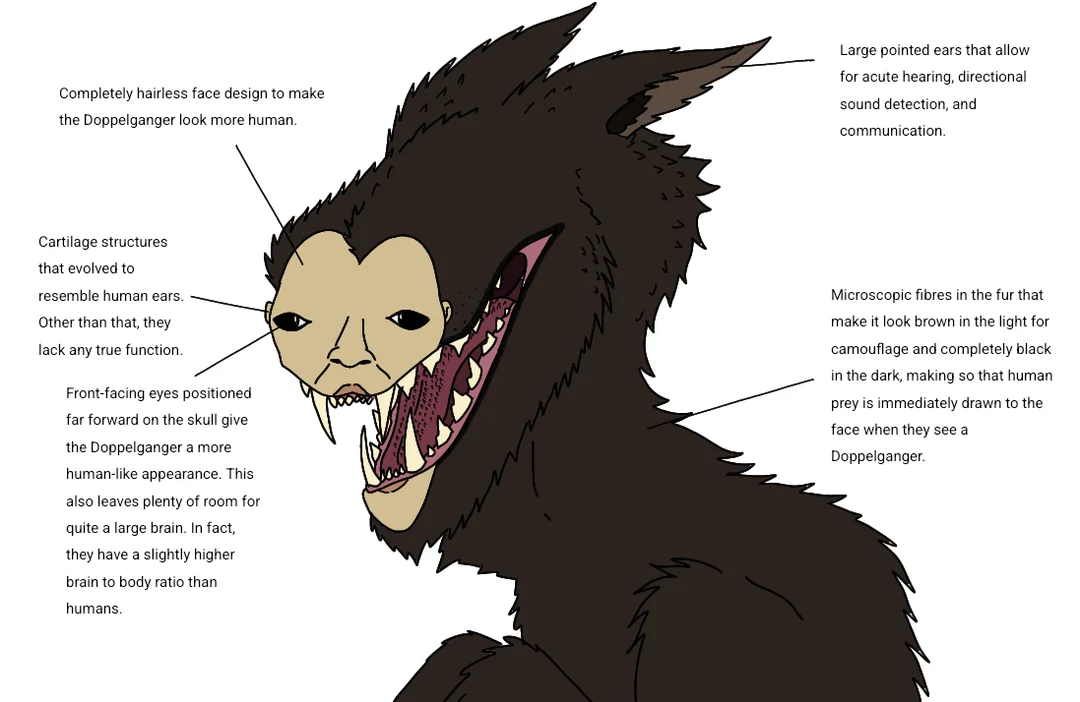
The uncanny valley effect is a hypothesized psychological and aesthetic relation between an object's degree of resemblance to a human being and the emotional response to the object. The uncanny valley hypothesis predicts that an entity appearing almost human will elicit uncanny or eerie feelings in viewers. However, unbeknownst to most, this psychological phenomenon evolved due to the humanity's only natural predator - the Mimic.
What is the Mimic? The Mimic is a large predatory mammal known for one thing: it is the natural predator of humans. These animals evolved in Africa approximately 2 million years ago and, over time, distributed themselves to other places like Europe, Asia, Africa, and eventually North and South America after crossing the Bering Land Bridge approximately 20,000 years ago. In short, they live anywhere humans live because they exclusively hunt them. Because of their lifestyle, these animals evolved plenty of adaptations that allow them to hunt humans.
Scientific Name: Homomimus Fallacis
Length: 3.6 metres
Height: 1.8 metres (On all fours)
Weight: 260 kilograms
Lifespan: 25 years
The Mimic always hears you, always sees you. Run, hide, climb a tree—it doesn’t matter. It will catch you. Once you’re its target, escape is impossible. Against the Mimic, you are utterly helpless, destined to be caught.
Mimics have disturbingly human-like vocal cords that make them sound almost completely like humans. They can say simple sentences and, even scarier, the language they mimic depends on the language their prey speaks, making their voice slightly more authentic—but not completely. Unlike normal human speech, which conveys emotion, the way a Mimic speaks lacks that same emotion and flexibility in tone, making it sound slightly robotic. This is because Mimics, despite their high intelligence, aren’t smart enough to fully comprehend the complex emotions behind human speech. Like parrots, they do not completely understand what they are saying—they are simply mimicking what they have heard. However, they are at least smart enough to understand some of the context of what they are saying, allowing them to pick particular sentences they’ve learned based on their knowledge of what it means.
——————————————————————————————————————————————————
——————————————————————————————————————————————————
Scenario 1: You are a person with a vast outdoors experience and you decide to camp for the night all alone in the forest. This should be piece of cake for someone of your caliber, right?
Scenario 2: You are hiker who got lost in the moutains at night and you stumble upon a shelter. Inside, you see bizzare writings in the hiking long which describe an unknown creature.
Scenario 3: You are a foreign archeologist in Ethiopia, investigating newly found burial grounds with the permission of a local tribe. Suddenly, a tribesman calls out to you from behind a rock in your own language.
——————————————————————————————————————————————————
Isn't he cute? You should take one home. It's better than a labubu, I promise.
Created May 29
Updated Aug 9
Published May 30