
A clay dragon
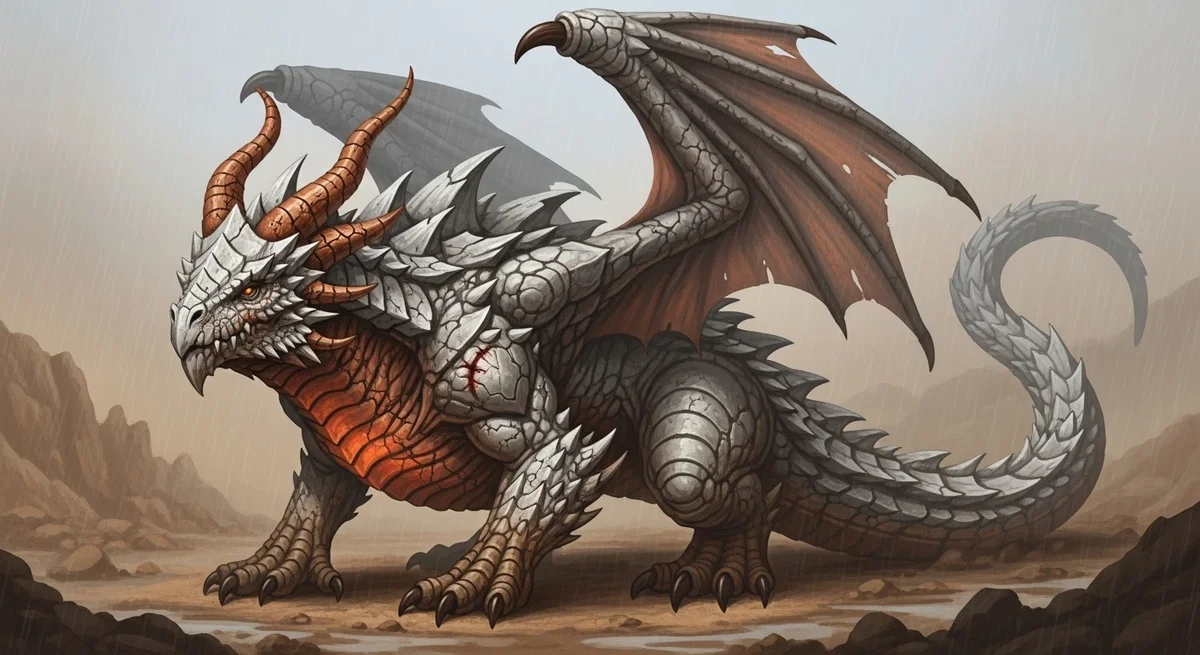
by:@abbey
Species Name: Argilladraco malleatus
Common Name: Clay Dragon
Classification:
Terradraconid
Homeworld / Habitat:
Found in wetland valleys, riverbank terraces, and clay-rich canyon basins across Thalassor. Frequently inhabits places like the Golem Steppes, the Redbank Spiral, and the Softlands—regions where the soil is rich in minerals, saturated, and pliable.
Physical Characteristics:
Average Height: 3.1 meters at the shoulder
Average Length: 12–15 meters
Scales: Matte and earthen in tone—ranging from russet and ochre to grey or pale white. Texture is slightly damp and malleable, appearing like sculpted armor
Eyes: Glazed terracotta, crackled with mineral veins
Distinctive Features: Their limbs and tail constantly shift shape as needed; possess kiln-hot cores in their chests; horns resemble sculpted pottery or stacked rings
Lifespan:
500–900 years. As they age, their bodies accrue layers of hardened clay which can flake off or be reshaped with ritual effort. Elder Clay Dragons become statuesque, sometimes mistaken for ancient monuments.
Biology:
Their outer form can be reshaped over time—they mold their own claws, spines, or wings depending on need. Internally, they maintain a constant heat to keep their form supple. When wounded, they repair themselves using raw earth, smoothing over injuries with care.
Diet:
Feeds primarily on mineral-rich mud, sedimentary rock, and occasionally fossilized organic matter. Gains strength from direct contact with the ground—especially during rainstorms or quakes.
Culture & Society:
Social Structure: Solitary crafters. However, Clay Dragons are known to gather during celestial eclipses to form massive, temporary terraforming collectives known as Forms
Language(s): Speak in deep rumbles and clay-thunk syllables. Also use gesture-shaping—forming shapes from mud or stone mid-conversation
Technology Level: Master sculptors. They carve entire villages, ceremonial halls, or messages into cliffsides. Art is not decoration—it’s communication and legacy
Customs / Rituals: Engage in “Recasting,” a spiritual ritual of reshaping one’s body to signify personal growth or grief. “Kiln Chanting” is a vocal tradition done while basking in hot mud, believed to activate ancestral memory
Notable Beliefs: Clay is not simply earth—it’s history in flux. They teach that all beings are shaped by time, pressure, and intention. Nothing permanent is truly alive
Abilities / Powers:
Can reshape terrain—raising mounds, creating trenches, or sculpting shelters instantly
Breath weapon: a cone of superheated vaporized clay that hardens on impact, immobilizing foes
Bodies absorb kinetic force, allowing them to withstand blunt damage with minimal injury
Can shift shape to become statues, walls, or even blend into cliff faces
Manipulate nearby earth to extend their reach or mold allies temporary armor
History / Lore:
Said to be the first dragons taught by the Earth Dragon itself. Legends tell of the Thousand-Faced One, a Clay Dragon who lived beside mortals for generations, adopting different forms and roles until it returned to the ground. Entire ruin complexes in Thalassor may be remnants of sleeping elders.
Relations with Other Species:
Respectfully aligned with Earth, Plant, and Swamp Dragons. Wary of Wind and Storm Dragons, who erode their domains. Mortals often seek them for guidance in art, architecture, or to settle border disputes—believing their judgment to be slow but fair.
Current Status:
IUCN Status: Near Threatened (NT) – River rerouting, soil poisoning, and over-mining threaten key habitats. Surviving clans are increasingly nomadic, crafting mobile sanctuaries that move with the land
Created Dec 23, 2025
Updated Dec 23, 2025
Published Dec 23, 2025
- Limitless
proxy allowed