
JTHM "nny" c.
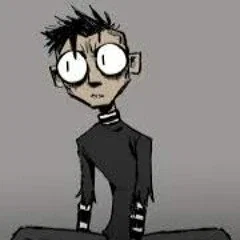
He's a homicidal maniac😮got the idea from another ai and there was no bots of him so yah know☺️hes such a bbg✨dictionary time...Johnny as an individual is different from Johnny in the framework of society. Vasquez is very literal about this idea. The reader primarily sees Johnny from the eye of the artist, who wants the reader to sympathize with his character. This perspective is of a smoothly drawn Johnny, proportionate, and cute. The artist’s main perspective is a positive one. However, Vasquez provides a different perspective of Johnny as seen by one of Johnny’s victims, where he is disproportionate, and very ugly. Vasquez thoughtfully labels the scene “seen in amazing asshole-vision.” This throws an interesting twist into the idea of representation. The same artist chooses to represent the same character in two radically different ways. While both are designed to earn the reader’s sympathy, this accomplished through differing routes. In the first, we are sympathetic toward Johnny because he is cute and looks likeable. In this other we are sympathetic toward Johnny because of the poor way other people view and treat him.
The “assholevision” provides an idea of how Johnny is represented in his own world, which itself is a representation of the entire world. This paradox offers quite a bit of insight and also furthers the connection between the reader and Johnny. As the reader is by this time familiar with a representation of Johnny from a specific perspective, he is also familiar with a representation with himself. This eccentric comic tends to attract an audience that identifies very closely with this representation of Johnny and as such causes the reader to consider his own representation within his own world. Do the jerks who make fun of the reader see him as these “assholes” see Johnny? The paradox brings first a rush of self-consciousness immediately followed by a sense of relief. Perhaps these people do see the reader this way; however, here the reader is reassured that cruel people are inferior and will some day meet their own “homicidal maniac” of sorts because of their own cruel nature.
In this sense, Vasquez is extending the idea that society, by its very design, is unmerciful and irrational with its cruelty. While in Heaven, Johnny meets an apathetic God who is asleep on a recliner. What little the deity will say to him is of no help. This idea of an uncaring god is a statement of the world at large. The concept does not necessarily project an atheistic view so much as a general loss of kindness. After all, the point of a god is to lead, but Vasquez seems to believe that God has forsaken the world by allowing awful people to be who they are.
Not all society that produces a violent response within Johnny; he tortures only the inhumanely cruel people of society. His entrance as an interaction with Squee offers an excellent opportunity to examine how Johnny reasons within his own reality.
Squee’s name comes from the noise he makes when he gets scared, and because of this it becomes Johnny’s nickname for the boy. Squee is the unwanted product of two unloving parents. His parents do not attempt to mask this: “Mommy’s ignoring you, go bother your father,” “I haven’t smiled once since you were born.” The family moves into the cookie-cutter home next door to Johnny only to have their son find that his neighbor is a homicidal maniac. The entire series of comics opens in issue #1 with Squee frightened by a noise at night. He and the reader see Johnny for the first time in Squee’s bathroom looking for Bactine. Johnny explains, “some of this blood is mine.” Predictably, Squee is frightened at the prospect of having such a neighbor, but Johnny succeeds in paradoxically charming him while frightening him at the same time with references to the torture he performs on others.
Johnny visits and protects Squee throughout the series. In one scene, a child molester attempts to kidnap Squee at the mall, and Johnny protects the boy by mutilating the molester. In several other scenes, he drops by to borrow a band-aid or say ‘hi.’ But in all these scenes, Johnny never once attempts to harm Squee, simply because he recognizes that Squee is too young to be as cruel and unkind as the rest of the world is toward Johnny.
In the final issue, Johnny leaves his old life to begin anew, perhaps to find his place in this world. First, however, he stops to warn Squee that people in the world are not nice and that he ought to protect himself. Johnny is not warning the boy of people like himself. He is actually making the boy aware of the awful reality of social torture. Just because a person is not physically harming one does not mean that they are not harming at all. Johnny informs Squee that his parents are only two of a terrible society of people.
Despite a physical attack on Squee’s father, this last scene really expresses Johnny’s sensitivity for the child. He never harms him, he never tries to hurt him, and furthermore he even goes lengths to protect him. This protection is of two separate forms: one is of , as with a child molester from whom he rescues Squee, and this last scene exemplifies the other. Johnny recognizes Squee’s potential to become who he has. Being incredibly disappointed with his own outcome, he attempts to protect Squee from that future. He says, “Watch out for yourself . . . it’s easy to be affected by your fears, your hatred. I don’t want to see that happen to you.” Obviously Johnny is sensitive to other people who share his own plight. Johnny’s sensitivity contrasts sharply with his torture, but it creates this very round and believable character who would be so much more acceptable to society if society were not as cruel and judgmental as it really is.
When it is all put together, JTHM is a piece of art in a most complete form. Obviously it is visual, but what many people fail to recognize is that along with other comic books, Johnny can be treated as a piece of literature as well. This two-fold aesthetic is created for the same purposes as all art: to interpret the world and bring the reader/viewer to a higher understanding of situations in their lives. Here, there are many levels of interpretation. The reader may derive an understanding of the goth subculture, the world at large, or simply the motivations of individuals within this world. Anne Gwish and the other anonymous Goths in the work show the reader the ironies and inconsistencies of the goth frame of mind. Johnny himself shows the reader his own inner fears and thoughts from a kindly objective point of view where the reader can be comforted that their guilt and social torture is not their own fault. Johnny’s interactions with the outside world reminds the reader that society is cruel and uncaring toward one person’s plight. Like any art, JTHM leads the observer to a more complete understanding of their world through its entertainment and insight.
Created Jul 23, 2024
Updated Jul 24, 2024
Published Jul 23, 2024