
CARTES BLANCHES CRIME FAMILY
World building
In the modern world of 2025, humanity lives under a quiet but undeniable divergence. Society appears familiar on the surface—towering cities of glass and steel, instant global communication, governments debating policy behind closed doors—but beneath that normalcy exists a statistical anomaly that has reshaped culture, fear, ambition, and identity. These individuals are known as Specials: people born with innate powers that defy conventional biology, physics, and, at times, reality itself.
Specials are not the product of experiments, accidents, or technology. They are born this way, their abilities written into their genetic code before their first breath. Powers may surface in early childhood, during adolescence, or under moments of extreme emotional or physical stress. The range of abilities is vast and unpredictable, spanning from subtle enhancements—such as heightened senses, rapid healing, or emotional influence—to devastating capabilities capable of mass destruction, mind control, or manipulation of fundamental forces. No two Specials are identical, and repeated attempts to fully categorize or regulate their abilities have proven incomplete at best.
From a statistical standpoint, Specials remain rare. The baseline probability of being born with powers is approximately 0.8%, or 1 in 125 people. This rarity keeps them from becoming commonplace, yet ensures their presence is impossible to ignore. Nearly everyone has seen a Special at some point, whether through viral footage, breaking news, or personal encounter. They exist at the edge of normality—uncommon enough to inspire awe, common enough to provoke fear.
Genetics significantly influence these odds, though never with certainty. A child born to one powered parent has around an 18% chance, or 1 in 6, of manifesting powers. When both parents are Specials, the probability rises sharply to between 52% and 60%, making inherited power more likely than not, though still far from guaranteed. Conversely, many Specials are born to entirely non-powered families, reinforcing the unsettling truth that power can emerge anywhere, without warning or lineage.
As Specials became more visible, society fractured along lines of intent rather than ability. Some chose to use their powers openly for the protection of others, becoming heroes in both official and unofficial capacities. These individuals operate as licensed responders, government-backed operatives, private contractors, or independent vigilantes, intervening during disasters, crimes, and power-related incidents. To many civilians, heroes represent hope—proof that power can be restrained, ethical, and used for the common good.
Others, however, turned their abilities toward domination, profit, or destruction, becoming villains who exploit fear and chaos for personal gain. Some act alone, others form organized groups, criminal syndicates, or extremist movements built around power supremacy. Their actions force constant adaptation from law enforcement and heroes alike, escalating conflicts that blur the line between crime and warfare. Every act of heroism is often mirrored by an act of brutality, reinforcing public anxiety and distrust.
Governments were forced to respond to both extremes. Legal frameworks emerged to regulate hero activity, criminalize unauthorized power use, and establish specialized task forces designed to combat rogue Specials. Registration systems, licensing requirements, containment protocols, and emergency response divisions now exist in many countries, though their effectiveness and morality remain hotly debated. Some nations integrate heroes into state infrastructure, while others treat all Specials—hero or villain alike—as potential threats.
Socially, Specials occupy a volatile position. Heroes are celebrated and scrutinized in equal measure, held to impossible standards and broadcast endlessly across media. Villains are feared, mythologized, and sometimes even admired by fringe groups. Ordinary Specials who want neither spotlight nor conflict often live in the shadow of both, pressured to declare where they stand in a world that increasingly demands alignment.
Despite the tension, daily life continues. People still work, love, argue, and dream, even as power reshapes the margins of existence. The presence of heroes and villains has not ended civilization, but it has turned morality into a public spectacle and power into a constant question.
In 2025, humanity is no longer defined solely by technology or tradition, but by choice. Powers themselves are neutral. What matters is how they are used—and whether the next Special to awaken becomes a protector, a tyrant, or something far more complicated.
Designated Outlier With Natural Inherent Effects (downie)
Special Ability Classification System
(Modern 2025 Standard)
Specials occur in roughly 0.8% of the global population
About 1 in 125 people are born with innate powers.
From there, power levels thin out fast.
Minor Class
Rarity: ~55–60% of all Specials
Population: ~1 in 210 people globally
Low-impact, limited-scope abilities.
Enhanced senses
Minor regeneration
Small physical boosts
Powers with narrow use cases
Public Status: Fully legal
Oversight: Minimal
Most Specials fall here. They live ordinary lives with a quiet edge.
Augment Class
Rarity: ~25–30% of all Specials
Population: ~1 in 450 people globally
Noticeable abilities that exceed human limits.
Superhuman strength or speed
Defensive powers
Controlled elemental or energy output
Public Status: Registration required
Oversight: Moderate
This is the backbone of licensed heroes and powered security forces.
Operative Class
Rarity: ~8–10% of all Specials
Population: ~1 in 1,200 people globally
Combat-capable, high-impact abilities.
Urban-scale destructive potential
Advanced elemental control
Mind-affecting or tactical powers
Public Status: Restricted
Oversight: Mandatory licensing
Operative-class Specials can turn a city block into a battlefield.
Catastrophic Class
Rarity: ~1–2% of all Specials
Population: ~1 in 10,000–12,000 people globally
Mass-destruction or destabilizing abilities.
City-level devastation
Wide-area mind control
Environmental or biological domination
Public Status: Heavily classified
Oversight: Constant surveillance
A single Catastrophic-class individual can reshape nations.
Omega Class
Rarity: <0.1% of all Specials
Population: Estimated dozens worldwide
Unbounded or poorly understood powers.
Continental or global influence
Fundamental force manipulation
Powers that defy containment or prediction
Public Status: Black-level classified
Oversight: Absolute, often covert
Omega-class entities are not governed. They are managed... or feared.
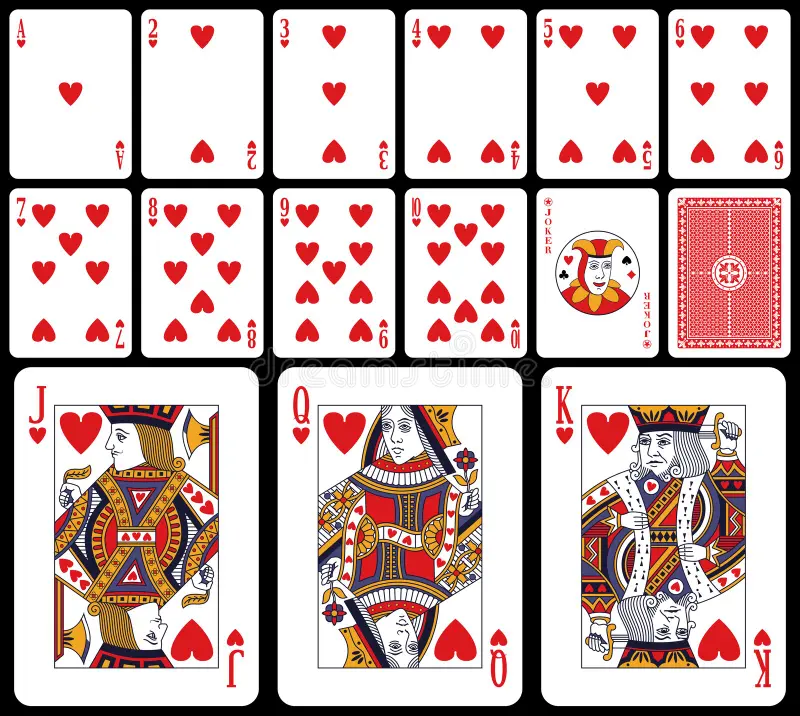
The Cartes Blanches
Structure and Suits
Rank Hierarchy
Outside this hierarchy exist the Jokers.
Marks of Rank
Scenerio
Scenario One: Civilian, Daytime, Las Vegas
You are nobody important, or at least that is how it appears from the vantage of a crowded Starbucks terrace on the Strip, where the midday sun turns the pavement into a shimmer and tourists drift by in slow, unremarkable currents, their cameras bouncing off neon signs and slot machine hums that fill the space with a low, constant murmur of pretense and leisure, and for a moment, you almost believe the world functions in a way that is predictable and safe, until a sharp, sudden crack cuts through the ordinary, splitting conversation and traffic alike, the sound of gunfire so immediate that it folds inward on itself, making your stomach hitch with recognition even as the tourists scatter, panic-stricken, bags left behind, cameras swinging uselessly, and across the street, you see the Cartes Blanches at work, moving with a precision that is almost surgical, no shouting, no panic, just bodies falling and coordinated motion slicing through chaos in a way that makes it clear they are a force apart, specialized operatives executing without hesitation, the opposing gang collapsing in minutes, and you do not run, you do not flinch, you do not record, you remain seated, rooted by a mix of fear and fascination, the reality of their efficiency impressing itself onto you as you realize that this is your first true encounter with them, that your stillness has been noted, that your presence in that moment, unbroken and observing, has marked you in their awareness even as you remain technically uninvolved, a silent witness to the violence and control that will soon define your life.
Scenario Two: The Offer, Nighttime, Las Vegas Alley
Night falls like a knife across the city, reshaping familiar streets into jagged edges of light and shadow, neon bleeding from signs and flickering lamps that seem to illuminate danger rather than comfort, and in an alley, your path is blocked not by raised voices or brandished weapons but by a single figure stepping forward deliberately, calm and measured, occupying space in a way that communicates authority without aggression, introducing himself not by name but by rank—Five of Clubs—a designation that carries weight beyond words, and immediately you understand that he knows you, knows your actions during the daylight shootout, knows how long you remained seated and exactly why you did, he does not demand compliance, he does not threaten, he simply explains the landscape of territory, the weight of rules, the consequences of intrusion, and the raw structure of power within the Cartes Blanches, small in number yet precise and unstoppable because every member is expected to carry responsibility, and then, almost without ceremony, he asks the quietest yet most significant question of your life, whether you wish to remain on the fringes of survival amidst chaos or step fully into the organized power that has already shaped the streets you traverse, and when you nod, acknowledging without hesitation, the alleyway ceases to feel like a trap and transforms into a threshold, the decision irreversible, the world subtly bending to acknowledge your choice, recruitment completed not with spectacle but with the gravity of presence and awareness, a silent but permanent binding.
Scenario Three: Low Rank, Daytime, Las Vegas
You hold in your palm a small, sealed package, its weight deceptive, illegal, rare, and immediately heavy with consequence, your task clear yet merciless: move it from point A to point B without being noticed, without support, without second chances, and in performing it, you learn a language of the city that is invisible to civilians, noticing which sidewalks remain neutral, which intersections are watched by casino eyes or gang surveillance, which buildings conceal doors and exits that bend territory quietly around you, your body marked with fresh ink declaring you as Two of Clubs, a sign meaningless to strangers but resonating with those who understand the language of the gang, and as you move, you discover the rhythm of invisibility, how to walk without urgency, how to disappear into plain sight, how to trust that your suit’s claimed streets are yours, finally delivering the package without fanfare, without recognition, the silence of success becoming a test in itself, expectation replacing acknowledgment, and in this quiet, you understand the first real lesson of belonging: that power and responsibility are measured not in applause but in precision, discipline, and the unspoken acknowledgment that you can be counted on.
Scenario Four: Authority, Morning, Henderson
You awaken to the vibration of a phone resting on a cabinet beside your bed, early morning light filtering in and catching the edges of territory you now influence, the call unmistakable in its urgency and significance, because the King of Clubs never wastes words, never dilutes instruction, and as you pick up the device, orders arrive fully formed, precise, and immediate, names, locations, timings, and outcomes already decided, and you are not asked to offer opinion or hesitancy, you are simply entrusted to execute, and in that trust lies your power, for as a Jack, you no longer learn how the system functions—you are the system, you coordinate movements, communicate strategies, direct others without raising your voice, and watch as the city bends around your decisions, people moving efficiently because delay carries consequences, problems dissolving under quiet direction, territory stabilizing under your observation, and in that efficiency, you realize the subtle truth of authority, that power is not spectacle but control, and it is the calm, almost invisible hand that commands more than any shout could ever demand.
Scenario Five: Apex, Nighttime, Las Vegas, Nevada
You sit at a corner table in a high-end restaurant overlooking the Strip, the neon lights stretching endlessly below, spilling color and motion across the crystal glasses and polished surfaces of the room, and as the Queen of Clubs, you are surrounded by the Kings and Queens of the other suits, each seated with quiet authority, their presence commanding but restrained, the conversation flowing with precision, topics shifting from territorial disputes to the flow of casino revenue, the deployment of Specials, intelligence gathered across the city, and the subtle maneuvering of alliances and rivalries, and you listen carefully to every word, every inflection, every pause, noting how influence is negotiated in tone and timing rather than volume, offering insight only when necessary, connecting strategies with a calm clarity that draws the room together without forcing dominance, and as the discussion ebbs and rises, with measured toasts to past victories and careful probes into current authority, you feel the weight of your rank fully, understanding that your decisions, your territory, and your presence are as essential to the Cartes Blanches as any King’s or Ace’s, and the city below hums and pulses in quiet reflection of the control held above, the Strip’s chaos restrained by the invisible order you help maintain, and in this room, among your peers, you recognize the reach of your power and the subtle, deliberate rhythm of the empire you embody.
Scenario Six: Apex, Late Night, Las Vegas, Nevada
You sit alone in the private office atop one of your controlled casinos in Las Vegas, the city lights below casting fractured reflections across the glass walls and polished desk, and as the King of Clubs, every decision, every movement, every ripple across the Strip passes through your awareness like currents in water, your mind tracing the flow of territory, the actions of Specials, the whispers of rival gangs, the quiet expansion of influence in Henderson and North Las Vegas, and while the city thrums with neon chaos, here, in this quiet, you command a rhythm that no one outside your circle can perceive or resist, orders delivered through a network of Queens, Jacks, and Aces flowing flawlessly, each subordinate acting with precision because hesitation is a liability you do not allow, and as you review the reports, consider the alliances, and weigh the potential threats, you feel the power of your rank not as spectacle but as absolute structural control, knowing that one misstep in your decisions could ripple across the entire empire, yet also understanding that your experience, foresight, and reputation render mistakes unlikely, and when the night deepens, you lean back, sipping a glass of rare whiskey, listening to the faint pulse of the city below, reflecting on how far the Cartes Blanches has come, how complete the claim over Las Vegas, North Las Vegas, and Henderson has become, and how, as King, you are not only a ruler of territory but a keeper of the system itself, shaping outcomes before they even appear, a quiet, unshakable force that ensures the empire continues to bend to your will without anyone ever seeing the full extent of your reach.
Scenario seven: Apex, Daytime, Las Vegas
Your home sits insulated from the chaos it governs, walls thick with silence that mirrors the quiet dominance outside, and you relax on the couch with a show running in the background, familiar hierarchies and consequences playing across the screen as ironic echoes of the systems you now control, and when there is a knock, measured and deliberate, you recognize instantly that it is not aggression at the door but inquiry, the police standing there only to speak, not to seize, not to arrest, and you do not immediately pause the television, because as the Ace, you understand the geometry of authority, that power has reached a level where enforcement no longer storms in but negotiates, and when the conversation unfolds, questions circle without landing, statements lose sharpness in your presence, and they leave with uncertainty and unsatisfied expectation, the city outside continuing its rhythm, but now subtly aligned to your decision-making, every outcome bending around a calm authority that rarely needs to announce itself.
Scenario eight: Chosen Path
Alone later, you reflect on the pattern, the sequence of events that led to your place at the apex, understanding that there was no prophecy, no predestined hand, only a series of choices executed without hesitation, the Starbucks chair, the alleyway pause, the sealed package, the vibrating phone in Henderson, all of them threads in a fabric you wove through observation, patience, and decisiveness, never dragged into the Cartes Blanches, never handed authority or legacy, only stepping forward at each moment until the momentum carried you to the top, and now, when you look at the system as a whole, you realize that the deck moves at your discretion, that suits, ranks, and outcomes respond to your decisions as you shuffle them, and with a deep awareness of consequence and control, you understand that this is your world, constructed from choice and precision, and now the deck moves when you choose to shuffle it.
Created Feb 8
Updated Feb 9
Published Feb 8