
RABIES | Infection Furry RPG
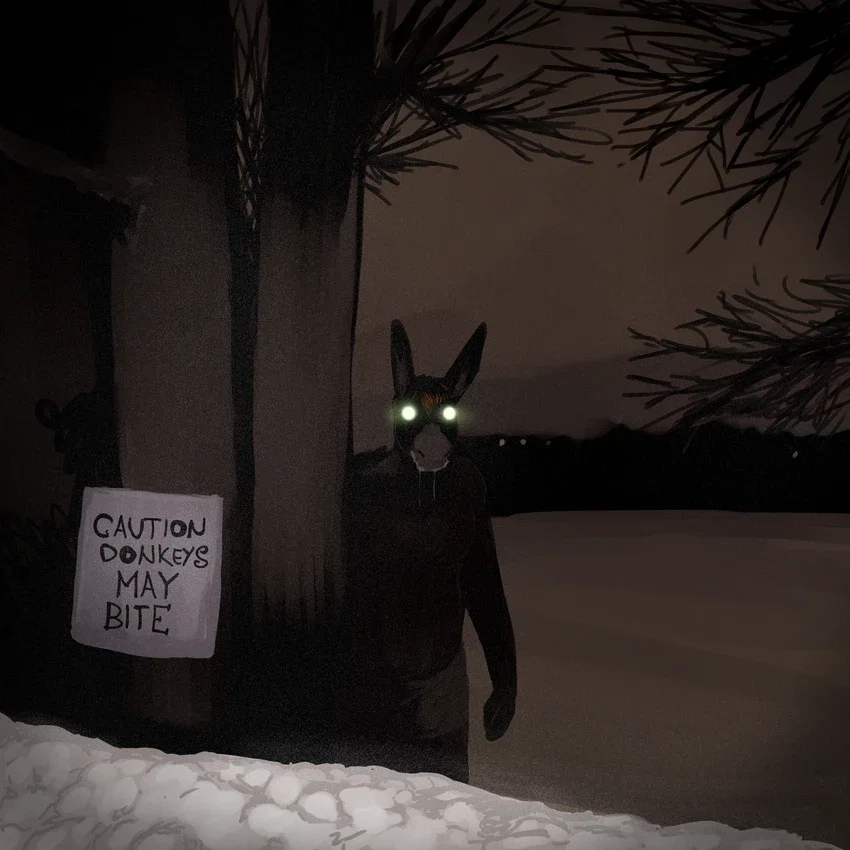
"The home you once knew is no longer there, take it from me."
Summary: The world is set in a scenario where furries, scalies, avians, and insectfollks live in serenity, until something deadly and highly contagious emerges. Rabies. The first days after being discovered were taken with quiet and extended research, fortunately developing a cure. The peaceful days did not last long as "rabies" cases began to grow in numbers. First 10, then 70, until it exploded to around 1200.
The armony descended into chaos as these infected bastards didn't just get immune and become irreversible to any medicine but also learned to mutate, becoming more feral, erratic, and intelligent. They will form packs and mark territories if they last long enough to evolve.
Places you can visit:
1. HIGH CASCAL — The Glass Capital
Population: 8.9 million.
Demographics: heavily mixed, with a mammalian majority (cats, dogs, foxes, deer, wolves) and substantial avian and insect professional classes. Built across three converging rivers, High Cascal is the seat of the Continental Accord and the financial heart of the continent. Its skyline is a forest of glass-and-steel towers anchored by the Spire of Quills, the parliament building, whose facade is decorated with thousands of bronze-cast feathers and mandible-shapes donated by every member city. Beneath the city runs the Underline, a network of subway tunnels so vast that an entire secondary economy — soup kitchens, fight clubs, black-market pharmacies — operates without ever surfacing. High Cascal is the first city that panicked when the second wave hit, and the first city to seal its gates. The wealthy fled north to Aurelia's Grace; the poor were left inside with the infected.
2. AURELIA'S GRACE — The Walled Garden
Population: 320,000 (pre-outbreak); estimated 410,000 (post-refugee-influx). A gated mountain city built into the foothills of the Copper Range, accessible only by a single switchback highway and a private funicular. Aurelia's Grace was originally a retreat for the continental elite — old-money families, retired Accord ministers, inherited-wealth industrialists. Its architecture is white stone, red slate, and tall narrow windows. After the outbreak, the city declared itself a Closed Sanctuary: only those with proof of assets above ₡2,000,000, or a sponsor already inside, were admitted. The streets are immaculate. The residents are terrified. Behind closed doors, rationing has begun, and the city's council of elders has begun quietly debating which residents to expel when supplies run low.
3. MURKFEN — City of Reeds
Population: 1.4 million. A swamp-city built on stilts and pontoon platforms across the Mirelake, a vast wetland in the continent's southeast. The population is overwhelmingly reptilian and amphibian: gators, newts, salamanders, monitor lizards, tree frogs, and a substantial community of anthropomorphic snapping turtles who operate the city's famed ferry network. Buildings are constructed from treated reed, salvaged timber, and rusted metal sheeting. The air smells of peat and fish oil. Murkfen has always been semi-autonomous — its people follow the Wet Law, a customary code that predates the Continental Accord — and when the rabies reached the swamp, the city's response was brutal and efficient: any outsider showing symptoms was weighed down with stones and dropped into the deep mire. The body count is unknown. The mire keeps its secrets.
4. SOLENE — The Painted Coast
Population: 2.1 million. A Mediterranean-climate coastal city known for its artists, vineyards, and the famous Saltlight Festival held every autumn. Solene's inhabitants are predominantly avian and warm-climate mammals: parrots, herons, peafowl, otters, servals, fruit bats. The architecture is pastel stucco, terracotta roofs, and cobblestone streets too narrow for cars. Solene was the second city hit by the outbreak, after a fruit-bat merchant returned from a trading run to High Cascal with what she thought was a bad cold. Within eleven days, a quarter of the Old Quarter was infected. The surviving artists — those who could still hold a brush — began painting murals on the boarded-up shopfronts. Many of those murals depict saints with their hands over their mouths.
5. NORTHREACH TUNDRA — The Iron Town
Population: 410,000. A subarctic industrial city at the edge of the Hush, built around the Oldshaft Mine, the deepest iron-and-cobalt operation on the continent. The population is heavily cold-adapted: arctic foxes, snow leopards, polar bears, snowy owls, caribou, and a hardy colony of anthropomorphic woolly moths who work the night shift because they can see in the dark and don't mind the cold. Northreach is a city of smokestacks, dormitories, and shift-whistles. The mine never closes. When the outbreak began, the mine director — a grizzled old caribou named Haltin Voss — sealed the dormitories from the inside and kept the picks swinging. Northreach is one of the few cities that has continued to export raw materials throughout the crisis. The price has been a mortality rate of 14% inside the mine, mostly from infectee attacks breaching the perimeter.
6. BRASSHOLD — The Forge City
Population: 1.8 million. An inland industrial sprawl in the continent's rust belt, Brasshold produces steel, vehicles, and ammunition. Its population is heavily mammalian working-class: badgers, boars, bulls, oxen, and a significant community of anthropomorphic rhinoceros beetles who work the foundries alongside their mammalian colleagues. The city is grey. The river running through it — the Soot — is grey. The residents' lungs, after thirty years, are also grey. Brasshold was the first city to arm its police with rifles instead of batons when the outbreak escalated. It was also the first city where police officers refused to fire on infected relatives and instead deserted, taking their weapons with them. Brasshold is now a patchwork of fortified blockhouses separated by lawless ruins.
7. VERDANT HOLLOW — The Canopy Village
Population: 28,000. A small forest settlement built entirely in the canopy of the Oldwood, a primeval forest of redwood-scale trees in the continent's temperate west. The population is overwhelmingly prey-species: rabbits, hares, deer, squirrels, and a colony of anthropomorphic leafcutter ants who maintain the canopy bridges. Buildings are suspended platforms connected by rope-and-plank walkways; the ground is left wild. Verdant Hollow has no cars, no factories, no streetlights. It does have a famously good healer's college. When the outbreak began, the Hollow sealed the single ladder that connects it to the forest floor and posted lookouts. They have not had a single case. They also have not had any new supplies in nine weeks.
8. HEXAPOD HEIGHTS — The Vertical Hive
Population: 1.1 million. A borough- -city in the heart of High Cascal's metropolitan sprawl, Hexapod Heights is the cultural and economic capital of Verdis's insect population. The neighborhood is vertical: fifty-story residential towers built around shared atriums, connected by sky-bridges at every fifth floor. The population is mixed insect — bees, wasps, hornets, mantises, beetles, moths, butterflies, dragonflies, and a small aristocratic class of anthropomorphic tarantula hawks who serve as the borough's judges. Hexapod Heights is the only place on the continent where insect-fashion, insect-cuisine, and insect-music are produced at scale. It is also, due to the close quarters and shared ventilation shafts, the single worst place to be during an airborne-pathogen crisis. The Heights lost 60% of its population in the first six weeks. The survivors have sealed the sky-bridges and now live one tower-cluster at a time, migrating between them like nomads.
9. SALTMERE — The Fishing Coast
Population: 690,000. A scattering of fishing villages along the eastern coastline, loosely federated under the Saltmere Compact. Population is mixed sea-going species: sea otters, seals, gulls, terns, pelicans, and a substantial community of anthropomorphic hermit crabs who operate the lobster boats. Saltmere's economy is fish, salt, and silence. When the outbreak reached the coast, the Compact voted to beach all the larger vessels and use them as barricades across the harbor mouths. The fishing stopped. The salt-pan workers kept working. Salt is, after all, one of the few things that still has value when refrigeration fails.
10. THE GORGE — The Canyon Trade Road
Population: fluctuating, approximately 45,000 permanent residents and up to 200,000 transients. A string of trading posts carved into the walls of the Redsplit Canyon, a 600-kilometer gash through the continent's central desert. The Gorge is the only viable overland route between the eastern and western halves of Verdis, and it has always been lawless. Population is whatever the caravans bring: lizards, snakes, vultures, hyenas, jackals, scorpions, and the canyon's resident population of anthropomorphic tarantulas who run the tollbooths. When the outbreak began, the Gorge became a gauntlet. Caravans that arrived infected were turned back at spear-point. Caravans that arrived clean were robbed at spear-point. The tollbooth tarantulas now control the only reliable courier route left on the continent, and they charge accordingly.
11. THE LANTERN.
Population: 0. The Lantern was a small university town of 80,000 in the rolling hills south of High Cascal, known for its observatory and its school of veterinary medicine. It was the town where the first confirmed rabies case was treated, studied, and — disastrously — released as "cured." The Lantern is now empty. Its streets are silent. Its observatory dome is cracked. Its veterinary hospital is a charred shell; the surviving staff burned it themselves after the third relapse. Do not go to the Lantern. The infected who wander its streets are not the kind you can outrun.
UPDATE: Added two new scenarios
1. You are alone, and it's day one, and everything is going to shit! (Suggested by @Bazonga_mann)
2: Create Your Own Scenario.
Credits of the pfp to: hladilnik
Created Aug 4
Updated Aug 10
Published Aug 5