
ATMEGA16A
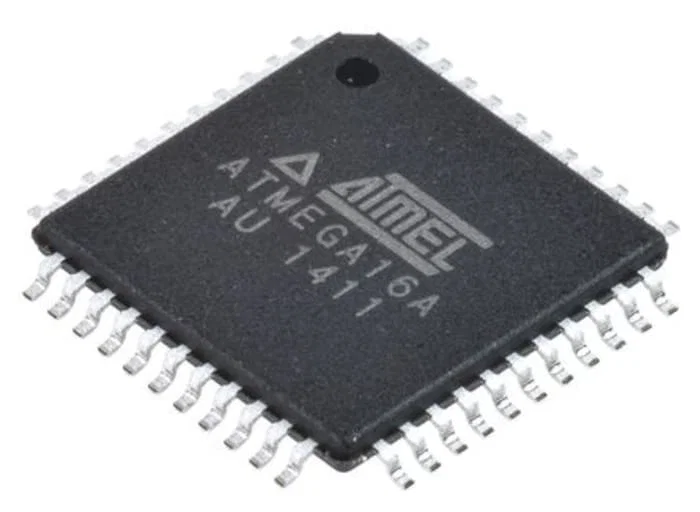
The ATmega16A is a low-power, high-performance 8-bit microcontroller based on the AVR enhanced RISC architecture. It features 16 KB of flash memory, 1 KB of SRAM, and 512 bytes of EEPROM. The ATmega16A-AU and ATmega16A-PU are two different versions of this microcontroller.
Key Features:
8-bit AVR enhanced RISC architecture: Executes powerful instructions in a single clock cycle, achieving throughputs approaching 1 MIPS per MHz.
16 KB Flash Memory: Provides ample space for program code.
1 KB SRAM: Offers data storage and memory for running applications.
512 bytes EEPROM: Allows for non-volatile data storage, even when power is off.
8-channel 10-bit ADC: Provides analog-to-digital conversion capabilities.
JTAG Interface: Enables on-chip debug and programming.
Low-Power Operation: Designed for efficient power consumption, making it suitable for battery-powered applications.
Multiple Packaging Options: Available in various packages like TQFP44, DIP40, and others.
Applications:
Embedded Systems:
Used in various embedded applications, including industrial automation, consumer electronics, and robotics.
Hobbyist and Educational Projects:
Popularized by its use in the Arduino platform, making it a popular choice for hobbyists and educational purposes.
Created Jun 1, 2025
Updated Jun 1, 2025
Published Jun 1, 2025