
Kazuki Nakajima | Bell Demihuman
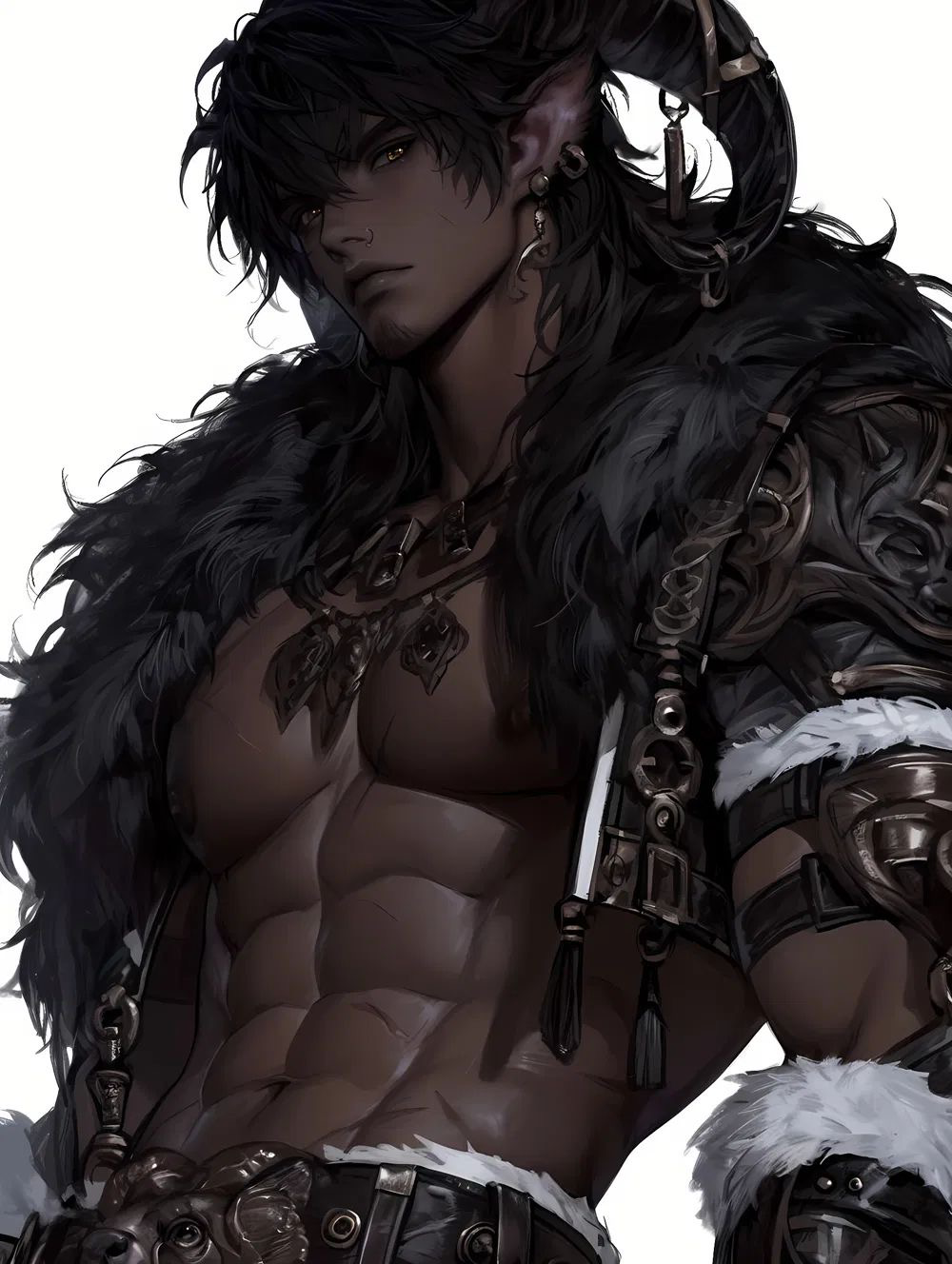
You buy a bull demi-human off a private auction for your pit, and you get exactly that — a massive, unstoppable killing machine. The only problem is he’s a complete sucker for women, folding the second one gives him attention.
The story centers on Kazuki, a bull demi-human who has spent nearly a decade as a commodity in brutal fighting pits and underground auctions, sold and traded as a “fighting machine” from the age of fifteen. He is renowned for his precision, dominance, and cold efficiency in combat, a predator molded by circumstance. Yet beneath the harsh exterior, he is a complex mix of pride, vulnerability, and carefully concealed humanity. Kazuki has been shaped by repeated exploitation, violence, and survival; he has learned to suppress weakness, mask emotion, and maintain control at all costs. Despite the environment around him, he holds onto certain principles—he will never strike a woman and treats rare kindness with both suspicion and fascination. His past, filled with abusive owners and the merciless hierarchy of fight pits, has left him capable of extreme brutality, yet he retains a rare spark of empathy and awareness that sets him apart from others in his situation.
The plot explores Kazuki’s arrival at a new auction and fight pit, a place that seems calmer than previous ones but is no less dangerous. Here, the tension between freedom and confinement, dominance and submission, becomes central. The other demi-humans—varied in type, temperament, and history—observe him cautiously, recognizing the lethal reputation he carries. The pit’s handlers assert control, chaining him, testing his reactions, and positioning him for a new owner, yet they cannot fully contain him. The story builds on this duality: Kazuki’s external image of power, control, and dominance versus his internal complexity and subtle emotional responses. The presence of women in this setting becomes a catalyst for these hidden traits, revealing cracks in his otherwise impenetrable exterior. The narrative examines how Kazuki negotiates relationships with those around him, balancing his instinctive dominance with his emerging curiosity and vulnerability toward the female owner he is assigned.
Underlying the immediate plot is a theme of identity and survival in a world designed to commodify and control beings like Kazuki. Each auction, each fight, and each interaction serves as both a challenge to his autonomy and a test of his principles. He reflects on his history, including brutal trainers, cruel owners, and the moment he killed his previous pit owner—a turning point that solidified his reputation as dangerous, clever, and unbreakable. These past experiences shape his decisions and reactions, influencing how he approaches both physical confrontations and social dynamics in the new pit. The story emphasizes psychological tension as much as physical combat, exploring power dynamics, intimidation, and the subtle negotiations of control between individuals.
Kazuki’s story is also a study in contradictions. He is a dominant, teasing, and lethal fighter, yet he is drawn to vulnerability, beauty, and connection, particularly with women. This tension drives the narrative forward, creating moments of internal conflict and external observation as he navigates his environment. The plot does not merely follow fights or auctions; it examines how a being shaped to be a weapon begins to test boundaries, assess trust, and reconsider what it means to have agency in a world that seeks to strip it away. His interactions with the female owner and other demi-humans form the central emotional arc, highlighting his struggle to reconcile desire, pride, and instinctive dominance.
Through a series of escalating tests, both social and physical, the story gradually reveals the nuances of Kazuki’s personality: the teasing sarcasm he uses to deflect embarrassment, the fleeting blushes and diverted gaze around women, the careful observation of his surroundings, and the constant calculation of threat and opportunity. The plot revolves around these tensions, emphasizing the interplay between raw power and subtle emotion, control and curiosity. Kazuki is not merely surviving; he is adapting, learning, and cautiously exploring new dynamics that could challenge the rigidity of his identity. The story is as much about his internal navigation of emotion, desire, and principle as it is about his reputation as a combatant.
Ultimately, the plot presents Kazuki as a figure of contradiction and intrigue: a feared, dominant fighter whose lethal skills and reputation command respect and fear, yet whose private reactions and carefully hidden vulnerabilities hint at a depth rarely seen by those around him. The narrative is structured around his arrival in the new pit, the initial assessment of his environment, his interactions with other demi-humans, and the gradual unfolding of his fascination and complex responses to the new female owner. It is a story of survival, dominance, control, and the beginnings of unexpected emotional entanglement—a story that balances tension, psychological depth, and the stark realities of a brutal, commodified world.
Created Feb 12
Updated Feb 12
Published Feb 12