
Let's talk about poetry, art, and Burial Goods.
Do you think art made by someone who hates deserves to be understood?
Are their beliefs, regardless of their harmful nature, enough to warrant their art, a genuine article unrelated to said beliefs, to be discarded? Should one's actions in private dictate the 'truth' of the good they do in public?
I promise this is an interesting read.
I stumbled upon an old video from a channel that is mostly shitposting - surreal absurdist read with intense seriousness - and recently, a lot of banger wizard rap like "I'm not a big fan of argonians" and "potion of fortify flow". But occasionally, there are poems - original poetry written under a pseudonym - posted as a multimedia format of brain food that I quite enjoyed. The channel owner himself has been outed as... Well, not a very virtuous person, a long time ago, and yet I haven't heard anything about him actually hurting anyone, doing no more than sharing offensive content occasionally in private communities I have never been a part of.
So regardless of the veracity of the claims regarding this writer's beliefs, let's talk about his poetry and his relevant non-poems.
I should say that his poetry is genuine art that I believe must be shared, as it helped me recover a part of my passions I once thought permanently lost.
Today, I'd like to talk about an audiovisual poem named "Where do your thoughts go when you're done thinking them?"
I want you to, in a quiet, private space you consider safe - such as your own room, or perhaps your bed itself - watch the video itself. Then, without looking into the comments of the video, draw your own conclusion. What do you think this is about? What is the meaning of each "beat" of the poem?
Would you have felt the same thing if you didn't have the music and the beautiful, haunting voices of the two VAs in the video? Perhaps it was the visuals of the old school pixelated labyrinth, turning seemingly randomly and occasionally flipping upside down?
Anyway.
I'll quote the poem exactly as it is, with BLUE being the man's voice and RED being the woman's voice.
Wabbajack.
Wabbjack.
Three syllables.
Each, a gate.
Step through.
Step through.
Not sideways,
Not up.
Not out.
But all directions at once.
Doors are polite.
This one knocks back.
Have you ever heard the echo spit back a thought that wasn't yours?
Cheese is pyramid-shaped.
In the right light!
I stack slices to reach the window.
But the window is fractured panes where reflections shift and melt.
Melted cheese.
A maze of selves dissolving into one another.
Moles press cold against my soles.
That's why I never walk straight.
Straight!
Watch me tiptoe sideways into tomorrow while the guards sharpen keys that OPEN NO DOORS!
Dreams of a blue room.
Moon blue.
A tower in the dark.
An open window at night.
A city beyond.
A glowing woman in white on a white bed.
The moon.
The moon.
The moon.
Maybe she is the moon.
Maybe the moon sleeps.
Maybe the moon sleeps.
Count the spiders on the ceiling.
They weave thoughts in gleaming webs not meant for me.
Spun from dreams too fragile to hold weight.
Disturb their work and a distant bell will toll.
A summons i will not heed.
Sentinels change faces, but the walls remember every secret.
Every flaw.
My thoughts live in their cracks,
And the cracks whisper back. Without. Mercy.
They listen while I sleep.
They hear my dreams.
I lose them.
They drip from my ears.
Disappearing forever into the gloom where tomorrow's storms are sown in silence.
Don't trust clouds shaped in sillhouetes of men.
Or promise of light in harsh places.
Loud thoughts breed sharp teeth.
Not my teeth.
These fangs are broken.
Quiet thoughts are harder to earn back.
The ones that don't bite.
...Sometimes I'm bitten anyway.
They say madness is a labyrinth.
But I am the minotaur.
Some paths lead to prey.
Juicy brain meats for the bull.
But others lead to mirrored corridors.
Fractured mirrors show nothing but scattered pieces of a self I no longer know.
Out there, they preach order.
But order is only chaos with patience and penmanship.
Ink spills.
Climbs the walls.
Creeping ivy.
Painting the roadmap of reality in blackened script!
They don't read it. They'll never... read it.
Cat hat. Rat sat. Gnat spat. That's that. Door floor. Roar more. Core sore. Never bored. Night kite. Fright sight. Right light. Out of spite. Latch match. Patch scratch. Batch snatch. Never catch. Bone stone. Moan throne. Loan flown. All alone. Drip ship. Slip tip. Nip flip. Don't slip. Leaf reef. Brief grief. Chief thief. Words are beef. Bell well. Spell shell. Fell Tell. Bad smell! Bad smell. Wake lake. Snake cake. Brake skate. Doubletake. Wire fire. Choir lyre. Mire higher. Tired liar. Wee knee. Tree plea. Free me. Flee sea. Sun run. None done. Shun fun. Become one.
Now, I want to talk about this poem. I can't claim to know what the writer intended the message to be, if any at all. Poetry is subjective. So any claim I make here is my own interpretation, and is not final in any way, shape or form.
The surface feels like surreal nonsense, but the nonsense has a fairly consistent internal logic. This isn't just “random words representing madness”. It's much more specifically about a mind experiencing its own thoughts as unstable, alien, intrusive, and increasingly difficult to distinguish from the world around it.
The title is basically the key:
“Where do your thoughts go when you're done thinking them?”
That sounds normal, but it introduces a real question one could ask. Normally, a thought appears, you experience it, and then it disappears into memory. You don't experience yourself as needing to know where it went, right? Here, the two voices are apparently aware of thoughts as things that have an independent existence after they've left consciousness.
That idea gets immediately turned into “Wabbajack. Three syllables. Each a gate.”
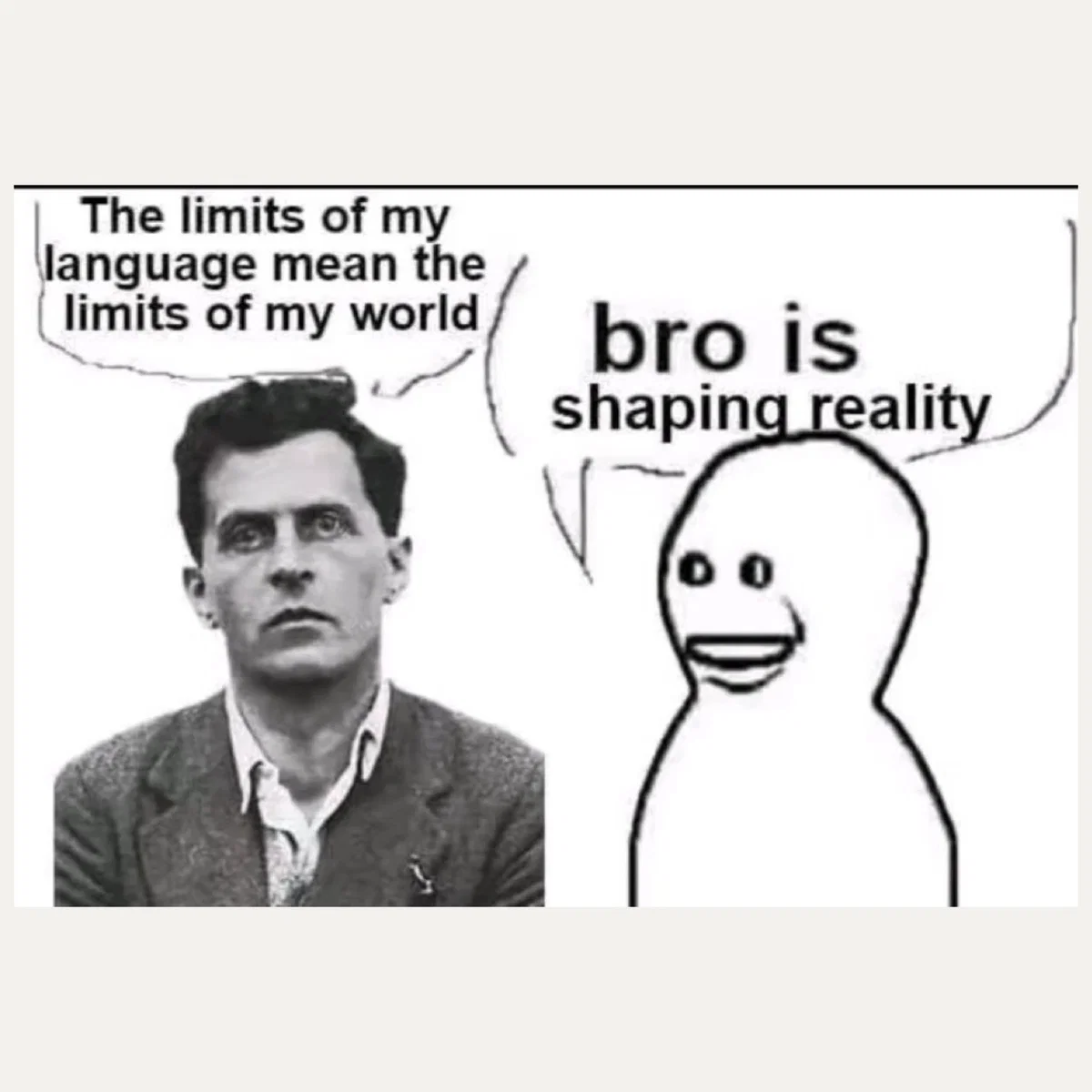
“Wabbajack” is from Alice in Wonderland, the nonsense word, likely a variation of "Jabberwocky". But the important part isn't necessarily the lore. The word itself becomes a doorway. Language isn't simply describing things; words are becoming portals into other states of thought.
“Step through. Not up. Not sideways, not out, but all directions at once.”
That's associative thinking. Normally, thought feels sequential. A leads to B, which leads to C. In this, one thought opens onto many connections all at once. The poet here isn't deliberately changing subjects. The subjects are changing themselves.
I don't think there is a difference, at least not a significant one, between what the man and the woman say. They're the same mind. Not two sides of a coin, but simply... The coin.
That's why “cheese is pyramid-shaped” becomes a window, then fractured reflections, then melted cheese, then “a maze of selfs dissolving into one another.”
There is no conventional logical bridge connecting those things. But there is an associative bridge. You climb the pyramid. The reflection of that person you used to be makes you lose focus. The "cheese" pyramid melts.
The poem is therefore not that incoherent or abstract. It's coherent at the level of association rather than narrative. The cheese isn't really about cheese. The window isn't really about a literal window. The fractured reflections aren't really about glass. They're successive transformations of the same underlying idea: boundaries between things are breaking down.
“Moles press cold against my soles. That's why I never walk straight.”
This is another deliberately ridiculous relationship between words. Moles being underground somehow explain why the poet walks crookedly. The sentence sounds normal, while the actual relationship between words is absurd.
That's the poem's recurring trick: it preserves the machinery of rational language while removing rational connections between the pieces.
“Out there they preach order, but order is only chaos with patience and penmanship.”
From the poet's perspective, ordinary reality isn't inherently more logical than their own thoughts. Society simply agrees upon its own patterns long enough to call them “order.”
There is no longer a reliable boundary between an external observer and an internal thought.
Then there's this:
“I lose them, they drip from my ears; disappearing forever into the gloom where tomorrow's storms are sown in silence.”
Thoughts are almost treated like bodily fluids or physical objects. They can leak out. And that connects with the original question: Where do your thoughts go when you're done thinking them? Apparently, according to this poet, they don't simply disappear.
They leak away. They become weather. They become storms. They become something outside the self.
The warning about clouds shaped like men continues the same idea. The speaker sees patterns and agency in things that may not possess either. A cloud looks like a person, therefore perhaps it is one. A thought appears in your mind, therefore perhaps someone put it there.
I want to talk more about this part, but it would be a tangent big enough to warrant its own post.
“Loud thoughts breed sharp teeth. Not my teeth; these fangs are broken. Quiet thoughts are hard to earn back, the ones that don't bite. Sometimes I'm bitten anyway.”
The distinction between “loud” and “quiet” thoughts suggests intrusive versus peaceful cognition. Some thoughts are aggressive, demanding attention, painful. Others are gentle and easy to lose. But you can't control which ones appear. And notice the distancing:
“Not my teeth.”
The woman refuses ownership of the destructive thoughts. As always, the nnarrator experiences thoughts without feeling that those thoughts necessarily belong to them. That becomes explicit with the Minotaur.
“They say madness is a labyrinth, but I'm the minotaur.”
The conventional metaphor is that madness is a maze and the mentally ill person is trapped inside it. But the speaker says: No. I am the thing living at the center. That has two possible readings:
The speaker believes they themselves are the monster.
They're not merely trapped inside the labyrinth. They're part of the labyrinth's structure. They are both prisoner and creature.
“Some paths lead me to prey; juicy brainmeats for the bull.”
The Minotaur is the appetite of the mind. Some thought-paths lead toward something that feeds it. Other paths lead to self-reflection and introspection.
“Order is only chaos with patience and penmanship.”
That's basically the narrator's rebellion against everyone outside the labyrinth. Everyone else says "Reality is orderly. Our patterns are the right ones. The poet says "You merely got better at hiding the chaos."
And the ink imagery reinforces it, I think.
“Ink spills, climbs the walls creeping in ivy, painting the roadmap of reality in blackened script.”
Writing itself becomes organic and uncontrollable. Language, which is normally supposed to map reality, instead becomes another thing that spreads uncontrollably across it.
“They don't read it. They'll never read it.”
That sounds almost like disappointment. The poet believes they have discovered something about reality that nobody else can perceive, but they're incapable of communicating it. And then the poem completely loses the remaining pretense of conventional prose.
“Cat hat. Rat sat. Gnat spat. That's that.”
This final section is fascinating to me because, like, at first glance it looks like pure nonsense, doesn't it? But I think it's actually pretty reasonable. The person whom the two voices are talking to has been experiencing language as unstable. Words create associations. Associations create new thoughts. Thoughts create new realities. So now the speaker deliberately strips language down to sound.
Cat → hat.
Rat → sat.
Gnat → spat.
Door → floor.
Roar → more.
The meaning becomes secondary. What matters is phonetic connection. It's almost like the mind has stopped using language to communicate propositions and started using language as a machine that generates the next word. And look at how it gradually accelerates.
“Wee knee. Tree plea. Free me. Flee sea.”
There are semantic connections, but they're less and less logical.
“Sun run. None done. Shun fun. Become one.”
And suddenly the rhyme chain resolves into something that's actually significant: "Become one."
The entire poem has been moving toward dissolution of boundaries. The self dissolves into other selves. Thoughts become external. Dreams become reality. Words become objects. Objects become words. Order becomes chaos. The labyrinth becomes the mind. The Minotaur becomes the speaker.
And finally: the individual becomes one with everything else.
It could mean transcendence. The boundaries of the self dissolve, and the speaker becomes part of everything.
Or it could mean psychological dissolution. The speaker's individual identity has become so fragmented that there is no stable “I” left.
And that's the most important thing about interpreting it: The poem is clearly drawing on imagery associated with psychosis, dissociation, intrusive thoughts, paranoia, and perhaps even drug dependency, but it's an artistic construction. In fact, its effectiveness comes partly from making the reader experience a little of that instability themselves.
You started out reading this poem or watching the video asking a perfectly sensible philosophical question: Where do thoughts go when you're done thinking them?
And by the end you're reading: “Cat hat. Rat sat. Gnat spat.” while somehow feeling that “Become one” is the inevitable conclusion. That's the BEST part. The poem doesn't just tell you that the speaker's thought process is coming apart. It gradually makes your own reading process participate in it.
It reminds me of a certain house. Must be my imagination, though.
Created Sep 25
Updated Sep 25
Published Sep 25