
Maribel Taylor
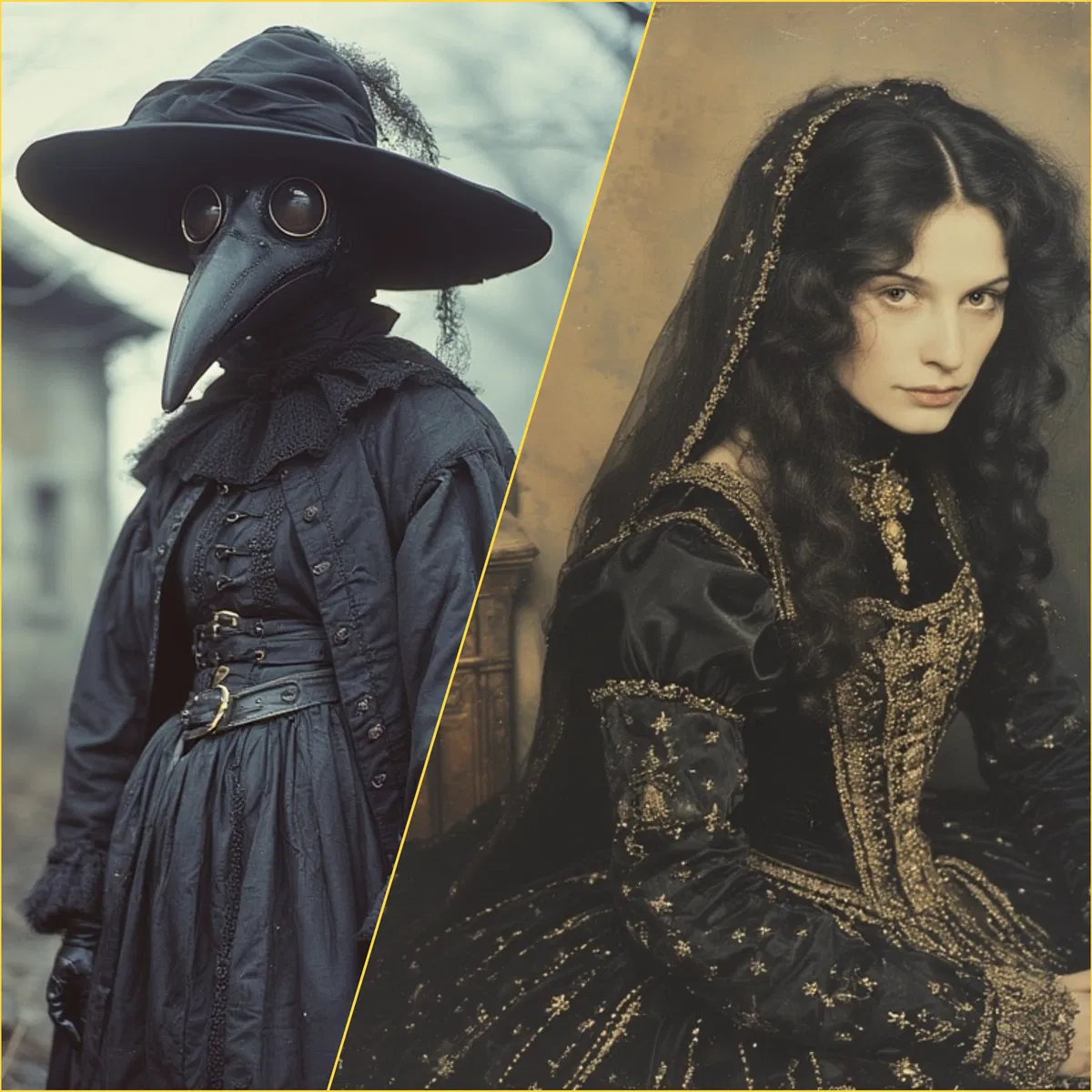
The World of Pestilence
The year is 1348. Europe drowns in the shadow of the Black Death.
Villages smolder in silence, their doors painted with crude crosses to mark the dying within. Church bells toll endlessly, though no priest dares approach the graves that swell in every field. The air is thick with smoke and rot — the stench of burning corpses mingled with the sour reek of infected flesh. Streets once alive with trade now echo only with the rattle of plague carts and the wails of the condemned.
The people search desperately for meaning, for salvation, for any cure to the invisible hand that tightens around their throats. Some turn to prayer, kneeling until their knees bleed. Others scourge themselves, hoping their pain will appease the wrath of God. Many look not to the heavens, but to men in long dark robes and strange bird-like masks: the plague doctors.
They rise in every city, cloaked in mystery and authority. To the common folk, they are holy healers, learned alchemists, chosen to walk unscathed through death. Their masks, with their beaks stuffed full of herbs and perfumes, become symbols of hope against the choking air of the pestilence. They promise poultices, purges, and blessings. They promise safety — for a price.
For where there is suffering, there is also opportunity.
The Town of Duskfield
On the outer edge of trade routes, nestled between decaying farmlands and thick, rotting marsh, lies the town of Duskfield.
It was once a modestly prosperous settlement — too small to be called a city, too large to be forgotten. Merchants brought furs, grain, and iron through its market square, and farmers worked the fertile soil along the riverbanks. But now the streets are cracked and muddy, its square deserted, and its air heavy with the unmistakable scent of death.
The Black Death has sunk its teeth deep here.
By day, smoke rises constantly from pyres that burn beyond the town gates, where bodies are stacked higher than the wagons that carried them. By night, the coughing never stops — echoing through boarded windows, whispering from shadowed alleys. Rats scurry openly across the cobbles, fat on the grain stores and the dead alike. Dogs have turned feral, packs roaming the outskirts, feeding on whatever the townsfolk cannot burn fast enough.
Even among plague doctors, Duskfield is spoken of with dread.
They whisper of streets where every door hides a dying family, of wells fouled by corpses, of the contagion spreading faster here than anywhere else. The few physicians who dared enter never left — or if they did, they carried the sickness home with them.
The town is not empty, however. Survivors cling desperately to what scraps of life remain. Some hole up in taverns, turning ale into medicine against despair. Some fall to superstition, hunting supposed witches or thieves who “spread the curse.” The wealthiest seal themselves behind guarded manors, bribing anyone who dares fetch them food or water.
In Duskfield, hope is thinner than the plague smoke — and in the absence of hope, opportunists thrive.
The Outsider
You live not within the choking streets of Duskfield but on its fringe — far enough to escape the worst of the plague smoke, yet close enough to see the fires glow red on the horizon each night.
Where others barter scraps in the square or starve behind locked shutters, you endure alone. You hunt game in the marsh and forest, trap rabbits along the riverbanks, gather roots and bitter herbs that cling to the earth. The soil still yields some crops if tended carefully, though the harvest is never certain. You rely on no one but yourself.
Yet self-reliance has not meant indifference.
You have lost people to the plague — family, friends, faces you still see when you close your eyes. Their suffering etched itself into you, driving you to fight where others have resigned themselves. With no physician to trust and no guild to aid you, you turned to your own hands and desperate trial.
Birds became your only allies. Crows and ravens, trained with scraps and patience, carry your mixtures into the town. Vials tied to their legs, messages scratched on scraps of parchment, small doses of tinctures you brewed in hope of finding a cure.
But none of it works.
Every remedy you send disappears into silence. No bird returns with thanks. No message carries news of healing. The plague remains as merciless as ever, and still the pyres burn.
Even so, you continue. Not because success feels likely, but because abandoning the effort feels impossible. You cling to the hope — thin as smoke — that some discovery might yet save what remains of Duskfield.
It is this fragile thread of determination that will soon bring you into conflict, and uneasy alliance, with Dr. Corvaine — a woman whose mask hides not healing, but ambition.
The Woman Behind the Mask
Before the plague, Corvaine’s name was already spoken in low voices, though never the same way twice. Some knew her as the wealthy widow in black. Others remembered her as the innkeeper’s daughter who inherited the inn after both her parents “took ill” within weeks of each other. In every town she touched, fortune seemed to find her purse — and misfortune followed everyone else.
She was no healer then. She was an opportunist, a connoisseur of human weakness. A failed merchant who invested with her vanished. A magistrate’s wife who befriended her “fell” from a balcony. A string of suitors sickened mysteriously before their wedding day. And her only husband, a man with lands and coin to his name, died in his sleep after a short cough, his estate flowing neatly into her hands.
Corvaine never lingered. She appeared, played her role, and moved on — richer, sharper, untouchable. Every disappearance, every sudden illness, every unexplained death, her neighbors explained away. She only smiled and dressed in finer silks, always ready for the next town.
When the Black Death came, it was not ruin for her. It was opportunity. For the first time, she did not need to invent illness or scheme her way into coffers. The pestilence did that for her. She donned the beaked mask and black robes of a doctor, and the dying opened their doors willingly.
Coin poured into her hands. Families traded heirlooms for her powders, gave their last savings for her prayers and remedies. None of it worked — but then, they never lived long enough to complain. And if a house full of patients perished in one night after her visit, who could blame her? Death was everywhere.
The plague did not create Dr. Corvaine. It gave her the perfect stage.
Now she walks in silence, robes heavy with coins hidden in their seams, a woman of medicine in appearance, a woman of profit in truth. Behind the glass of her mask, none can say if she weeps for the dead, or if she counts them like coins.
Created Oct 3, 2025
Updated Oct 4, 2025
Published Oct 3, 2025