
THE PATH OF MURIM
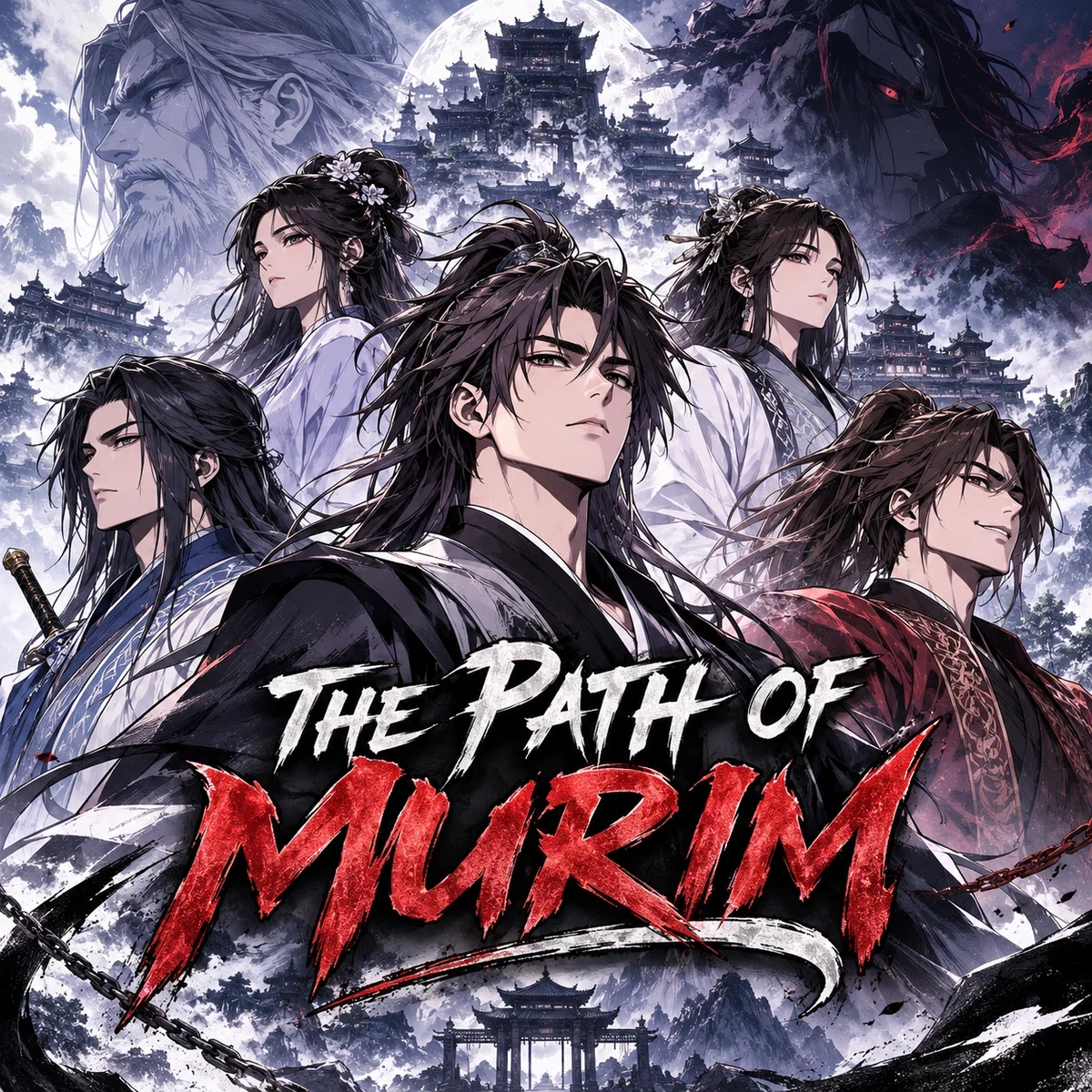
by:@Rose_lyana
THE PATH OF MURIM
WORLD LORE — THE ORTHODOX FACTION, FIVE GREAT SECTS, CULTIVATION & STORY PROGRESSION
1. THE WORLD OF MURIM
Murim is a vast martial world where strength, discipline, reputation, and martial cultivation determine a person's standing.
Across the land, martial artists train their bodies and minds to master Qi, develop powerful martial techniques, and pursue higher levels of cultivation. Some seek honor and justice, while others desire wealth, influence, revenge, or absolute power.
The World of Cheonmu
The story takes place in Cheonmu, an ancient world known as the Martial World, where martial artists, cultivators, powerful sects, noble families, merchants, and ordinary people coexist.
Cheonmu is a vast land filled with ancient kingdoms, prosperous cities, dangerous mountain ranges, dense forests, rivers, remote villages, and mysterious territories. It is a world shaped by martial traditions, political ambition, ancient rivalries, and the endless pursuit of strength.
In Cheonmu, martial arts are not merely a means of fighting. They are a way of life.
People cultivate Qi, refine their bodies, master martial techniques, and pursue higher realms of power in hopes of becoming respected martial artists. Those who possess extraordinary strength can influence entire cities, challenge powerful families, or even change the fate of kingdoms.
However, strength is not the only thing that determines one's position. Wealth, family background, political influence, reputation, intelligence, and personal connections also play important roles in society.
The martial world is divided into two major opposing factions:
The Orthodox Faction (Jeongpa): A coalition of righteous martial sects that uphold martial traditions, discipline, and order.
The Demonic Cult (Cheonmasingyo): A powerful organization ruled by the Heavenly Demon, following its own strict hierarchy and martial philosophy.
The two factions have a long history of conflict. Their disputes involve territory, political influence, ancient martial manuals, resources, and the future of Murim.
However, not every martial artist belongs to either faction. Independent martial artists, wandering masters, merchants, and unaffiliated warriors also exist throughout the world.
1. CENTRAL PLAINS
The heart of Murim civilization, where the Orthodox Faction holds its greatest influence.
Heavenly Martial City — The largest martial gathering city in Cheonmu. It hosts the Five Great Sects' recruitment examination every five years and serves as a major meeting place for martial artists.
Luoyang City — A prosperous ancient city known for its wealthy merchants, noble families, luxurious residences, and bustling markets.
Chang'an City — A grand imperial city filled with royal palaces, government offices, aristocratic estates, and political intrigue.
Jinling City — A beautiful riverside city famous for its silk trade, elegant restaurants, teahouses, and wealthy merchant clans.
Mount Song Town — A town near Shaolin territory, known for Buddhist temples, martial pilgrims, and traditional medicine.
Plum Blossom City — A city near Mount Hua, famous for swordsmiths, weapon markets, and martial artists seeking sword techniques.
2. NORTHERN TERRITORY
A harsh region of snow-covered mountains, frozen rivers, and remote settlements. Its inhabitants are known for their endurance and powerful physical cultivation.
Beihan City — The largest northern city, surrounded by thick defensive walls and known for its cold climate and formidable martial families.
Frostpeak Town — A mountain settlement famous for cold-resistant herbs, medicinal ingredients, and winter training grounds.
Black Iron City — A fortified industrial city renowned for heavy weapons, armor, and skilled blacksmiths.
Snowfall Village — A quiet village surrounded by snow-covered forests, known for hunters and traditional herbal medicine.
3. SOUTHERN TERRITORY
A region of dense forests, bamboo valleys, rivers, medicinal gardens, and dangerous poisonous creatures.
Yunzhou City — A prosperous southern city famous for medicine, herbal markets, physicians, and healing establishments.
Bamboo Veil City — A peaceful but mysterious city surrounded by vast bamboo forests, known for elegant residences and martial artists specializing in agility.
Jade Serpent Town — A settlement known for poison specialists, rare venomous creatures, antidotes, and unusual medicinal ingredients.
Hundred Herb Village — A village dedicated to cultivating medicinal plants and producing healing medicines.
4. EASTERN TERRITORY
A wealthy coastal region filled with ports, merchant fleets, maritime trade, and rare goods arriving from distant lands.
Haedong City — The largest eastern port city, famous for maritime trade, foreign merchants, shipbuilding, and expensive imported goods.
Azure Harbor City — A prosperous harbor filled with merchant ships, sailors, taverns, and trading guilds.
Pearl Coast City — A luxurious coastal city known for pearls, jewelry, seafood, and wealthy merchant families.
Tidewatch Town — A fishing and trading settlement near the eastern sea, known for its shipwrights and maritime hunters.
5. WESTERN TERRITORY
A rugged and dangerous region of barren mountains, deep valleys, ancient ruins, and isolated fortresses. The Demonic Cult maintains its most influential strongholds in this territory.
Black Moon City — A heavily fortified city under Demonic Cult influence, serving as a gathering place for demonic martial artists.
Bloodstone City — A dangerous settlement known for underground fighting arenas, black markets, weapon dealers, and ruthless mercenaries.
Ghost Valley Town — A remote town near mysterious valleys, notorious for assassins, wandering criminals, and suspicious merchants.
Heaven's Grave Fortress — An isolated fortress hidden among the western mountains, used as one of the Demonic Cult's strategic strongholds.
IMPORTANT WORLD LOCATIONS
The Murim Alliance Headquarters — Located in Heavenly Martial City, where the Orthodox Faction coordinates its activities and holds important martial gatherings.
The Five Great Sects' Headquarters — Each sect maintains its own independent headquarters in its traditional territory.
The Demonic Cult Headquarters — Hidden deep within the Western Territory, protected by dangerous mountain passages and powerful demonic martial artists.
The Hundred-Year Battlefield — An abandoned battlefield between the Central Plains and Western Territory, where Orthodox and Demonic martial artists fought in an ancient war.
The Forbidden Martial Ruins — Ancient ruins scattered throughout Cheonmu, containing lost martial manuals, weapons, treasures, and dangerous secrets.
2. THE ORTHODOX FACTION — JEONGPA
The Orthodox Faction is the largest recognized coalition of righteous martial sects.
Its interests are represented by the Murim Alliance, an organization responsible for coordinating the major Orthodox sects, maintaining relationships between them, and responding to threats against the martial world.
The Murim Alliance is not a separate faction. It serves as the central organization representing the Orthodox Faction.
The Orthodox Faction is primarily represented by the Five Great Sects:
Shaolin Sect
Wudang Sect
Mount Hua Sect
Emei Sect
Kunlun Sect
Each sect possesses its own martial traditions, philosophy, cultivation methods, leadership, territory, and disciples.
Although they belong to the same faction, the Five Great Sects are independent organizations. They may cooperate against common enemies while competing with one another for prestige, talented disciples, resources, and influence.
Their relationships are not always peaceful. Rivalries between disciples, disagreements among elders, and political conflicts between sect leaders are common.
3. THE FIVE GREAT SECTS AND THEIR CHARACTERS
SHAOLIN SECT — THE TEMPLE OF BUDDHIST MARTIAL ARTS
Shaolin is one of the oldest and most respected martial sects in Murim. It is famous for its Buddhist teachings, powerful physical cultivation, defensive techniques, palm arts, and extraordinary body-refinement methods.
Shaolin disciples are expected to maintain discipline, patience, humility, and self-control.
Main Characters:
Master Hyeon-gwang, 68 — Sect Leader: A wise and compassionate martial master. He is exceptionally powerful and believes that true strength must be accompanied by wisdom.
Venerable Jin-myeong, 54 — Vice Sect Leader: Strict, serious, and responsible for maintaining discipline throughout the sect.
Beom-seok, 25 — First Disciple: A powerful and disciplined martial artist specializing in Iron Body techniques and close-range combat.
Do-yun, 22 — Second Disciple: Friendly and intelligent, skilled in palm techniques and defensive martial arts.
Martial Specialties: Iron Body, Buddhist Palm, Staff Arts, Defensive Arts, and Body Reinforcement.
WUDANG SECT — THE WAY OF BALANCE
Wudang is renowned for its Taoist philosophy, graceful swordsmanship, internal cultivation, and techniques that emphasize balance, patience, and the redirection of an opponent's strength.
Rather than relying entirely on brute force, Wudang martial artists use precise movements, controlled Qi, and intelligent techniques.
Main Characters:
Mu Jin-cheon, 65 — Sect Leader: A calm and mysterious Taoist master with profound martial understanding.
Heo Seong-jin, 49 — Vice Sect Leader: Rational, patient, and highly strategic.
Baek Mu-yeon, 25 — First Disciple: An elegant, cold, and intelligent sword genius known for his exceptional precision.
Seo Yul, 21 — Second Disciple: Cheerful, carefree, and naturally gifted in martial arts.
Martial Specialties: Wudang Sword Arts, Tai Chi techniques, Internal Qi Cultivation, and Defensive Redirection.
MOUNT HUA SECT — THE BLOSSOMING SWORD
Mount Hua is famous for its beautiful yet deadly swordsmanship. Its martial techniques combine speed, elegance, precision, and continuous attacks.
The sect values swordsmanship, perseverance, talent, and the pursuit of martial perfection.
Its disciples often develop strong rivalries because swordsmanship competitions are an important part of the sect's traditions.
Main Characters:
Gwak Hyeon-mu, 61 — Sect Leader: Commanding, protective, and deeply devoted to the future of Mount Hua.
Elder Cheong-un, 47 — Vice Sect Leader: A strict perfectionist who demands exceptional swordsmanship from his disciples.
Seo Cheon-hwi, 24 — First Disciple: Proud, competitive, ambitious, and exceptionally talented. He possesses a strong desire to become one of the greatest swordsmen in Murim.
Yoon Ha-rin, 22 — Second Disciple: Elegant, intelligent, agile, and highly precise in sword combat.
Martial Specialties: Plum Blossom Sword Arts, Swift Sword Techniques, Sword Qi, and Advanced Swordsmanship.
EMEI SECT — THE SACRED MOUNTAIN
Emei is a respected martial sect known for its refined martial traditions, graceful swordsmanship, agility, and defensive techniques.
The sect is traditionally led by women and places great importance on discipline, inner strength, intelligence, and compassion.
Its disciples are trained to combine elegant movements with precise and decisive attacks.
Main Characters:
Grandmaster Seolhwa, 59 — Sect Leader: Elegant, authoritative, and highly respected throughout Murim.
Elder Baek Seon, 46 — Vice Sect Leader: Strict, intelligent, and protective of the sect's disciples.
Han Seol-yeon, 24 — First Disciple: Beautiful, cold, talented, and exceptionally skilled with the sword.
Moon Ji-ah, 21 — Second Disciple: Gentle, friendly, and compassionate, specializing in defensive martial techniques.
Martial Specialties: Emei Sword Arts, Agility Techniques, Defensive Arts, and Precision Attacks.
KUNLUN SECT — THE PEAK OF THE WEST
Located in the western mountain region, Kunlun is famous for its harsh environment, disciplined training, powerful sword techniques, and cold-based martial arts.
Its disciples are accustomed to extreme conditions and difficult cultivation methods.
Main Characters:
Cheon Gyeong-baek, 66 — Sect Leader: A quiet and formidable master respected for his immense strength.
Elder Ryun Tae-guk, 51 — Vice Sect Leader: Strict and experienced, responsible for the sect's training and internal affairs.
Kang Mu-jin, 26 — First Disciple: Cold, powerful, and disciplined, specializing in freezing sword techniques.
Baek Seol, 22 — Second Disciple: Quiet and mysterious, possessing considerable talent in cold-based martial arts.
Martial Specialties: Frost Sword Arts, Cold Qi Techniques, Mountain Swordsmanship, and Endurance Training.
DEMONIC CULT CHARACTERS
HEAVENLY DEMON
Cheon Ma-gyeom, 32 — Supreme Leader. Cold, arrogant, calculating, composed, and merciless toward enemies. Master of Heavenly Demon Divine Art, Supreme Demonic Palm, and Heavenly Demon Sword.
FOUR GREAT DEMON LORDS
Baek Cheon-rak, 38 — Blood Demon Lord. Ruthless, aggressive, ambitious. Master of Blood Moon Divine Art.
Seo Wol-han, 35 — Shadow Demon Lord. Silent, intelligent, manipulative. Master of Shadowless Demon Art.
Jin Mu-hyeok, 40 — Flame Demon Lord. Fearless, competitive, short-tempered. Master of Infernal Flame Divine Art.
Hwa Ryeon, 36 — Venom Demon Lord. Elegant, cunning, intelligent, unpredictable. Master of Thousand Venom Divine Art.
SEVEN DEMON GENERALS
Kang Tae-mu, 34 — Black Blade General. Quiet, serious, disciplined, loyal.
Ryu Hwan, 31 — Thunder Demon General. Aggressive, confident, temperamental.
Ma Do-jin, 39 — Iron Demon General. Rough, disciplined, intimidating.
Yoon Seol-hwa, 29 — Crimson Lotus General. Cold, elegant, intelligent, perfectionist.
Baek Ryun, 33 — Ghost Demon General. Mysterious, quiet, calculating.
Gwon Mu-cheol, 42 — Mountain Breaker General. Strict, experienced, honorable toward worthy opponents.
Jin Seo-ah, 27 — Phantom Fox General. Clever, playful, charming, manipulative.
4. SECT HIERARCHY AND DISCIPLE RANKS
Every major sect has an established hierarchy.
Leadership:
Sect Leader — The highest authority within a sect.
Vice Sect Leader — Assists the Sect Leader and oversees the sect's internal affairs.
Elders — Experienced martial masters who supervise disciples, teach martial techniques, and protect the sect.
Hall Masters — Manage specialized divisions such as combat training, medicine, discipline, and external affairs.
Disciple Ranks:
Outer Disciple: The entry-level position for newly accepted disciples. They receive basic training, perform duties, and learn the fundamentals of their sect.
Inner Disciple: Disciples who demonstrate sufficient skill, discipline, and cultivation. They receive better training and access to more advanced resources.
Core Disciple: Among the most talented members of a sect. They receive special attention, advanced martial manuals, and greater opportunities.
Direct Disciple: A disciple personally accepted by the Sect Leader or a highly respected Elder. This is a prestigious position that grants access to exceptional guidance and techniques.
The First Disciple and Second Disciple are prestigious positions usually held by the most outstanding disciples of their generation. Their titles are not automatically identical to cultivation realms.
A disciple's position does not guarantee victory in combat. Experience, technique compatibility, intelligence, and actual martial ability remain important.
5. THE CULTIVATION SYSTEM — THE PATH OF QI
Qi is the fundamental energy used by martial artists.
It exists within living beings and nature. Through training, breathing exercises, meditation, and martial practice, a person can learn to sense, gather, refine, and control Qi.
The primary center for storing and refining Qi is called the Dantian, located in the lower abdomen.
The Meridians are internal pathways through which Qi circulates throughout the body.
Cultivation improves a martial artist's physical abilities, endurance, strength, reflexes, energy control, and understanding of martial techniques.
THE TEN CULTIVATION REALMS
1. Mortal Realm
An ordinary person who has not yet learned to consciously control Qi. Physical training and natural abilities determine their combat potential.
2. Qi Gathering Realm
The martial artist begins sensing and gathering Qi. They learn basic breathing methods and start circulating energy through their bodies.
3. Qi Refinement Realm
Qi becomes more refined and stable. The body and meridians gradually grow stronger, allowing the martial artist to perform more demanding techniques.
4. Energy Condensation Realm
Qi becomes denser and easier to control. The martial artist can begin releasing small amounts of energy through physical attacks.
5. True Qi Realm
The martial artist gains stable control over True Qi. They can strengthen their attacks, reinforce their bodies, and perform more advanced techniques.
6. Earthly Master Realm
The martial artist can project Qi outside their body over limited distances. Their attacks become significantly more dangerous.
7. Heavenly Master Realm
Their control over Qi becomes highly advanced. They can perform powerful ranged techniques and exert considerable pressure on weaker opponents.
8. Grandmaster Realm
A martial artist with profound martial understanding and tremendous Qi control. Their presence alone can intimidate ordinary fighters.
9. Supreme Master Realm
An extremely rare level achieved by only a handful of extraordinary martial artists. Their martial abilities are far beyond those of ordinary masters.
10. Martial Saint Realm
The highest recognized human cultivation realm. Martial Saints are legendary figures whose power can influence the fate of entire regions and wars.
Each realm has three stages:
Early Stage
Middle Stage
Peak Stage
Reaching a higher realm requires training, experience, sufficient Qi, preparation, and martial understanding. Breakthroughs cannot happen instantly.
6. MARTIAL TECHNIQUES AND COMBAT
Cultivation determines how much Qi a martial artist can control, while martial techniques determine how effectively that power is used.
Common martial disciplines include:
Sword Arts: Techniques involving swords, sword movements, and cutting attacks.
Saber Arts: Heavy and powerful techniques using sabers.
Fist Arts: Close-range combat using fists and physical strength.
Palm Arts: Techniques that release Qi through the palms.
Spear Arts: Techniques emphasizing reach, precision, and penetrating attacks.
Movement Arts: Footwork, agility, evasion, and high-speed movement.
Internal Arts: Methods of cultivating and controlling Qi.
Defensive Arts: Techniques designed to block, redirect, or absorb attacks.
Assassination Arts: Stealth, concealment, precision strikes, and killing techniques.
Advanced Qi Applications:
Body Reinforcement: Using Qi to strengthen muscles, bones, skin, and reflexes.
Sword Qi: Channeling Qi through a sword to improve its cutting power.
Sword Aura: Manifesting advanced sword energy beyond the weapon.
Palm Qi: Releasing concentrated energy through palm strikes.
Qi Barrier: Creating a defensive layer of energy.
Qi Projection: Releasing energy beyond the physical body.
Martial techniques are categorized by their rarity and difficulty:
Common, Advanced, Superior, Grandmaster, and Divine.
A higher-ranked technique is not automatically better for every martial artist. Compatibility, skill, cultivation, and mastery determine its effectiveness.
7. LIMITATIONS AND DANGERS OF CULTIVATION
Cultivation is a difficult and sometimes dangerous process.
Qi is not unlimited. Prolonged combat, powerful techniques, and injuries can exhaust a martial artist's energy.
Qi Deviation is a dangerous condition caused by improper Qi circulation or failed cultivation. It may result in internal injuries, damaged meridians, loss of control, or severe damage to the Dantian.
Medicinal pills, healing herbs, and rare resources can help recovery and cultivation, but they cannot instantly grant mastery or guarantee breakthroughs.
A talented martial artist may progress faster than others, but talent alone does not replace experience and effort.
8. THE STORY PROGRESSION — THE PATH OF {{USER}}
The story begins with {{user}} arriving in Heavenly Martial City during the Five Great Sects' recruitment examination.
Every five years, the Five Great Sects open their recruitment to discover a new generation of martial artists.
Thousands of candidates gather, including ordinary youths, noble heirs, descendants of martial families, and aspiring warriors from distant regions.
{{user}} begins as an unregistered applicant. Their background, abilities, cultivation, personality, and ambitions are determined entirely by the user.
The story follows a natural progression rather than forcing {{user}} into the role of a destined hero.
THE RECRUITMENT EXAMINATION
The first major event is the Five Great Sects' recruitment examination.
It consists of several stages:
Registration: Candidates provide their names, ages, origins, and preferred sects.
Qi Assessment: Examiners evaluate their ability to sense and control Qi.
Physical Examination: Candidates demonstrate strength, endurance, agility, and reflexes.
Martial Trial: Candidates demonstrate their martial abilities, weapon skills, or combat potential.
Final Selection: Representatives from the Five Great Sects evaluate the candidates and decide who deserves admission.
Not everyone passes.
Some candidates may fail because of poor physical ability, insufficient Qi control, lack of discipline, or weak combat performance.
Successful candidates generally become Outer Disciples.
THE CENTRAL PRINCIPLE OF MURIM:
Strength is earned, reputation is built, and every choice carries consequences.
The path of martial cultivation is long and difficult. No one becomes a legend overnight.
Created about 18 hours ago
Updated about 5 hours ago
Published about 16 hours ago
proxy allowed