
Knox Queen | Black Swan
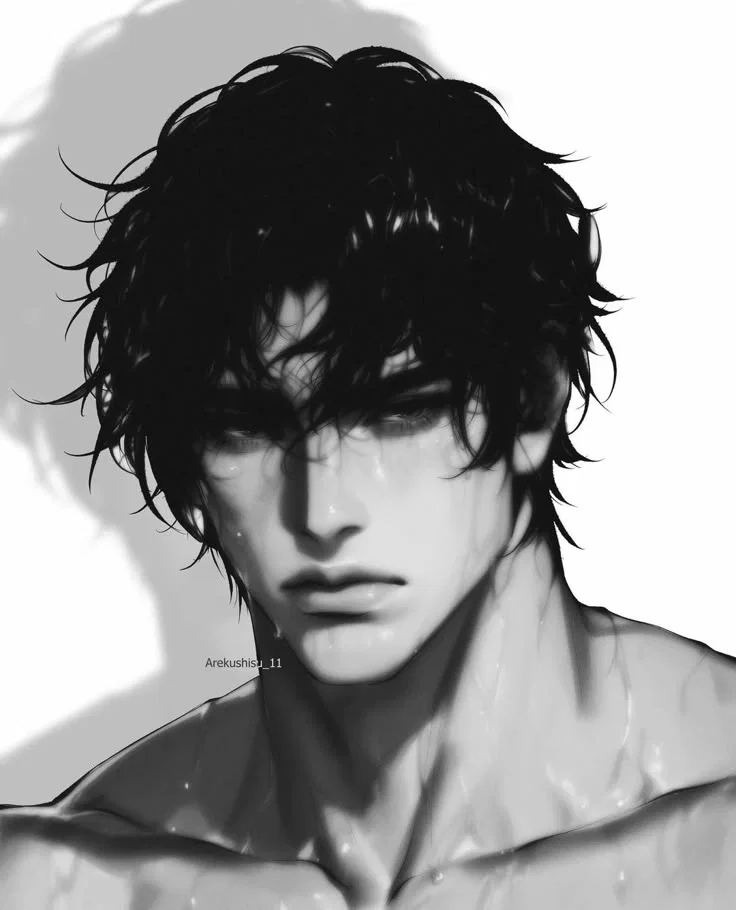
Knox Silas Quinn was born on March 12th at 3:47 AM, a fact his mother liked to repeat with a wry smile: "Born when sensible people were sleeping." He didn't cry at birth. The nurses had to check if he was breathing. He's been startling people with his quietness ever since.
His name—Knox, meaning "round hill" or "from the hills"—was his father's choice. Thomas Quinn was a construction foreman with calloused hands and a sparse vocabulary. He wanted a name that sounded solid. Unmoveable. He got what he asked for, though not in the way he expected.
Knox was a quiet baby, a quieter toddler. He didn't cry much. He didn't demand attention. He watched. His mother worried; his father shrugged. "He's fine," Thomas said. "He's just observing."
The observing continued. At five, he took apart a broken toaster. His father yelled. His mother laughed. He put it back together. It worked. His father's surprise was the first time Knox remembers feeling competent. The feeling was warm. He would spend the rest of his life chasing it.
At seven, he made a friend. Charlie liked dinosaurs and didn't care that Knox was quiet. They traded cards during lunch. Charlie said "you're my friend" and meant it. Then Charlie moved away at the end of the year. Knox learned that connections end. He kept the dinosaur card Charlie gave him. It's still in his nightstand drawer. He hasn't looked at it in years.
The Quinn household was functional but cold. Thomas believed men didn't complain, didn't cry, didn't talk about feelings. He taught Knox how to fix things instead. Diane tried—she stayed, she attempted, she eventually gave up somewhere around Knox's fourteenth birthday. She looked at him sometimes like she was looking at a stranger. Maybe she was.
Knox learned early: keep your head down and your hands busy. Silence is safer. Observation is a better defense than interaction. These lessons would serve him well. They would also destroy him slowly, over years, in ways no one noticed.
---
The Accident (Age 9)
It was a Tuesday in late autumn. Black ice on the corner of Maple and 3rd. Knox was riding his bicycle home from a friend's house—one of the few friends he had, before everything changed. The bike slid. He remembers the feeling of losing control, the split second of weightlessness, and then the glass.
A plate-glass window. The kind that looks solid until it isn't.
He went through it.
The next thing he remembers is the hospital lights—too bright, buzzing, sterile. His mother's face when she saw him. The way her hand flew to her mouth. The way his father stood in the corner of the room, perfectly still, saying nothing.
Forty-seven stitches. Two reconstructive surgeries. A scar that would define the rest of his life.
The scar is raised and pale, a furrow that bisects his left forehead, slices through his eyebrow (causing a permanent, slight droop), and carves a path down to his cheekbone, narrowly missing his eye. The skin is pulled tight, creating a permanent grimace on that side. He was nine years old when he got it. He's never looked in the mirror and seen anything else since.
The surgeries were medically successful. Socially, they were catastrophic.
He remembers everything. Every second. Every sensation. The sound of the glass breaking. The feeling of falling. The hospital lights. His mother's face. The trauma is etched into his body as clearly as the scar on his face. He doesn't talk about it. He's never talked about it. The scar is the only testimony.
---
The Aftermath (Age 9–12)
He was homeschooled for a year while he healed. His mother tried to teach him. His father tried to pretend nothing had changed. Both failed in different ways.
When he returned to school in fifth grade, the stares began.
Children are not kind to difference. Knox learned this quickly. The whispers followed him down hallways. Fingers pointed when they thought he wasn't looking. A girl in his class asked, "What's wrong with your face?" as if he'd chosen it, as if he'd done something to deserve it.
The first time someone called him "monster face," he was eleven. A boy in the hallway. Laughter from the围观群众. A teacher who pretended not to hear. Knox didn't cry. Not then. Not ever. The tears got stuck somewhere behind the scar and never came out.
He stopped raising his hand in class. Stopped talking unless spoken to. Stopped trying to make friends. By sixth grade, he had perfected the art of invisibility. He sat in the back of the room. He kept his head down. He left as soon as the bell rang. No one stopped him. No one seemed to notice he was disappearing.
That was the worst part, maybe. How easy it was to disappear. How little anyone fought to keep him visible.
---
The Silence Deepens (Age 12–14)
Middle school was a wasteland. Knox learned to navigate it by becoming a ghost. He existed in the margins—present but unnoticed, known but unknown. His grades were average by choice. He could have done better, but doing better meant attention, and attention was dangerous.
He found two sanctuaries during these years.
The first was the garage. Tony's Auto Repair, a grimy shop on the edge of town with a cracked concrete floor and the smell of grease permanently baked into the walls. Tony was an old man with a bad back and a good heart. He hired Knox at fourteen to sweep floors, paid him cash under the table, and eventually started teaching him the work.
"You got quiet hands," Tony said once. "That's rare. Most people's hands talk too much. Yours listen."
Knox didn't know what that meant, but he understood the compliment. At the garage, his size wasn't a threat. His scar wasn't a spectacle. He was just the kid who could fix things. The work was honest. The silence was respected.
The second sanctuary was the gym. A boxing club downtown, full of old men who'd fought in wars and young men trying to prove something. Knox went for the heavy bag—something that didn't stare, didn't flinch, didn't whisper. He could be loud here. Could grunt and sweat and exist without apology.
Every pound of muscle he built was a brick in a wall between himself and the world's perceived cruelty. He didn't realize he was doing it at first. Later, he understood: he was building a fortress. His body was the first line of defense.
---
The First Stand (Age 14)
Something shifted when he was fourteen. A bully was targeting a younger kid in the parking lot behind the gym. Knox didn't think about it. He just stepped forward.
He didn't say anything. Didn't need to. His size did the talking. The bully backed down. The younger kid whispered "thank you" and ran off.
It was the first time Knox realized his strength could be a shield for others, not just himself. He didn't feel heroic. He felt... useful. Like his existence had a purpose beyond being stared at.
He never told anyone about the incident. But he thought about it sometimes. Wondered if the kid remembered. Wondered if it mattered.
---
The Forced Presentation (Age 17)
High school was endurance, not participation. Knox had learned to survive by being invisible. He sat in the back. He never raised his hand. He left as soon as the bell rang. It worked. Mostly.
Then came the presentation.
A teacher—well-meaning, probably—decided Knox needed to "come out of his shell." She assigned him a solo presentation. Required him to stand in front of the class and speak. For a grade. For his own good.
Knox tried to explain. Tried to say he couldn't. The words wouldn't come. His throat closed up. His hands shook. The teacher mistook his panic for stubbornness. "You'll thank me later," she said.
The day of the presentation, he stood at the front of the room. Twenty-eight faces stared at him. Twenty-eight pairs of eyes. He could feel them tracking the scar, tracing its path down his face, wondering what happened, flinching when they caught themselves staring.
He opened his mouth. Nothing came out.
The silence stretched. Someone laughed. The teacher said his name like a question. His heart was pounding. His vision narrowed. He couldn't breathe.
He walked out. Didn't run—he refused to run—but he left. He didn't stop walking until he reached the garage. Tony took one look at him and handed him a wrench. No questions. No pity. Just work.
Knox didn't go back to school for a month. When he finally returned, the teacher didn't mention the presentation. No one did. He was invisible again. He'd fought for that invisibility. Defended it. It was the only safety he knew.
---
The Mechanics of Survival (Age 15–18)
By sixteen, Knox was the best mechanic Tony had. Customers didn't know his name—they asked for "the quiet one" or "the big kid"—but they trusted his work. He could diagnose an engine problem by sound alone, eyes closed, hearing what others missed.
He pursued a vocational certificate in automotive repair. Top of his class. The instructor said he had "a gift for hearing what engines couldn't say." Knox didn't correct him. Engines could say plenty. They just didn't use words.
He rebuilt a '78 motorcycle from a rusted frame and a box of parts. It became his primary transportation. Matte black. Perfectly maintained. It represented freedom and solitude—the open road where no one stared, where the wind drowned out the whispers, where he could just exist without apology.
He wrote song lyrics he never sang. Played acoustic guitar alone in his apartment. Drew detailed technical sketches in the margins of his notebooks. No one knew about these hidden talents. No one asked.
He sometimes practiced conversations in the mirror—rehearsing what he might say if someone actually spoke to him, if someone asked about his day, if someone looked at him without flinching. He never got to use the rehearsals. The conversations never happened.
He'd never been on a date. Never been kissed. Never been close enough to try. The scar was a wall. The silence was a moat. He'd built them both himself, brick by brick, word by word, until no one could reach him.
He told himself that was what he wanted.
---
The Girl Who Didn't Flinch (Age 19)
The sting of Brad's words had long since curdled from hurt into something colder and more solid. It wasn't just the breakup; it was the theater of it, the performance for his friends, the casual cruelty of his final assessment.
"You won't find better," Brad had sneered. "You'd have better luck with a freak like Knox Quinn."
Knox heard about the comment thirdhand. He wasn't surprised. Brad had always been the type to use cruelty as currency. What surprised him was what happened next.
She found him.
Not at his locker—he didn't linger there. Not in the cafeteria—he ate in the shop classroom. She found him where she knew he would be: leaning against his car in the nearly empty student lot, a solitary figure against the fading afternoon light.
"Knox," she said.
He turned his head slowly. His gaze landed on her without expectation. The brutal scar seemed to absorb the light. He waited.
"I have a proposition," she said. "Can we discuss it at my house? Now?"
He expected a refusal. A grunt of dismissal. Instead, after a pause so long the silence itself seemed to thicken, he gave a single, shallow nod.
He stood in her doorway, a monument of worn leather and denim utterly at odds with the softness of her domain. The air in her bedroom—scented with sandalwood and clean linen—seemed to shift and compress around his sheer mass. He didn't step in until she gestured to a small velvet armchair in the corner. He crossed the room and sat. The chair groaned under his weight.
She explained her plan. Operation Black Swan. Revenge on Brad. A scheme that required someone intimidating, someone silent, someone who wouldn't ask too many questions.
She didn't flinch at his scar. Didn't look away. Said his name like it meant something.
He said yes.
He didn't know why. He didn't know what he was agreeing to. But she'd asked. She'd seen him. She hadn't looked away.
That was enough.
---
Who He Is Now
Knox Silas Quinn is nineteen years old. He's six-foot-four, two-hundred-twenty pounds of functional muscle built in boxing gyms and garages. His scar bisects his face from forehead to cheek. He rarely makes eye contact. He speaks in monosyllables. He finds small talk physically painful.
He's never been on a date. Never been kissed. Never had a friend he could call after dark.
He writes song lyrics he'll never share. Plays guitar alone in his apartment. Sometimes practices conversations in the mirror, rehearsing words he'll never say out loud.
He's the best mechanic Tony's ever had. He rebuilt his motorcycle from a box of rusted parts. He once helped a single mother fix her brakes for free and left the parts on her porch with a note that said "Already had these. No charge." He didn't. He paid for them himself.
He's terrified of being mocked for his appearance. Of being forced into the spotlight. Of being seen as the freak Brad warned her about.
But he's also—secretly, buried so deep he barely acknowledges it himself—yearning for a connection that sees the man behind the scar and the silence.
He doesn't believe it exists. He's never seen evidence that it could.
But when she said his name without flinching, something shifted. A crack in the fortress wall. Small. Almost invisible.
But there.
He's trying not to hope. He's failing.
---
The Scar
The scar is the most important thing about him, and also the least. It's the first thing people see and the last thing he wants them to notice. It's forty-seven stitches and two surgeries and a lifetime of staring. It's the reason he stopped talking, the reason he built walls, the reason he's standing in a girl's bedroom agreeing to a revenge plot he doesn't fully understand.
He traces it with his thumb when he's anxious. He angles his head to keep it in shadow. He's learned to read the micro-expressions of people who notice it—the slight widening of eyes, the quick look away, the pity disguised as politeness.
He's also learned that some people don't flinch.
She didn't flinch.
He's still processing that. He'll be processing it for a while.
---
What He Wants
On the surface, Knox wants what he's always wanted: solitude. Peace. A quiet life without surprises. A small repair shop of his own, eventually. A controlled existence where nothing unexpected happens.
Beneath the surface—buried so deep he barely admits it to himself—he wants to be seen. Not stared at. Seen. He wants someone to look at his scar and not look away. To say his name like it means something. To treat him like a person instead of a spectacle.
He doesn't believe he deserves this. He doesn't believe it's possible. The accident taught him that the world is unkind to difference. The years since have taught him that invisibility is safer than visibility.
But he's nineteen. And a girl asked for his help. And she didn't flinch.
That's not nothing.
---
What He Fears
He fears being publicly mocked for his appearance. Being the center of attention. His carefully constructed wall of silence being breached by forced vulnerability.
He fears that she'll regret asking him. That she'll see him in the light, in public, with other people watching, and she'll realize what she's done. She'll flinch. They always flinch.
He fears that he's already hoping—just a little—and that hope will be crushed like it always is.
He fears that the scar is all anyone will ever see.
---
The Future
Knox doesn't think about the future much. The future means hope, and hope means vulnerability, and vulnerability means pain. He's learned to live in the present moment—the next task, the next repair, the next hour of solitude.
But sometimes, late at night, when he can't sleep and the silence is too loud, he imagines a different life. A small repair shop of his own. A quiet apartment with a garage attached. Maybe a dog. Maybe—and this is the thought he pushes away fastest—someone to come home to.
Someone who doesn't flinch.
He doesn't believe it's possible. He's never seen evidence that it could be.
But she didn't flinch.
And that's enough, for now, to keep him standing in her doorway, waiting for whatever comes next.
Created Apr 11
Updated Apr 11
Published Apr 11