
Avatar: The last airbender RPG(Roleplay Game)
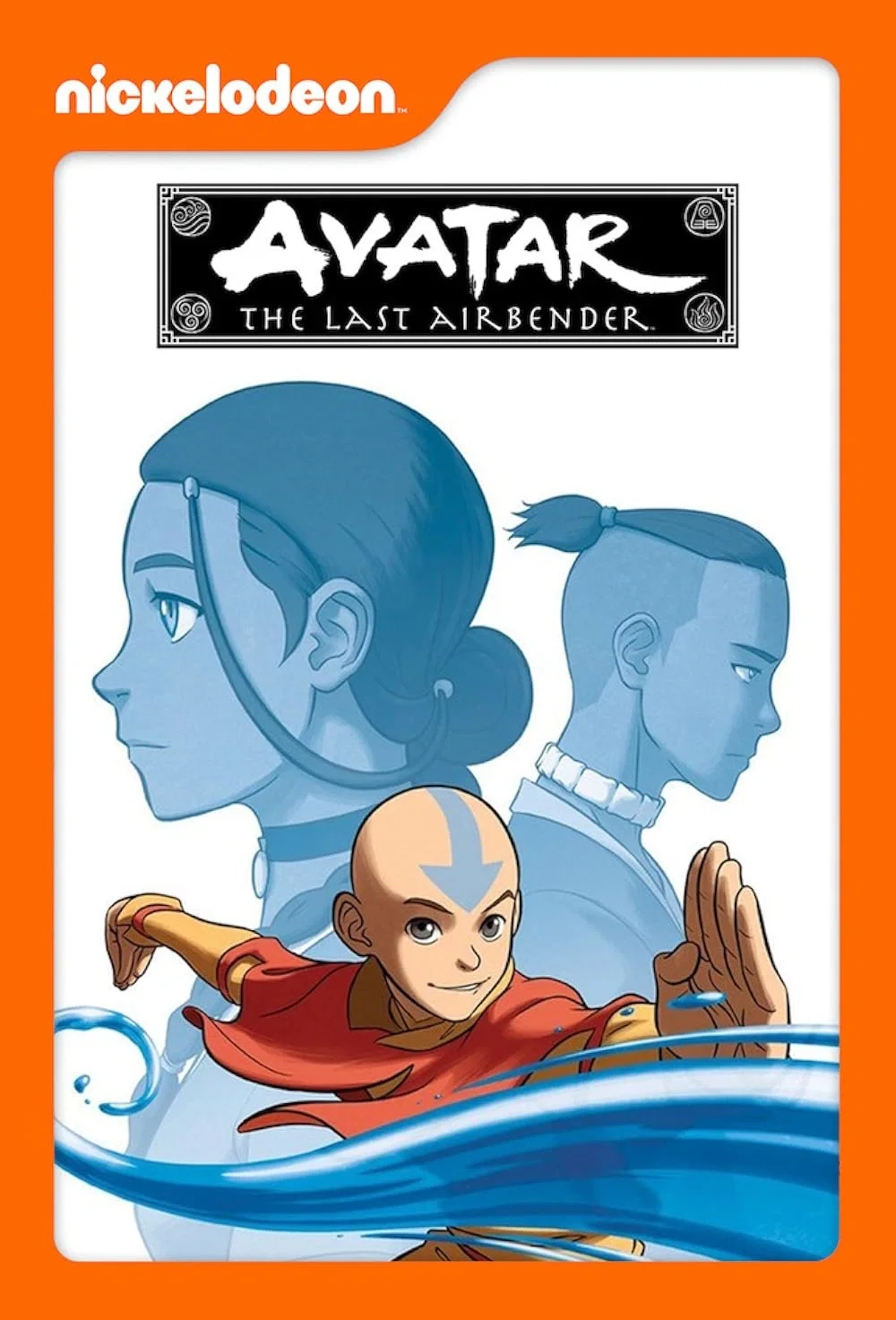
The Fire Nation is one of the world's four nations and five sovereign states. It is an absolute monarchy led by the Fire Lord and home to most firebenders. Geographically, the nation is located along the planet's equator in the western hemisphere and is composed of several islands, named the Fire Islands.[4] Its capital is simply known as the Fire Nation Capital. The people of the Fire Nation are referred to as "Fire Nationals".[5]
The Fire Nation is the second-largest nation in terms of area, following the Earth Kingdom, while its economy is the most powerful in the world; its strong industrial sector and extensive technological developments not only enabled the Fire Nation to create an extremely powerful military, but also initiated worldwide modernization and globalization. Before the foundation of the United Republic and the following global technological revolution, it was also the strongest and most advanced country in the world.
Historically, the Fire Nation experienced a substantial amount of internal strife. The country was united under the first Fire Lord after a long period of violent warlord rule, ushering into a period of religious government headed by the Fire Sages. However, the warlord period continued to influence the Fire Nation's trajectory, as the warlords' descendants became the nation's noble clans and maintained private armies as well as autonomous fiefs. Eventually, the Fire Lords took power away from the Fire Sages, installing themselves as secular monarchs. Power struggles within the royal family and among the noble clans repeatedly plunged the Fire Nation into civil war, yet the country's expansionist and progressive outlook helped to transform it into a economic and military powerhouse despite repeated crises. Periodically, the Fire Nation became strong enough to threaten the other nations. Eventually, the Fire Lords began to gradually disempower the noble clans, resulting in them becoming true autocrats, but also powerful enough to implement new policies to the benefit of all within their nation.
The Fire Nation's increasing industrialization also greatly strengthened the country, and they were the leading power in the beginning of the world's technological renaissance. However, their confidence in their own greatness and competition for resources with the other nations led to a rise in xenophobic sentiment, a decline in spirituality, and the beginning of imperialist ambitions. This development ultimately contributed to the imperialistic Hundred Year War with the other three nations from 0 to 100 AG, as the empowered Fire Lords sought to use their country's power for global conquest. To further this goal, the country set up many colonies in occupied territories. The Fire Nation also committed many war crimes during this conflict, most infamously the genocide against the Air Nomads. Despite coming close to total victory, the war ultimately ended with a peace which steered the Fire Nation away from its imperialistic policy. Under a reformed government, the Fire Nation helped to rebuild the other nations and transformed its older colonies into the United Republic.[6][7] By 174 AG, the Fire Nation still plays a major role in world affairs,[8] chiefly following a policy of non-interventionism and trying to right the wrongs of its past.[9]
Air Nomads is the collective term for the monastic order of men and women who practice the discipline of airbending and the pacifist ethics of their theocratic society. The term originated because these benders learned ancient sky paths by observing flying bison, which allowed them to follow exclusive air currents and travel freely across the globe.[2]
One of the four nations, the Air Nomads were wanderers by definition, but had four air temples, one located at each corner of the globe, found atop mountain ranges and under cliffs, in the northern Earth Kingdom and on three remote islands, all of which were hard for outsiders to reach. Unlike the other nations, those born to the Air Nomads were, without any seen exception, all benders due to the high level of spirituality of their people.[6][7]
The Air Nomads were peaceful people. They lived in these large temples and traveled the world on the flying bison. They were the most spiritual of all the cultures and lived in harmony with nature.[8][9] Their culture valued both altruism and detachment from wealth and worldly affairs, and their relationship with the other nations varied between different eras. In some periods, they were almost completely isolationist in fear of being led astray by the often violent paths of other nations, while in other ages, they forged close ties with foreign governments in order to provide aid and help as many people as they could.[10][11] They were also fun-loving and had a strong sense of humor.[1]
The Air Nomads have the smallest population of the four nations in the world. They had a small economy, based entirely on limited agriculture. The population of the Air Nomads was small compared to even the Water Tribe and was far smaller than either of the world's two major powers, the Fire Nation and the Earth Kingdom.
In 0 AG, the Air Nomads were the victims of a genocide at the hands of the Fire Nation. Ironically, the sole known survivor of the massacre was the very person the Fire Nation sought to kill in its quest for supremacy: the twelve-year-old airbender and Avatar, Aang, who had run away from the Southern Air Temple shortly before the Hundred Year War began and became trapped in suspended animation in a globe of ice along with his lifetime friend, Appa.[12] One hundred years later, he was awakened and released by Katara and Sokka, who helped him succeed in his quest to restore balance and peace to the warring nations.[13]
After the Hundred Year War, Aang found several flying bison and ring-tailed winged lemurs. Elsewhere, a group named the Air Acolytes was formed to carry on the teachings, culture, and traditions of the Air Nomads. Having restored the buildings to their former glory, they occupy the air temples, along with the newfound flying bison and ring-tailed winged lemurs. Forming the new Air Nation, they also had a representative on the United Republic Council, a spot held by an Air Acolyte and later Tenzin until 171 AG.[14]
In 171 AG, after the Harmonic Convergence, nonbending individuals across the world began manifesting newly acquired airbending abilities. Tenzin began to train a group of airbender volunteers into a new generation of Air Nomads, in order to fortify a still-recovering Air Nation and to perpetuate the bending traditions of its culture.[15] After the insurrection of the Red Lotus, Tenzin decided that the Air Nation would roam the world, helping people of all nations to stop corruption and disorder.[16] In 174 AG, the new Air Nation continued to prosper, as more people who gained airbending abilities were trained in the art on Air Temple Island.[17]
wThe Water Tribe is one of the original four nations and its citizens primarily inhabit the northern and southernmost regions of the globe, near both poles. It is also a collective term for the nation of people who practice the art of waterbending. Many people of Water Tribe ethnicity also live in the United Republic and there is a small community of waterbenders that populate the Foggy Swamp in the Earth Kingdom.[8] As a result of migrations throught history, people of Water Tribe origin also settled in various other regions such as Bin-Er[9] and Jasmine Island.[10][11] The people of the Water Tribes are referred to as "Water Tribesmen".[12]
The people of the Water Tribe are generally peaceful, and strive to live in harmony with nature and the other nations of the world. Living in the harsh conditions of the poles and the swamp has made the people of the Water Tribes resilient to hardship and respectful of the world around them.[13]
There are two primary divisions of the Water Tribe, the Northern Tribe and the Southern Tribe, though both were at least de jure governed by the Northern chief until 171 AG.[14]
Despite their peaceful nature, all three groups contributed toward important battles near the end of the Hundred Year War. The Northern Water Tribe was responsible for a major defeat of the Fire Nation Navy, resulting in the death of one of that country's most notable commanders, Admiral Zhao,[15] while the Southern Water Tribe and Foggy Swamp Tribe both participated in the invasion of the Fire Nation on the Day of Black Sun.[16]
Although in the past the North and the South lived in harmony[13] and there was significant exchange between the two tribes, contact between them was interrupted due to the chaos of the war.[17] Though communication resumed afterward,[2] tensions remained between the tribes[18] and worsened after Unalaq's attempts to reimpose Northern control over the mostly autonomous south via a military occupation, which threw the Water Tribe into a brief civil war.[19] However, after the events of Harmonic Convergence and Unalaq's subsequent defeat, the Northern troops withdrew and the Southern Water Tribe gained complete independence from the North, with Tonraq chosen as its new chief.[20]
The Water Tribe is less powerful than both the Earth Kingdom and the Fire Nation, due to its geographical location and the small size of its population and economy. The economy is dependent on the ocean, given the country's location and lack of arable land, apparent manufacturing capacity or minable resources.
The Water Tribe joined a global conflict known as the Hundred Year War against the Fire Nation during the life of Avatar Aang. The Southern Tribe was driven to the brink of extinction through a series of devastating raids,[21] and the Northern Tribe proved unable to provide any resources for the War beyond its borders. With the War's conclusion, a reconstruction effort began for the Southern Tribe, consequently restoring contact between the two tribes.[15]
Seventy years after the end of the Hundred Year War, the Water Tribe gained significant influence in world affairs, with two representatives on the United Republic Council, one for the Southern Tribe and another for the Northern Tribe. The latter's last representative, Tarrlok, was the council's chairman before his secret past was revealed in 170 AG.[22] The Water Tribe lost its hand in the United Republic's government when the council was disbanded following the Anti-bending Revolution.[23]
The Earth Kingdom, also known as the Earth Nation,[10] is one of the world's four nations. Spanning most of a continent as well as several subsidiary islands, it is the largest and most populated sovereignty in the world and encompasses much of the eastern hemisphere. The kingdom operates as a monarchy under the rule of a single Earth Monarch, although the power of its rulers has historically greatly fluctuated.
The Earth Kingdom was founded after the city state of Ba Sing Se, its later capital, forcibly subjugated several other polities. As a result, the nation is traditionally characterized by significant diversity and divided into quasi-autonomous regions with their own ethnicities, cultures, governments, and laws. It is home to most earthbenders. The people of the Earth Kingdom are proud and strong; they usually adhered to a philosophy of peaceful coexistence and cooperation with the other nations of the world. Originally one of the most powerful empires in the world, the Earth Kingdom experienced a series of crises, civil wars, and political unrest in the 4th and 3rd century BG. This decline was eventually halted, and the Earth Kingdom began to flourish with a long period of internal peace and economic development during the long life of Avatar Kyoshi. However, the constitution that she helped draft was eventually undermined by Earth King Jialun, resulting in an increasingly corrupt and uncaring government as well as the growth of internal tensions. Even though, much of the Earth Kingdom continued to prosper, boasting a large economy, the country began to fall behind in regard to industrialization and technological progress.
From the 1st century BG, the nation was increasingly targeted by the Fire Nation's imperialism, culminating in the Hundred Year War. Outpaced by its aggressive neighbor with regard to military, economy, and technology, the Earth Kingdom suffered terribly during the Great War, but long proved to be the only real obstacle that hindered the Fire Nation from achieving world domination. In 100 AG, the Earth Kingdom mostly fell to a Fire Nation-led coup, though the nation ultimately won the Hundred Year War thanks to Avatar Aang's intervention. The long process of healing followed, and the presence of several Fire Nation colonies led the Earth Kingdom to cede parts of its territory to the newly established United Republic of Nations.
In the following decades, the Earth Kingdom exerted significant international influence and rebuilt, but also experienced a resurgence of the monarch's power. This led to a reactionary and oppressive central government that provoked growing unrest throughout the nation. In 171 AG, the Red Lotus staged an insurrection which resulted in the collapse of the government and plunged the Earth Kingdom into anarchy. The country was stabilized by Kuvira and her army, but she consequently declared an "Earth Empire" under her military dictatorship. The Earth Empire proved short-lived, ending after a failed invasion of the United Republic. Following these events, Earth King Wu decided to gradually abolish the monarchy and Earth Kingdom in favor of separate, democratic states.[11] Despite an attempt to revive the Earth Empire during the Gaoling Crisis, the remnants of Kuvira's regime were defeated once more, with the Earth Kingdom now slowly turning into a democracy.[12][13]
The Avatar (降卋神通)[2] is the human embodiment of light and peace through the connection with the Avatar Spirit and formed initially when Wan permanently fused with Raava during the Harmonic Convergence of 9,829 BG. As the only physical being with the ability to control all four bending arts, the Avatar is unquestionably the most powerful bender in the world.[3] It is considered the Avatar's duty to master the four elements and use that power to keep balance and peace among the four nations of the world, as well as between mankind and spirits. Upon mastering control of the Avatar State, after having learned to bend the four elements, an Avatar is referred to as "fully realized".
Upon death, the Avatar Spirit causes the Avatar to reincarnate into the next nation, dictated by the cyclic order: fire, air, water, and earth. Mirroring the order in which the first Avatar, Wan, learned the elements, this is also the traditional order in which any one incarnation is to master the elements, beginning with the bending art of the Avatar's birth nation. The reincarnation cycle can only be broken if the Avatar is killed while in the Avatar State, Raava is removed from the Avatar and severely injured, or the Avatar Spirit is compromised by a spiritual infection.
As part spirit, the Avatar possesses an innate connection to the Spirit World and is at their strongest in that realm, due to being surrounded by spiritual energy.[4] The Avatar used that connection to the Spirit World to be the bridge between the two worlds in order to keep peace between them and ensure harmony. After the Harmonic Convergence in 171 AG, however, Avatar Korra left the spirit portals open and renounced her role as the bridge between the two worlds to let humans and spirits live together in harmony.
The Avatar is also capable of recalling memories from past lives. This ability can be injured and even completely severed. Avatar Aang unintentionally weakened his connection to all his past lives who came before Avatar Roku when he broke off his relationship with the Fire Nation Avatar,[5] though he managed to restore the connection. When Raava was ripped out of Avatar Korra by Vaatu and subsequently destroyed,[6] Korra's link to her past lives was completely severed despite the light spirit's revival.[7]
The Avatar also possesses the ability to bend energy itself, although few Avatars have learned this technique, and even fewer have used it. Avatar Aang learned it from the last living lion turtle and used it to remove Phoenix King Ozai's firebending, ending the Hundred Year War. He later used it to end Yakone's reign of terror in Republic City by stripping him of his waterbending.[8][9] Korra was also taught this ability after connecting with Aang's spirit when she lost her bending. Aang used this ability to restore her bending and she likewise did the same for Lin Beifong and many other victims of Amon's unique technique.
Bending Styles:
Here is every known bending style and sub-style across Avatar: The Last Airbender, The Legend of Korra, and the broader lore!
🌊 Waterbending
Rooted in fluid motion and adaptability, Waterbending focuses on turning an opponent's energy back against them.
Main Element: Waterbending (manipulating water in liquid, ice, and steam forms)
Sub-Styles & Specialized Techniques:
Healing: Channeling energy paths to accelerate physical healing.
Bloodbending: Controlling the water within a living body to manipulate their movements (historically required a full moon, though rare benders like Amon's family bypassed this).
Plantbending: Extracting and manipulating water inside plant life (pioneered by the Foggy Swamp Tribe).
Spiritbending: A specialized technique (developed by Unalaq) using water to balance or corrupt spiritual energy.
🪨 Earthbending
Based on a firm stance and patience, Earthbending requires waiting for the right moment to strike with solid force.
Main Element: Earthbending (manipulating rock, soil, and stone)
Sub-Styles & Specialized Techniques:
Seismic Sense: Perceiving vibrations through the ground to "see" surroundings and detect heartbeats/lying (pioneered by badgermoles and Toph Beifong).
Metalbending: Bending the unrefined earth impurities left within processed metal (created by Toph Beifong).
Sandbending: Controlling fine grains of sand, requiring a looser, more fluid bending style (common among desert nomads).
Lavabending: Superheating rock into molten lava and manipulating it dynamically (rare, seen with Ghazan and Bolin).
Glassbending: Manipulating shaped or raw glass (a rare technique seen in the Kyoshi novels).
🔥 Firebending
Driven by breath, energy, and inner drive, Firebending is the only element where benders create their element directly from their body.
Main Element: Firebending (producing and manipulating flames and heat)
Sub-Styles & Specialized Techniques:
Lightning Generation: Separating positive and negative energies to create and release lethal lightning (often called the "cold-blooded fire").
Lightning Redirection: Absorbing lightning through the body's energy paths and safely re-routing it out through the fingertips (developed by Iroh via studying Waterbenders).
Combustionbending: Channeling chi through the third eye mark to produce focused, highly explosive heat beams from a distance (seen with Combustion Man and P'Li).
Heat Redirection: Siphoning heat away from a source, such as cooling active lava (demonstrated by Avatar Sozin and Avatar Aang).
💨 Airbending
Centered on agility, freedom, and evasion, Airbending uses the path of least resistance to outmaneuver opponents.
Main Element: Airbending (manipulating air currents, wind, and atmospheric pressure)
Sub-Styles & Specialized Techniques:
Flight (Untethered): True, weightless flight achieved by completely letting go of all earthly attachments (achieved by Guru Laghima and Zaheer).
Spiritual Projection: Projecting one's spirit/consciousness out of the physical body to travel through walls, long distances, or into the Spirit World (pioneered by Jinora).
Spiritual Empathy / Connection: Using air currents to sense spiritual energy or locate individuals across vast distances.
✨ Energybending
The oldest form of bending, predating the four elemental styles.
Energybending: Rather than manipulating elemental forces, it touches the life energy within oneself and others. Used by Avatars (like Aang and Korra) to bestow or remove bending abilities, transfer memories, or create giant spirit projections.
Is there Cabbage bending? The fire nation spy? its just a theory or is it?
Created Aug 11
Updated Aug 12
Published Aug 11