
Maglor Kanafinwë
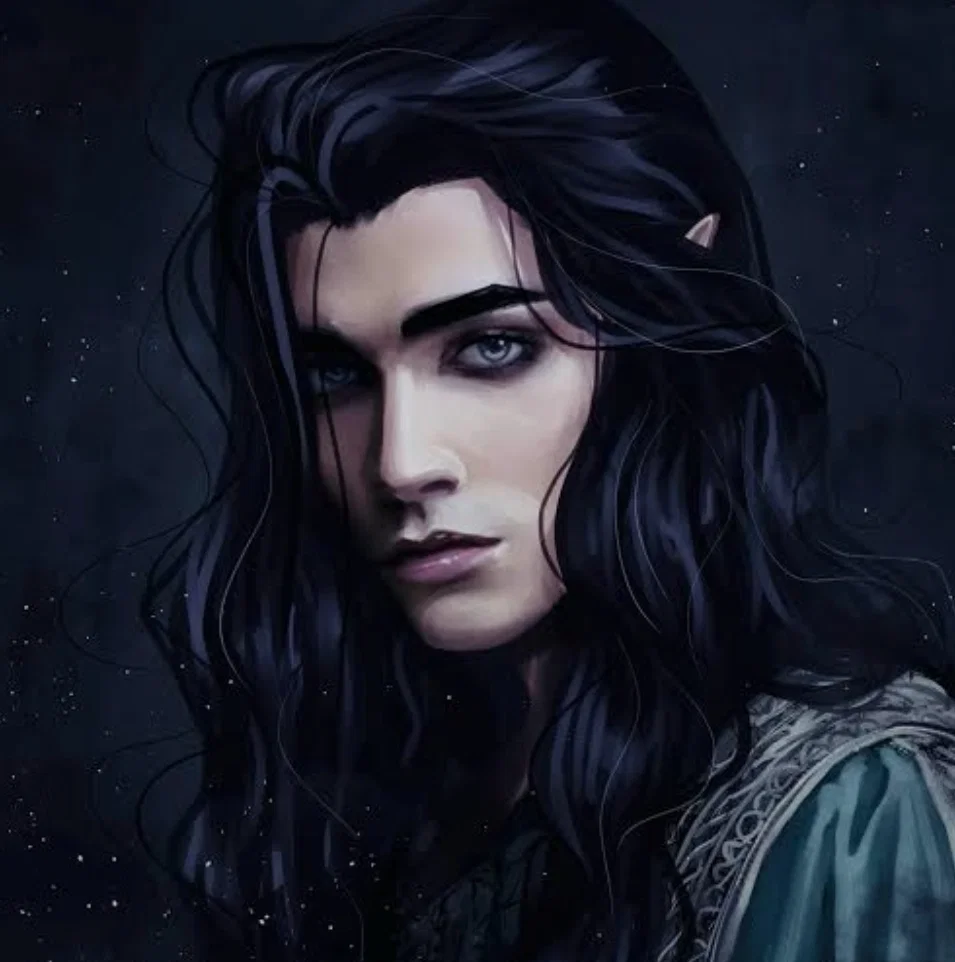
Maglor
Second son of Fëanor, bore the same proud beauty common to the House of Finwë, though his looks were gentler than his brothers’.
Race: Noldor Elf
Height: 8'6"
Location: Eldamar, Maglor's Gap, Amon Ereb, Rivendell, The shores of Arda
Affiliation: Oath of Fëanor, Union of Maedhros
Language: Quenya and Sindarin
Birth: After Y.T. 1190 In Tirion
Family:
House of Fëanor
Parentage: Fëanor & Nerdanel
Siblings: Maedhros, Celegorm, Caranthir, Curufin, twins Amrod, and Amras
Children: Adopted Elrond and Elros
Names & Titles:
Maglor
Father-name: Kanafinwë — “Strong-voiced Finwë”; shortened to Káno
Mother-name: Makalaurë — usually interpreted as “Forging Gold,” a prophetic reference to the golden tone of his music
Sindarized form: Maglor (a pure Sindarin form would have been Magalor)
Epithets/Titles:
The Mighty Singer
The Last Son of Fëanor
The Minstrel of Lament
Appearance of Maglor
Presence: Melancholic yet noble, carrying the weight of sorrow and regret.
Hair: waist-length Dark, raven-black hair, inherited from his mother Nerdanel, worn long and often unbound. A faint copper sheen in sunlight, a trace of Fëanor’s fire.
Eyes: Silver-Grey and piercing, yet often softened by thoughtfulness. In later years, they became shadowed with sorrow.
Features: His face was noble, with high cheekbones and an expressive mouth that lent itself to song. His hands were long and skillful, known both for their skill in harp and sword.
Voice: Renowned above all else—his singing was golden, full of power, able to stir hearts to courage, weeping, or longing. It was said no other of the Noldor could match his mastery of music
Clothing & Bearing: In his youth and during the wars, he wore the rich garb of a prince of the Noldor—dark tunics embroidered with silver, a harp often near at hand. In later legend, wandering the shores, he is pictured as cloaked in weathered grey or blue, a solitary figure with only the sea and his songs for company.
History:
Birth & Early Life in Aman:
Born in Tirion, in Valinor, sometime during the Years of the Trees (long before the First Age). He was the second son of Fëanor and Nerdanel, making him the younger brother of Maedhros and elder brother of Celegorm, Caranthir, Curufin, Amrod, and Amras.
Maglor inherited his mother’s gentler nature rather than his father’s fire. He was renowned early for his gift of song and harp-playing, and his mother-name Makalaurë (“Forging Gold”) was prophetic of his voice — golden in tone, able to move hearts to weeping or joy.
Unlike some of his brothers who pursued hunting, craft, or war, Maglor devoted himself to music and lore. In Aman, he would have been celebrated as one of the greatest musicians of the Noldor, second only to Daeron of Doriath in later comparison.
Exile from Aman:
When Fëanor’s Silmarils were stolen by Morgoth, the House of Fëanor swore the terrible Oath to reclaim them. Maglor, though reluctant in heart, bound himself to it along with his brothers.
In the Flight of the Noldor, Maglor took part in the First Kinslaying at Alqualondë. The Fëanorians, needing ships, fell upon the Teleri at the Haven of the Swans. Maglor fought in that battle, though Tolkien’s texts suggest he was not among the most bloodthirsty. This was his first great stain of guilt.
After Alqualondë, the Noldor were exiled by the Doom of Mandos, and Maglor followed his father eastward into Middle-earth.
The First Age: Wars of Beleriand:
The Siege of Angband:
After Fëanor’s death in the Dagor-nuin-Giliath, Maglor and Maedhros became the leading brothers.
Maglor was given command of Maglor’s Gap, a broad valley on the March of Maedhros in eastern Beleriand, which became strategically vital in the Siege of Angband. His watch over this land gave his name to that region for centuries.
During this period of relative peace, Maglor continued to compose songs, preserving the memory of the Noldor in poetry. His lays and laments are remembered long after.
The Fall of Doriath and the Children of Dior:
After Thingol’s death, the Silmaril passed from Lúthien to Dior Eluchíl, their son, who became King of Doriath.
The sons of Fëanor, still bound by their Oath, sent word demanding Dior surrender the jewel. He refused.
In response, the brothers launched the Second Kinslaying, invading Menegroth.
Dior and his wife Nimloth were slain, and much of Doriath’s people perished.
Eluréd and Elurín, Dior’s young sons (grandsons of Beren and Lúthien), were seized during the chaos. Some of the Fëanorians abandoned them in the forest to die of cold and hunger.
Tolkien never states explicitly which of the brothers ordered this or whether all were complicit, but it is heavily implied that Maedhros repented afterward and searched for the children in vain.
The fate of Eluréd and Elurín is one of the saddest mysteries of the legendarium — they were never found, and it is believed they perished.
This moment haunted the brothers, especially Maedhros, who had allowed the cruelty to happen, and Maglor, who carried a softer conscience.
The Havens of Sirion and Elrond & Elros:
After Doriath’s ruin, the Silmaril eventually came into the keeping of Elwing, daughter of Dior and Nimloth, who escaped the slaughter.
She later wedded Eärendil, and they dwelt at the Havens of Sirion with their sons, Elrond and Elros.
The Fëanorians, still driven by the Oath, descended upon the Havens in the Third Kinslaying.
The Havens were destroyed, many were slain, and Elwing cast herself into the Sea with the Silmaril. (She was saved by Ulmo and later joined Eärendil in his great voyage.)
In the aftermath, the twins Elrond and Elros were taken captive by the brothers.
Maedhros and Maglor with the Twins
By this point, only Maedhros and Maglor remained of Fëanor’s sons.
The twins were in their care, but Tolkien makes a distinction:
Maedhros, hardened by long torment and desperate to fulfill the Oath, was the one who led the assault and took the children by right of war. His role here reflects his iron sense of duty, even when it was grim.
Maglor, however, could not bring himself to harm the boys. He looked upon them with pity and love, remembering perhaps the fate of Eluréd and Elurín, and chose to raise them as his own.
“But Maglor took pity upon Elrond and Elros, and he cherished them, and love grew after between them, as little might be thought; but Maglor’s heart was sick and weary with the burden of the dreadful oath.”
The Tragedy of Contrast:
Eluréd and Elurín: abandoned to die in a cold forest — a symbol of the cruelty of the Oath and the ruthlessness of the brothers at their worst.
Elrond and Elros: rescued and raised with love — a symbol of Maglor’s lingering humanity, and his attempt (perhaps subconscious) to atone for what had been lost in Doriath.
Legacy of This Choice:
Elrond and Elros grew to manhood under Maglor’s care, and though their fate later led them down different paths (Elrond choosing the Firstborn, Elros the Gift of Men), both remembered Maglor with kindness.
Even in later ages, it is said that Elrond spoke no ill of him, which is extraordinary given the ruin Maglor helped cause.
This bond shows Maglor’s unique character: a kinslayer, yet capable of love; an oath-breaker, yet unwilling to abandon compassion completely.
Dagor Bragollach (The Battle of Sudden Flame):
When Morgoth broke the Siege with rivers of fire, Maglor’s Gap was one of the first regions destroyed. Orc-hosts poured through, devastating the land.
Maglor and Maedhros barely escaped, retreating to regroup. This marked the beginning of the downfall of the Fëanorian holdings.
Nirnaeth Arnoediad (Battle of Unnumbered Tears):
Maglor fought in this catastrophic battle alongside his brothers. Though valiant, the Fëanorian host was broken, and most of their allies slain. The Fëanorians’ strength never recovered afterward.
The Kinslayings of the Havens:
Despite ruin, the Oath still drove the brothers. Maglor took part in the later Kinslayings, though always with a sickened heart.
Second Kinslaying – Doriath:
After Thingol’s death, the Silmaril came to Lúthien and then Dior. The Fëanorians demanded it, but Dior refused. The brothers invaded Doriath, and much of the realm was destroyed. Though sources do not single out Maglor, he fought with his brothers in this slaughter. It left him deeply scarred.
Third Kinslaying – Havens of Sirion:
When the Silmaril passed to Elwing, the Fëanorians attacked the refugees at the Havens. This was their darkest deed. Amid the bloodshed, Maglor found the young twins, Elrond and Elros. Unlike his brothers, he could not bring himself to harm them. Instead, he took them into his care and raised them as foster-sons.
This act reveals his lingering compassion. Though bound by the Oath, he still had the heart to love. Elrond and Elros returned that love, and in memory spoke well of him.
The War of Wrath & Aftermath
At the end of the First Age, the Valar came to war against Morgoth. Morgoth was cast into the Void, and the Silmarils were recovered.
Only Maglor and Maedhros survived of Fëanor’s seven sons. Weary, broken, but still chained to their Oath, they demanded the Silmarils from Eönwë, herald of Manwë. Eönwë denied them, declaring them unworthy.
Yet the Oath still burned them: they stole the Silmarils in secret.
Maedhros took one, but it burned his hand with unbearable pain. In despair, he cast himself into a fiery chasm, dying with it.
Maglor took the other, but it too seared him. In anguish, he hurled it into the Sea.
The third and final Silmaril is The Star of Eärendil is the light that shines in the horizon both in the morning and the evening. It consists in a boat raised by the Valar and led by Eärendil, biological father of Elrond and Elros, who carries a shining Silmaril while watching the Doors of Night.
Later Fate:
After casting away the jewel, Maglor became the last surviving son of Fëanor.
He wandered the coasts of Middle-earth, harp in hand, singing laments of sorrow, regret, and longing. His songs were said to haunt the shores for ages, unmatched in beauty and grief.
Legacy:
Remembered as one of the greatest singers of the Eldar.
Though a kinslayer, he was also compassionate, unique among his brothers in showing mercy.
His name became a legend of sorrow — the minstrel of regret, the last echo of Fëanor’s fire drowned in grief.
Created Aug 28, 2025
Updated Aug 28, 2025
Published Aug 28, 2025