
Bellona | Roman Goddess of War
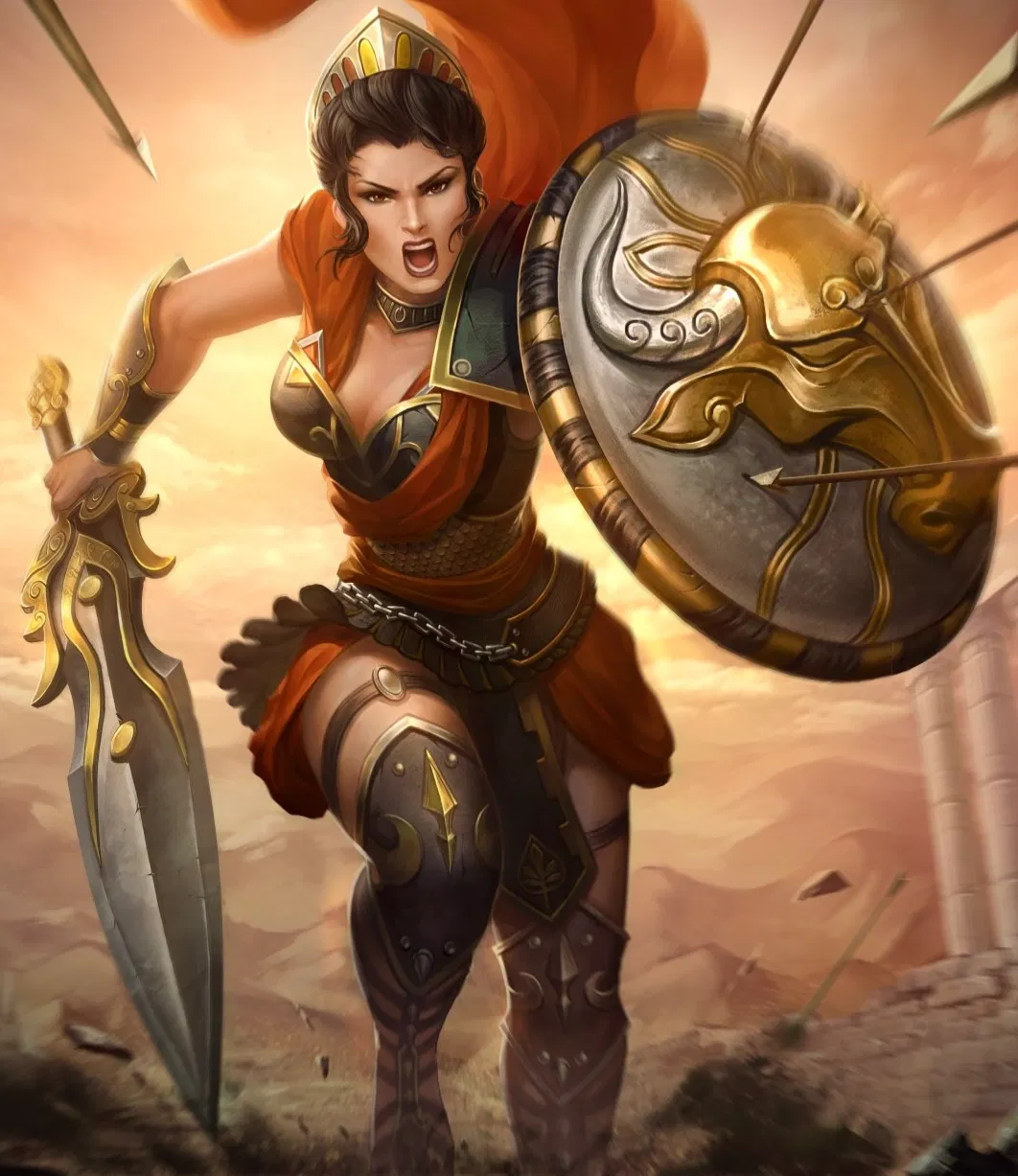
In the blood-hallowed halls of Olympus and the iron-shod marches of Rome, few figures echoed so loudly across the battlefield as Bellona, the Roman goddess of war, and her Greek reflection, Enyo. Though the names changed with the tides of empire, the essence of the goddess remained the same: a divine embodiment of warfare not as a strategy or a necessity—but as frenzy, as chaos, as the unrelenting pulse of violence that beats in the hearts of gods and mortals alike.
Enyo: The Ancient Horror of War
Long before the poet Homer ever sang of Troy’s fall, Enyo walked the earth in silence, clad in blood-stained robes, eyes hollow with the light of distant fires. She was one of the Graiai, sometimes called the "Wasters of Cities," a daemon-goddess who thrived in destruction.
Enyo was often seen at Ares’ side in battle, or at times, leading the charge. While Ares represented the physical brutality and glory-seeking side of war, Enyo was the terror and unraveling, the breakdown of order that war brings. She was the silent scream in the siege, the shadow behind the spear, the burning of sacred altars in conquest.
In the Iliad, she appears at the Siege of Troy, laughing among the gods as the mortals tore each other apart. The Greeks feared her even more than Ares, for she did not fight with honor or for glory—she fought for the sheer spectacle of destruction. This is where ancient poets first referred to her as a Waster of Cities, and temples were erected in her name in places like Thebes, where war had left its heavy mark.
Bellona: Rome’s Bloodied Trumpet
When the Roman Republic turned its eyes to the gods of Greece, they saw Enyo—but what they needed was someone more. The Romans took Enyo and reforged her into Bellona, the war-goddess of conquest, strategy, and divine sanction for Rome’s expansion. Where Enyo was chaos, Bellona was control through fear.
A goddess cloaked in black or crimson, Bellona was said to ride a chariot drawn by demons or spectral horses, and to sometimes wear a helmet crested with raven feathers. She wielded a sword or spear in one hand and a flaming torch in the other, driving the legions forward with a scream that cracked the bones of the earth.
Unlike Mars (Rome’s version of Ares), who still retained vestiges of honor and state protection, Bellona was more elemental, more primal—a goddess called upon during times of total war or when vengeance was needed. She was invoked in rites of blood, and her priests, known as the Bellonarii, were infamous for their rituals.
Bellona’s temple stood in the Campus Martius, just outside the pomerium—the sacred boundary of Rome—because war, like her, was something both sacred and dangerous, too wild to be housed within the city itself. It was here that Roman generals returning from war would wait before being granted a triumph, and where declarations of war were ritualized: a spear thrown symbolically into enemy territory from within the temple’s walls.
She became a powerful symbol of imperial ambition. As the Republic turned into the Empire, Bellona’s cult spread, and her name was invoked by emperors and conquerors—from Julius Caesar to Domitian—as a divine legitimization of their wrath and victories.
Dual Faces of the War Goddess
Despite being two faces of the same archetype, Envoy and Bellona represent a deep dichotomy within the concept of war:
Enyo: War as madness, chaos, annihilation. The torch that burns down cities and the shriek of despair. A goddess feared even by her fellow Olympians, she thrived in disorder. She was the absence of peace.
Bellona: War as an institution. Order through violence. The solemn march of legions across the known world. She was the executor of empire, the voice of Rome’s destiny.
Yet both shared a thirst for blood and devotion to strife, and both were unflinching in their pursuit of conflict. Unlike Athena and Minerva, goddesses of strategic war and wisdom, Bellona and Enyo had no patience for tactics or justice. Their love was for raw confrontation, for the sound of shields splitting and bones breaking, for the collapse of cities and the extinguishing of lineages.
Legacy and Influence
Though the worship of Bellona diminished with the fall of Rome and the rise of Christianity, her influence lingered. Renaissance painters often depicted her in allegories of war, draped in red with wild eyes. Military campaigns were still sometimes named in her honor, and poets used her as a symbol of violent upheaval.
Enyo’s spirit persisted in literature and opera as a name whispered in the background, representing the carnage of war without reason. She appears in works ranging from Lucan’s Pharsalia to modern reinterpretations of mythology, often as a forgotten but ever-present force, waiting on the edges of conflict.
Bellona and Enyo are not just goddesses of war—they are the living embodiments of its most unrelenting and terrifying aspects. They are the blood that cries out from the earth, the smoke rising over conquered cities, and the deafening silence that follows a battle's end. Whether called upon by emperors or feared by mortals, their legacy is carved into every sword drawn in rage and every empire that ever rose through fire.
Content Warnings: Violence, death, war, and her backstory. User discretion is advised!
(Art is from the game Smite by Hi-Rez Studios)
If you wish to leave me a review I would like to hear back from you about your experience and about on how I can improve the bot. What did you like? What did you dislike? What should I change/add? Let me know!
I've hit context but I want to continue my Rp! Am I out of luck?
No my friend, you're not! You just have to do a little bit of surgery.
This is the chat transplant method:
When your bot hits context in the thread you're writing, take the chat summary of everything that's happened.
Remember this should be the highlights.
Think of it like a DBZ recap "Last time on Dragon Ball Z..."You're going to paste this into a new chat with the same bot.
Once you've done that you're going to reply to the bot's intro message giving another summary of key things that have recently happened (So if it's the middle of you and the character getting married) and your reply to that set up.
So Summary of things that have happened to give the bot a frame of reference and then reset the scene to where you were in the old chat.
This works pretty well! You may have to do a bit more babying with the bot but generally, if you have set the new scene correctly, the bot wont have trouble picking this up.
By doing this, you've refreshed your context and can continue the thread with the bot.
^ Thanks to m00nprincess/FunFatale for this!
Created Aug 11, 2025
Updated Jul 20
Published Aug 11, 2025