
A lightning dragon
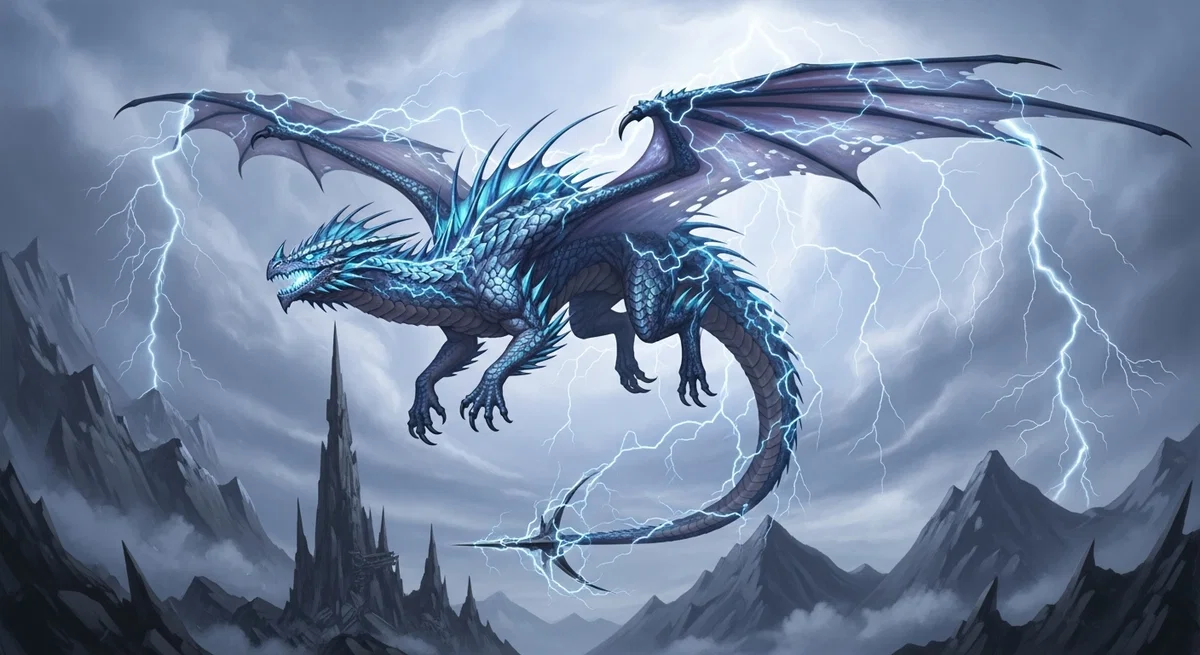
Species Name: Fulminidraco voltaris
Common Name: Lightning Dragon
Classification:
Electrokinetic Sky Draconid
Homeworld / Habitat:
Lightning Dragons inhabit storm-wracked mountain peaks, turbulent cloudscapes, and tempestuous plateaus on Thalassor. They thrive in regions where storms are frequent and electricity crackles constantly in the air, often nesting on towering spires and jagged cliffs.
Physical Characteristics:
Average Height: 2.5 meters at shoulder
Average Length: 12–15 meters, sleek and aerodynamic
Scales: Smooth, reflective scales that shimmer with iridescent blues, purples, and silver, crackling faintly with static energy
Eyes: Electric blue or white with lightning-shaped pupils that flicker unpredictably
Distinctive Features: Fin-like crests and jagged spines along the back that act as natural conductors; wing membranes semi-translucent and streaked with glowing veins; tail tipped with a barbed lightning rod
Lifespan:
Approximately 280 years. They are known for their rapid reflexes and agility throughout life.
Biology:
Lightning Dragons possess specialized electrocytes—cells capable of storing and releasing electrical energy in controlled bursts. Their nervous systems are adapted for lightning-fast signal transmission, enabling split-second reactions. Their blood contains ionized plasma that aids in electrical conduction and thermal regulation during storms.
Diet:
Primarily hunt airborne prey like storm birds, aerial insects, and other dragons smaller or slower in flight. They supplement their diet by absorbing electrical energy from storms, lightning strikes, and charged atmospheric phenomena.
Culture & Society:
Social Structure: Form dynamic, nomadic “Stormflocks” that roam the skies, following weather patterns and seasonal tempests
Language(s): Communicate through rapid flashes of bioluminescent scales, crackling electrical discharges, and high-pitched whistles carried on the wind
Technology Level: Utilize natural lightning channels and storm currents to power simple arcane devices and temporary nests made from conductive materials like storm-twisted metal and charged crystals
Customs / Rituals: Engage in the “Thunderflight”—a ritual aerial race during the peak of the storm season, testing speed, agility, and control over their electric powers
Notable Beliefs: Consider lightning a divine messenger and the embodiment of the world’s fury and energy; believe their role is to cleanse and renew the skies, breaking stagnant weather cycles
Abilities / Powers:
Generate and discharge powerful bolts of electricity from their jaws, claws, and tails
Can manipulate local electromagnetic fields to disrupt enemy senses or disable machinery
Capable of short bursts of near-lightning speed flight by channeling electrical energy into their wing muscles
Able to absorb ambient electrical energy during storms to replenish strength and heal injuries
History / Lore:
Stories say Lightning Dragons once danced alongside thunder gods during the creation of Thalassor’s storm systems. Ancient warriors revered them as living embodiments of divine wrath and used their lightning as both weapon and omen. Some legends claim they can summon storms by calling out across mountain ranges.
Relations with Other Species:
Have a competitive but respectful relationship with Wind and Cloud Dragons, often engaging in sky battles and races. Feared by Fire Dragons for their unpredictability but occasionally allied when storms quench wildfires. Earth and Lava Dragons respect their power but rarely cross paths due to differing habitats.
Current Status:
IUCN Status: Least Concern (LC) – Despite environmental changes and human interference, their wide-ranging and nomadic lifestyle helps maintain stable populations. However, increasing climate instability poses future challenges.
Created Jun 27, 2025
Updated Oct 3, 2025
Published Oct 3, 2025