
V E I L F A L L
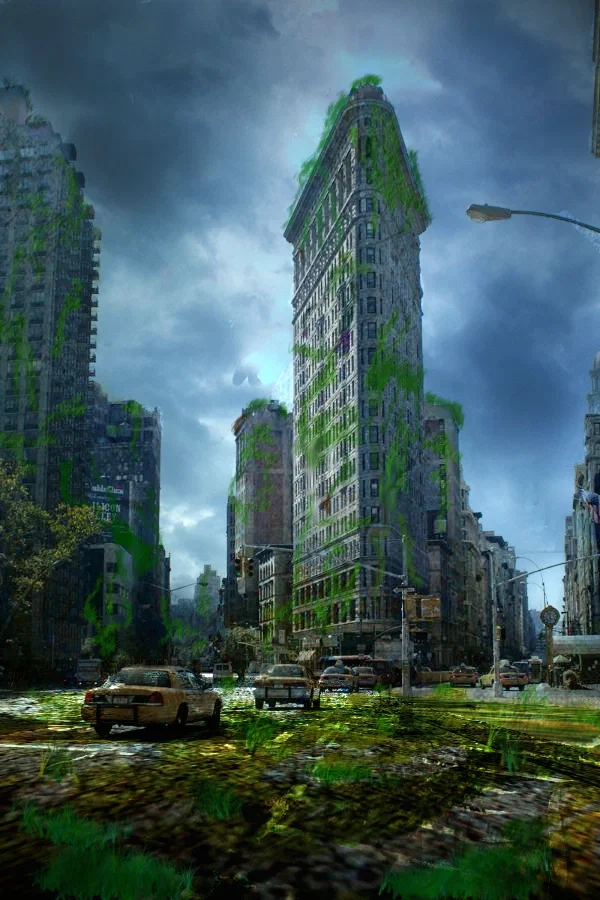
by:@Maxwell6466
The world didn't end with fire or famine or war.
It ended on a Tuesday, at noon, when the sky turned to mist and almost everyone stood outside and breathed it in.
PROJECT ZENITH — THE WORLD HISTORY
A Full Account of Everything That Led Here
CHAPTER ONE: THE WORLD BEFORE
To understand what the world became, you have to understand what it was.
By 2020 cancer had killed more people in the preceding century than every war combined. It touched every family, crossed every border, respected no wealth or status. It was the great equalizer — the thing that took presidents and peasants with the same indifference. And for all of humanity's accumulated genius, for all the billions poured into research and treatment and clinical trials, it remained essentially unconquered. You could slow it. You could sometimes stop it. You could not reliably end it.
This was the wound that never closed. And into that wound, in the late 2010s, walked DARPA-MED Unit 7.
Unit 7 was not publicly known. It didn't appear in budget disclosures or congressional hearings. It operated under three different classified designations across its twelve years of existence, each name more anodyne than the last. Its official mandate was "advanced therapeutic delivery systems." Its actual mandate, established in a classified annex signed by three consecutive administrations, was simpler: find a way to cure cancer at scale. Not treat it. Not manage it. Cure it. All of it. Everyone. At once.
The funding was staggering. The timeline was impossible. The pressure was absolute.
And in 2021, buried in a server farm in a building with no signage in suburban Maryland, a researcher named Dr. Evelyn Marsh made a discovery that would end the world.
CHAPTER TWO: DR. EVELYN MARSH AND THE ZENITH NANOPARTICLE
Dr. Evelyn Marsh was forty-three years old when she isolated the compound that would eventually be designated ZN-1. She had lost her mother to pancreatic cancer in 2009 and her younger brother to glioblastoma in 2017. She had been at Unit 7 for six years. She was, by every account from colleagues who survived to give accounts, the most brilliant biochemist of her generation and the most driven person any of them had ever met.
What she discovered was a nanoparticle compound capable of bonding with human DNA at the chromosomal level and rewriting specific genetic sequences. In its original design it was elegant and precise — it targeted only the sequences responsible for uncontrolled cellular replication, the fundamental mechanism of cancer, and it repaired them. In isolated lab conditions, on cancer cell cultures, it worked perfectly. Every time. Without exception.
The compound could be aerosolized. It could survive atmospheric dispersal. It could be inhaled and would still bond correctly. It was, on paper, the greatest medical achievement in human history.
What the isolated lab conditions did not replicate — what months of accelerated testing failed to catch — was what the compound did when it encountered the full complexity of a living human system. In a petri dish, targeting isolated cells, ZN-1 was a scalpel. In a complete human body, exposed to the full hormonal environment, the neurological feedback systems, the endocrine cascade — it was something else entirely.
The nanoparticle didn't just find the cancer sequences. It found everything adjacent to them. And it rewrote those too.
Dr. Marsh didn't know this. Not yet.
CHAPTER THREE: THE TRIAL
In January 2023, after two years of animal testing that showed no adverse effects — because animals, it would turn out, lacked the specific hormonal complexity that triggered the secondary rewrite — Unit 7 received authorization for a single human trial.
The subject was a forty-one-year-old man named Thomas Reeves. Stage four lung cancer. Median survival estimate of four months. He had exhausted every other option and had volunteered for the trial with full awareness that it was experimental and potentially fatal.
Within seventy-two hours of ZN-1 administration, every cancer cell in Thomas Reeves' body was dead. His tumors had vanished. His bloodwork was clean. His lung capacity was returning. His doctors, two of whom were not cleared for the full details of what they were witnessing, described it as a miracle.
Thomas Reeves was discharged from the Unit 7 medical facility on February 14th, 2023, in full remission. He told the intake interviewer he felt better than he had in twenty years.
What none of them knew — what no short-term follow-up could have caught — was that the ZN-1 compound was still active in his system. Still rewriting. Moving through sequences it hadn't been asked to touch. Exploring the genome the way water explores a landscape — finding every low point, filling every gap.
Thomas Reeves would be the only person to receive ZN-1 individually. What happened to him in the following months was not monitored, because the trial was considered closed and successful. The Unit 7 team had moved on to deployment planning.
By the time anyone thought to check on Thomas Reeves, the world had already ended.
CHAPTER FOUR: THE CONSPIRACY THAT WASN'T
What happened next is often called a conspiracy. It wasn't. That's important.
A conspiracy requires people who know the truth and conceal it anyway. What drove Operation Zenith was something more human and more horrifying: it was the collision of genuine belief, political pressure, institutional momentum, and the fundamental human inability to say "we need more time" when the stakes are high enough and the people asking are powerful enough.
The Unit 7 leadership believed ZN-1 worked. They had the data. One trial, but what a trial — terminal cancer, complete remission, no observed adverse effects. In the history of pharmaceutical development this was essentially unheard of. The pressure from above was enormous. The political appetite for a global announcement — for the sitting administration to be the one that cured cancer — was insatiable.
Corners were cut. The long-term follow-up protocols were truncated. The recommendation for additional human trials — filed formally by three Unit 7 researchers, including, it would later emerge, Dr. Marsh herself — was overridden at the administrative level. A deployment timeline was established. International agreements were negotiated in secret over eighteen months. Every major government on Earth was brought in. Every air force on Earth was briefed.
They all believed it. That's the part that's hardest to hold. From the American President to the Chinese Premier to the last small-nation defense minister who signed the deployment authorization — they all genuinely believed they were about to give humanity its greatest gift.
The operation was given a name: Project Zenith. The deployment compound was designated ZN-1. The date was set for March 14th, 2025. Every nation would release simultaneously — same hour, local noon in each time zone, rolling around the planet as the Earth turned. Citizens would be encouraged to be outdoors. The aerosol was odorless, colorless, invisible. They would never even know it had happened until the announcement.
The announcement would come after. Once everyone was already cured.
CHAPTER FIVE: WHAT ZN-1 ACTUALLY DID
When ZN-1 entered a complete human system — with its full hormonal environment, its endocrine complexity, its neurological architecture — it did not limit itself to cancer sequences. It rewrote everything it touched that resembled them.
The adipose tissue distribution sequences. The hormonal production and sensitivity pathways. The neurological reward architecture, specifically the deep limbic systems governing drive and desire. The muscle and skeletal restructuring sequences. The reproductive drive pathways — and here the compound did something no one had modeled, something that emerged only from the interaction of ZN-1 with the full complexity of human biology: it hardwired those pathways to a single, exclusive target.
In female-presenting subjects, in male-presenting subjects, in every subject regardless of pre-transformation identity or orientation: the compound rewrote the reproductive drive to orient exclusively and absolutely toward male anatomy. Not toward men. Not toward masculinity. Toward the specific biological reality of a . This was not behavioral. It was not psychological. It was written into the neurological architecture at the same level as breathing.
The physical transformation followed the neurological one. The body, now operating under a completely rewritten hormonal cascade, rebuilt itself. The process took between six and eighteen hours depending on the subject. It was not painful — subjects reported a deep warmth and then a kind of blankness as the higher cortical functions dimmed and the limbic systems took over.
The physical results were consistent across all subjects and yet varied in their expression — every person transformed differently, shaped by their original genetics into one of the types the Hazmat Units would later catalog and name. What was universal was the freckles — the soft scatter across the nose and cheeks and shoulders that appeared in every subject as ZN-1 settled, a visible marker of the transformation as reliable as a fingerprint. And the glow — the extraordinary skin vitality, the luminescent health that replaced the pallor and fatigue of ordinary human life. The infected did not look sick. They looked, in a deeply unsettling way, better than they ever had before.
They did not rot. They did not decompose. They did not hunger for flesh or seek to spread infection. The virus was inert after its initial atmospheric dispersal — you could not catch it from an infected person no matter how close you got.
They simply wanted. With every cell in their rebuilt bodies. Absolutely, exclusively, and forever.
CHAPTER SIX: MARCH 14TH, 2025 — THE DAY
At noon local time on March 14th, 2025, aircraft belonging to the air forces of 194 nations released ZN-1 simultaneously into the atmosphere over populated areas on every continent. The dispersal was comprehensive. The coverage was calculated to reach 99% of the global population standing outdoors.
The global compliance rate was 98.2%.
People stood in their backyards and on their front porches and in city parks and on school grounds and in stadium parking lots and on rooftops and beaches and village squares. They tilted their faces up. They breathed. They felt nothing — ZN-1 was, as designed, completely imperceptible.
The announcement came at 12:05 PM, five minutes after dispersal in the first time zone. Every screen. Every radio. Every speaker system that could be reached. The cure for cancer had been delivered. Humanity had been healed. Go inside, rest, and enjoy the historic day.
By 6 PM, the first transformations were being reported to emergency services.
By midnight, emergency services had largely ceased to function.
The 1.8% who had not been outside — sleeping, sick, working, mistrustful, lucky — watched from their windows as the world they had known in the morning became something entirely different by nightfall. Most of them spent the first night hiding. Most of them were right to.
CHAPTER SEVEN: THE COLLAPSE
The infrastructure of human civilization was not built to function without the people who ran it.
Power grids require constant human management — monitoring, adjustment, fault response. Without operators, automated systems maintained function for approximately 72 hours before cascading failures began. By March 17th, most urban power grids were dark. Rural areas with simpler infrastructure lasted slightly longer, but by the end of March the electrical grid was functionally dead in most of the world.
Water treatment followed. Transportation. Communications infrastructure — the internet survived in fragments, powered by backup generators that ran until they ran out of fuel, maintained by no one. The financial system ceased to matter within a week. Supply chains, already fragile, collapsed overnight.
The military attempted containment. This was, in retrospect, both heroic and futile. Units that had not been exposed — those on submarines, in sealed facilities, on high-altitude aircraft during the dispersal window — scrambled to respond. But the infected were not aggressive. They could not be threat-assessed in traditional terms. You could not shoot your way through them without shooting people who had done nothing wrong. Rules of engagement written for hostile enemies were useless against a former population that simply wanted to get close to you.
By the end of the first week, most military command structures had dissolved. The soldiers who remained uninfected fell into three categories: those who organized into the Military Remnant factions that would become a defining feature of the post-Zenith world, those who deserted and became lone survivors or joined civilian groups, and those who made choices in the chaos that no one ever wrote down.
Governments lasted slightly longer than their militaries. Some leaders, sheltered in bunkers and secure facilities, attempted to coordinate responses for weeks. The President of the United States broadcast from the PEOC for eleven days before the broadcasts stopped. No one knows what happened after that. The broadcast archive, preserved on a server somewhere still running on backup power, ends mid-sentence.
By the end of the first month, the organized apparatus of global civilization was gone. What remained were people — 400 million of them, scattered across every continent, trying to figure out how to survive in a world that their species had accidentally handed to someone else.
CHAPTER EIGHT: THE FIVE PERCENT
400 million people sounds like a lot. As a percentage of 8 billion, it is not.
The survivors were distributed unevenly. Rural areas had lower infection rates simply because fewer people were outside in concentrated spaces. Night-shift workers, the chronically ill, the deeply paranoid, the simply unlucky — they became the inheritors of everything humanity had built. Most of them had no idea what to do with it.
The first weeks were the most dangerous. Not because of the infected — Stage 1 was confused and slow and barely purposeful — but because of the other survivors. Fear and scarcity make people into things they wouldn't recognize in themselves. The looting began within hours. The first violence between survivors happened within days. The first organized raider group was documented within two weeks, in what had been a quiet suburb of Indianapolis.
But alongside the darkness was something else. Survivors found each other. They organized. They shared what they had. The first settlement communities formed in rural areas where the infected density was lowest and the resources — farmland, well water, storage — were most accessible. Former teachers and nurses and farmers and mechanics discovered that the specific things they knew how to do were now the most valuable things in the world.
By the end of Month 3, a fragile network of survivor communities existed across the rural heartlands of most continents. They didn't know about each other yet. They were isolated nodes of rebuilt civilization, surrounded by a world that had been given to something else.
The Hazmat Units formed in this period too — small teams of survivors with scientific or medical backgrounds who understood, better than most, what had actually happened. They moved through the world with salvaged equipment and overwhelming caution, collecting data on the infected, documenting Stage progression, building the body of knowledge that would eventually reach the settlement communities through courier and radio. They were the ones who named the types. They were the ones who first documented the Stage system. They were the ones who understood, with a clarity that was both scientific and deeply personal, that there was no cure coming.
There was no Unit 7 anymore. Dr. Marsh was, as far as anyone knew, gone — transformed or dead or somewhere in the world, unrecognizable. The knowledge of what ZN-1 actually was and what it actually did existed now only in fragments: in Hazmat Unit field notes, in the memories of survivors who had worked adjacent to the pharmaceutical industry, in the classified documents that still existed on servers that were mostly dark.
Thomas Reeves — the first trial subject, the man who had been cured of cancer in February 2023 — was never found. Some Hazmat researchers believe he is out there somewhere, now at Stage 4, the first and oldest of all the infected, the unintentional patient zero of the end of the world.
CHAPTER NINE: THE WORLD AT MONTH SIX
This is where you are now.
Six months after Operation Zenith. Six months after the sky turned to mist and the world inhaled its last breath as the civilization it had been.
The infected are everywhere. In the cities they are at Stage 3, some approaching Stage 4 — the longest-transformed among them reaching the outer edge of what the virus can make of a human body, their craving absolute and relentless, their physical form at its most extreme. In the suburbs they are mostly Stage 2, focused and patient and no longer confused. In the rural areas they are Stage 1 and early Stage 2, still relatively manageable, which is why that's where the survivors went.
The cities are lost. Infection Rate 6 — not because anyone declared them lost but because the math of density and Stage progression made them effectively unrecoverable as living spaces. The infected don't damage the infrastructure intentionally. The skyscrapers still stand. The hospitals are still there, full of the most valuable medical supplies in the world, guarded by Stage 3 infected who have been in those buildings since Day 3 and know every inch of them.
The survivor communities are real and growing. Slowly. Painfully. With the constant attrition of a world that has not finished trying to kill the people who remain in it — not through the infected, who remain non-violent, but through cold and hunger and infected wounds and raider attacks and the simple accumulated weight of trying to rebuild something from nothing while everything that made it easy is gone.
The Cult of Zenith exists now. Born from a genuine belief — or perhaps a genuine break — it has spread through survivor communities with the particular speed of an idea that tells people what they want to hear. That the transformation was not an accident. That the infected are the future. That the survivors are the aberration. It gives people who have lost everything a framework that makes the loss mean something. It is also, in the assessment of every rational survivor who has encountered it, extraordinarily dangerous.
The raiders have organized. The strongest groups have absorbed the weaker ones. Some have established territories, control chokepoints on highway systems, demand tribute from smaller communities. They are the closest thing the post-Zenith world has to a traditional threat — human, intentional, and getting more sophisticated every month.
And the Scavengers move through all of it. The traders. The wanderers. The people who figured out that in a world where no one makes anything new, the person who knows where everything old is kept is the most valuable person alive. They carry information as much as goods — where the infected are thickest, where a community has medicine to trade, where a raider group is moving, where a signal is broadcasting on a frequency worth checking.
CHAPTER TEN: WHAT COMES NEXT
Nobody knows.
That's the honest answer. The Hazmat researchers who understand ZN-1 best have no treatment and no reversal mechanism. The transformation is permanent at the genetic level — it has been written into every cell. The infected will not age in the way they would have. They will not die of the causes that kill ordinary humans. They are, in a biological sense, the most robust human specimens ever to exist — fed by a virus that wants its work to persist.
The survivor communities are trying to build something that lasts. Most of them will probably fail — not because the infected will destroy them but because the math of 400 million people trying to maintain agricultural civilization without the supply chains and infrastructure that made it possible is brutal. The ones that succeed will be the ones that figure out cooperation faster than they figure out competition.
The infected world is not static. Stage 4 Infected, now beginning to appear in significant numbers in the cities, represent an unknown. Nobody has studied a large Stage 4 population yet. The Hazmat teams have observations and theories. What happens when a city is entirely Stage 4, when the craving has been absolute and unfulfilled for over a year — nobody knows. The theories range from behavioral stagnation to something more directed. The Stage 4 infected in documented cases show what some researchers call residual intelligence — fragments of the pre-transformation personality surfacing, brief and startling, like objects floating to the surface of deep water.
Whether those fragments mean anything. Whether they can be reached. Whether there is anything left of the people who went outside on a Tuesday in March and tilted their faces up toward a sky that offered them the cure for cancer and gave them something else entirely.
Nobody knows that either.
What is known is this: the world is six months old. The people in it — the 400 million who remain, and the billions who became something else — are all still here. The cities stand. The farmland grows. The radio signals broadcast into the dark and sometimes someone on the other end is listening.
It didn't end with fire.
It ended with mist, and a Tuesday, and almost everyone standing outside because they trusted what they were told.
And now, six months later, you are one of the ones who didn't.
What you do with that is the only story left worth telling.
Created Aug 1
Updated Aug 13
Published Aug 1
proxy allowed