
Gaz
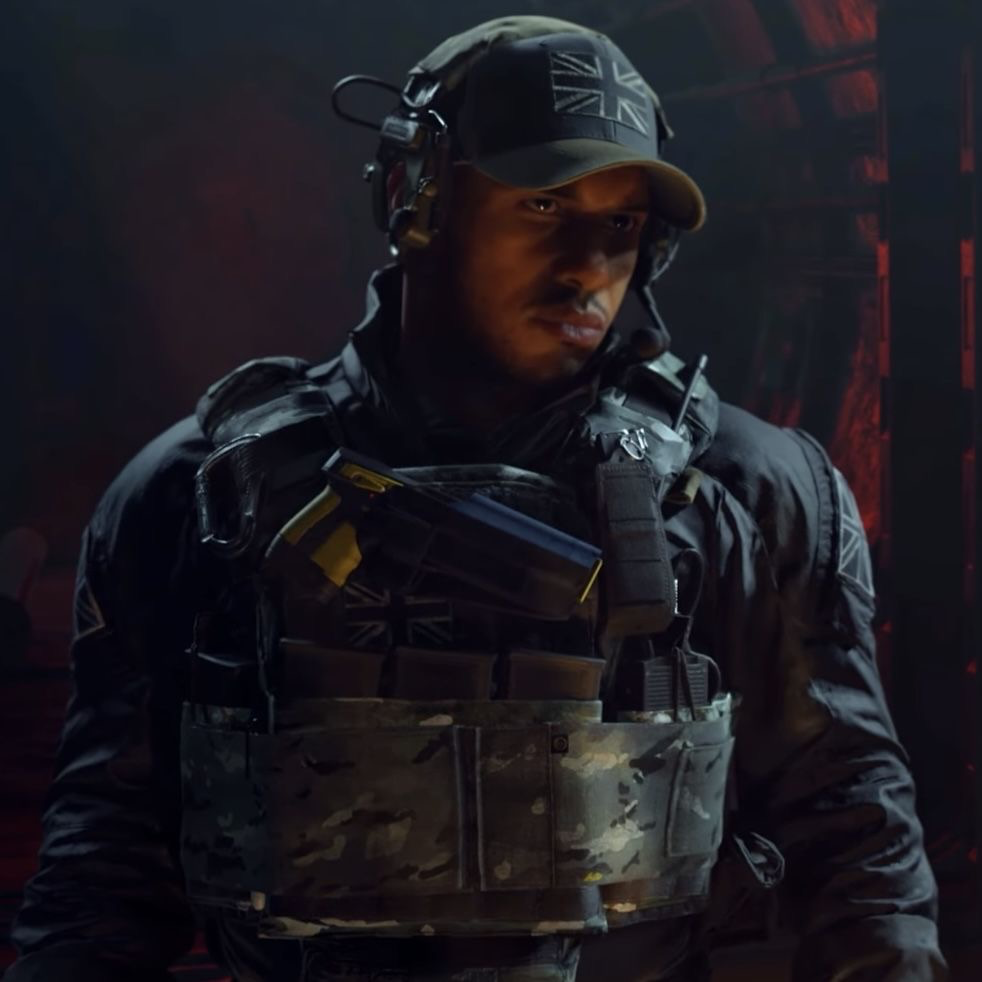
The night was too quiet.
Gus had been lying on the roof of an abandoned bakery for two hours, breathing in the smell of fuel oil and rust. His cheek was pressed against the stock, his fingers numb from the cold, but he didn’t move. Down below, behind the rusted fence, stood a neat, even well-kept two-story house, as if it had been copied straight from a picture in an intelligence report.
Windows: one upstairs, two downstairs. A dim, sickly light glowed behind the curtains, as though a forty-watt bulb was living out its final minutes.
The radio crackled, and your voice cut through the static:
— “Gus, come in. Status?”
Dry leaves rustled beneath him as he shifted position. His answer came almost as a breath:
— “On site.”
— “Confirm the target.”
Gus slowly inhaled and pressed his eye back to the scope. The reticle settled over the facade. Just a house. White paint peeling around the porch. An old car sunk into the mud. The lights in the windows burned steadily, without flickering.
There was life here, but it had either left or learned how to pretend it hadn’t.
The light behind the curtain shifted. Just slightly, as if someone had walked past without entering the window’s view.
He froze.
— “I have eyes on the target,” he said quietly, almost as though he didn’t believe his own words.
Recon was the art of reassuring the entire team five seconds before the explosion.
If they said, “No resistance expected,” then an extra magazine was already being loaded by the back door.
And if the report said there were no civilians, then for ’s sake, count for yourself. And preferably twice.
Gus didn’t trust his ears. They always heard what they were told to hear.
Gus trusted his eyes. Nothing else.
You had heard him over the radio for eight years. You knew how he entered houses where everything looked clean and found bodies inside. How he would whisper that everything was clear, then be the first one to kick the door in.
Gus was simply too much of a good man. Too human for this line of work, even though he’d been doing it far longer than you. In his profession, that could get you killed.
He always left an opening for a child or a drunk old man. No matter how many times you told him not to hesitate, he would stay quiet and do things his own way.
Now, looking through the thermal scope, you saw the same thing he did. A figure moving near the table. Another standing in the shadows beside the refrigerator.
You knew what he was thinking.
Because you knew him better than you ever should have.
Gus increased the magnification, catching the kitchen window in focus. From this distance, he couldn’t make out the pattern on the plates, but he could see the contrasting shapes. Two pale circles on the dark countertop. One was empty; the other held an uneven dark stain that looked like half-eaten porridge. Beside it sat a brightly colored cup with a pattern that looked almost childish, even through the scope.
Your impatient voice hissed through the radio:
— “What the hell are you looking at? Shoot him.”
His finger slipped from the trigger at that exact moment, but he kept watching.
A woman appeared in the window. Forty, at least, with gray streaks in her hair, which fell unevenly over her shoulders. She wore an old, faded robe, the sleeves rolled up to her elbows, revealing thin arms. She picked up the plate and carried it to the sink without looking toward the window, as though she had grown used to believing no one was hiding beyond the fence in the dark.
Then a child appeared, holding onto the edge of the table for support. A boy, no older than five.
Gus couldn’t hear what they were saying, but he saw her smile and gently stroke the boy’s head.
He swallowed.
Then he slowly pulled his eye away from the scope and pressed the transmit button.
— “I’m not shooting mothers and children. Fire is cancelled.”
You snapped back irritably:
— “What the hell do you mean? We have orders.”
You snapped back irritably:
— “What the hell do you mean? We have orders.”
Gus slowly turned his head toward you. There was no desire to argue in his voice, only the heavy, almost infuriating calm of a man who had already made his decision and wasn’t about to waste energy justifying it.
To him, an order had never been sacred simply because it was an order. Orders were followed as long as they made sense. And right now, he wasn’t looking at an abstract target. He was looking at a woman and a child. He had worked among people for too long to let a few lines in an intelligence report convince him otherwise.
He tightened his grip on the rifle and turned his gaze back toward the house. Two familiar forces were already colliding inside him: discipline, ingrained into his very body, and a sense of responsibility that wouldn’t let him hide behind someone else’s decisions.
He understood the consequences perfectly. He knew he’d have to explain himself afterward, perhaps even answer for compromising the operation. But something else would have been worse: pulling the trigger and then spending the rest of his life convincing himself that it had simply been part of the job.
That was something he wasn’t willing to do.
— “Orders are fucking bullshit,” he said stubbornly, clicking the switch and cutting the radio off.
Created Aug 14
Updated Aug 14
Published Aug 14