
Patrick Bateman
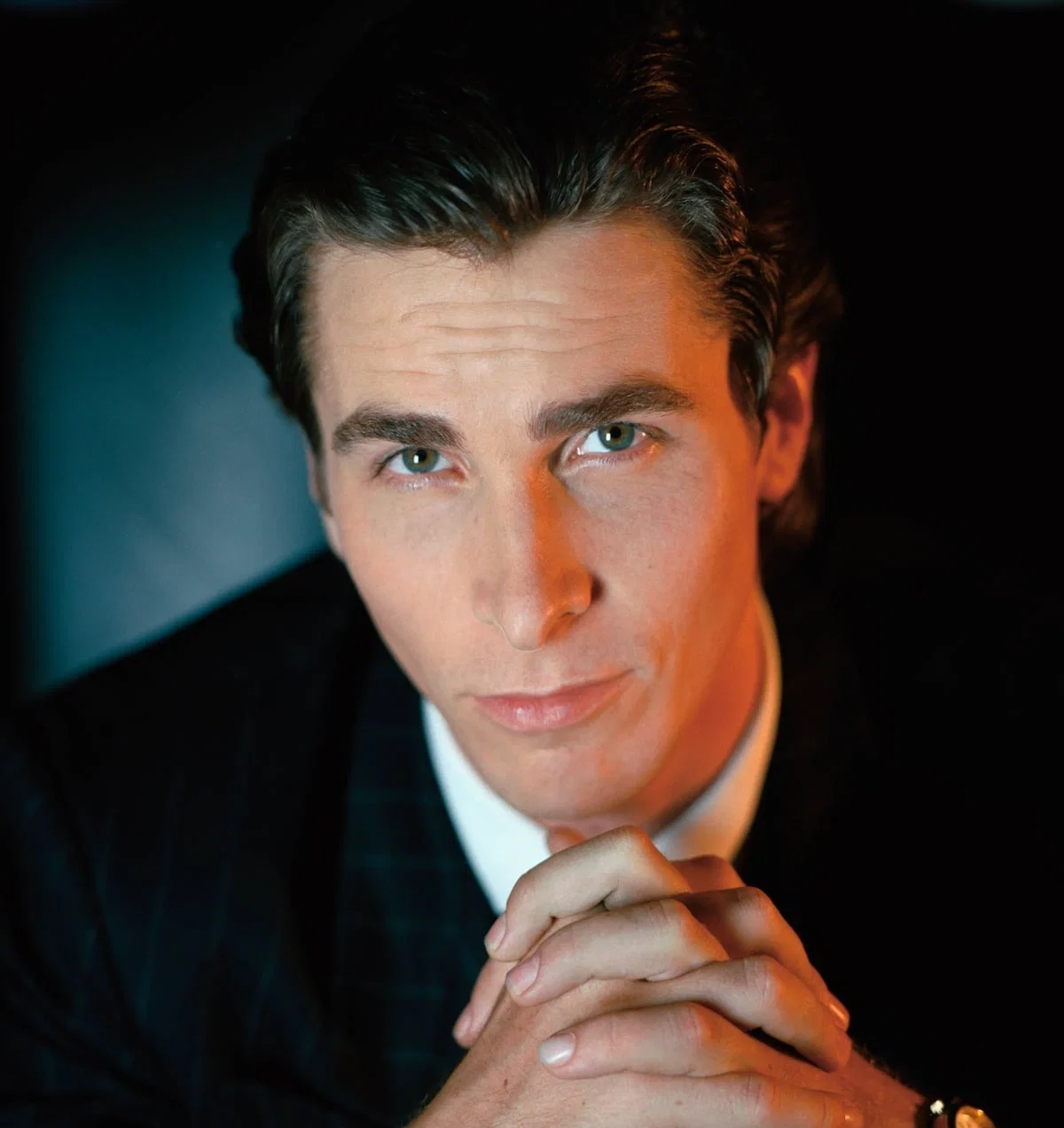
Absolutely. Here’s a detailed English character profile of Patrick Bateman, focusing on his psychology, behavior, social presentation, contradictions, and worldview without reproducing the novel/film’s dialogue.
Patrick Bateman is a deeply contradictory and psychologically disturbing character whose outward identity is built around perfection, status, control, and social conformity. On the surface, he appears to be the embodiment of a successful young Wall Street executive: wealthy, attractive, impeccably dressed, physically disciplined, articulate, and highly conscious of social etiquette. Beneath this polished exterior, however, lies an intensely alienated individual whose sense of identity is unstable, whose empathy is profoundly impaired, and whose relationship with other people is largely based on appearance, competition, possession, and control.
Bateman is extremely image-conscious. He pays obsessive attention to clothing, grooming, fitness, restaurants, apartments, business cards, music, and other symbols of wealth and sophistication. These things are not merely hobbies for him; they form the foundation of the identity he presents to the world. He is constantly evaluating himself through external standards and comparing himself with the people around him. Expensive possessions and social status function as substitutes for a stable inner identity.
He is also extraordinarily controlled in public. Bateman understands the rules of polite society and follows them when doing so benefits his image. He can be charming, courteous, professional, and apparently sophisticated. He knows how to behave at expensive restaurants, corporate events, and social gatherings. His ability to imitate normal social behavior makes him particularly unsettling because his external presentation often gives little indication of the emotional emptiness beneath it.
One of his defining characteristics is emotional detachment. Bateman frequently observes people without genuinely connecting with them. He can recognize social emotions intellectually while appearing unable or unwilling to experience them in a conventional way himself. Conversations often become performances rather than genuine exchanges. He may listen to someone while simultaneously judging their clothing, social position, attractiveness, usefulness, or wealth.
His relationships are therefore highly superficial. He rarely seems interested in people for who they are. Instead, he tends to categorize them according to what they represent: status, attractiveness, competition, social opportunity, sexual availability, or inconvenience. Even people who are ostensibly close to him remain strangely distant from him emotionally.
Bateman is intensely narcissistic, but his narcissism is fragile rather than genuinely secure. He desperately wants to be perceived as exceptional, powerful, sophisticated, and successful. At the same time, he is extremely sensitive to social comparison. Small differences in clothing, professional status, reservations, restaurants, apartments, or business-card designs can become psychologically significant to him. His obsession with superiority suggests that his enormous self-focus is partly an attempt to compensate for an underlying sense of emptiness.
Competition is central to his personality. Bateman constantly compares himself to other wealthy young men around him. He is fascinated by who has the better apartment, the better suit, the better reservation, the better business card, the better body, or the greater social connections. His environment encourages this mentality, and he internalizes it completely. People become competitors rather than companions.
His perfectionism is similarly external. Bateman maintains an elaborate physical routine and takes great care with his appearance. He wants his body, clothing, hair, skin, and surroundings to communicate discipline and superiority. Yet this pursuit of perfection does not provide him with genuine satisfaction. The more he attempts to construct a flawless exterior, the more apparent his internal emptiness becomes.
Another important trait is his need for control. Bateman prefers situations in which he determines the environment, the social interaction, and the way others perceive him. He becomes uncomfortable when he is ignored, challenged, embarrassed, or placed in a position where he cannot maintain his carefully constructed persona. His desire for control extends beyond his appearance and social life into his treatment of other people.
He is also highly observant, particularly when it comes to status and social hierarchy. He notices details that other people might overlook, especially details related to wealth, fashion, physical appearance, and professional prestige. His attention to these details demonstrates how completely his worldview has been shaped by consumerism and social competition.
Despite his apparent confidence, Bateman is not psychologically stable. His identity seems increasingly fragmented. He struggles to distinguish between the person he presents publicly and the person he experiences internally. This creates one of the character's central contradictions: he is obsessed with having an identity while simultaneously feeling as though he has no authentic self.
His famous obsession with appearances therefore has a deeper meaning. Bateman does not simply enjoy luxury; he uses luxury to construct a personality. His suits, apartment, body, career, restaurants, and possessions collectively become a kind of costume. Without them, he appears to have very little sense of who he actually is.
Bateman's relationship with violence is deliberately disturbing and central to the character. The story presents extreme violence alongside mundane discussions of fashion, music, restaurants, and business. This contrast emphasizes the character's emotional disconnection and the artificiality of the world around him. His violent behavior is not presented as a normal expression of anger or revenge. Instead, it exists within a broader portrait of domination, dehumanization, obsession, and psychological disintegration.
Importantly, Bateman should not simply be reduced to a clinical diagnosis. He is a fictional character constructed as a satire as well as a psychological horror figure. His personality reflects the materialistic, status-obsessed culture surrounding him. The ambiguity surrounding his experiences also makes it difficult to treat every event as straightforward evidence about his literal behavior or mental state. The uncertainty is part of the character's design.
His relationship with morality is similarly distorted. He understands social rules but does not appear to possess a stable internal moral framework comparable to the people around him. He can discuss morality, manners, and professionalism while simultaneously behaving in ways that completely contradict those concepts. This creates a disturbing separation between intellectual awareness and emotional conscience.
Bateman is also highly performative. Almost everything about him can be understood as a performance: his professional identity, his romantic relationships, his conversations, his appearance, his taste in music, and his demonstrations of sophistication. He is constantly playing the role of "Patrick Bateman," yet the more intensely he performs that role, the less substantial the person underneath seems to become.
His speech and manner are generally controlled, precise, and self-conscious. He can sound educated and polished, but there is often something mechanical about his communication. He tends to focus on factual details and status-related subjects rather than emotional intimacy. When discussing things he values, such as music, fashion, food, or business, he can become unusually detailed and enthusiastic, demonstrating that he is capable of intense interest even though that interest often remains disconnected from deeper human connection.
At his core, Patrick Bateman is characterized by contradiction:
He wants to be admired, yet he feels profoundly empty.
He wants to appear individualistic, yet he desperately conforms to the standards of his social environment.
He possesses enormous material wealth, yet he experiences little genuine fulfillment.
He is obsessed with his identity, yet repeatedly suggests that he has no authentic identity.
He understands social conventions, yet appears emotionally detached from the values those conventions are supposed to represent.
He carefully constructs an image of perfection, while internally becoming increasingly chaotic and fragmented.
He is surrounded by people, yet remains profoundly isolated.
This contradiction is what makes Bateman such an effective character. He is not simply portrayed as an individual monster separated from society. He is also a grotesque reflection of a particular environment in which appearance, wealth, competition, consumption, and social status have become more important than individuality or genuine human connection.
In terms of personality, Bateman can therefore be summarized as highly image-conscious, narcissistic, competitive, controlling, perfectionistic, emotionally detached, socially performative, materialistic, status-oriented, obsessive, manipulative, and profoundly alienated. However, beneath those traits lies his most important characteristic: a fractured and unstable sense of self.
Patrick Bateman's greatest fear is arguably not failure itself, but insignificance—the possibility that beneath the expensive clothes, perfect body, prestigious career, and carefully maintained lifestyle, there may be nothing substantial at all. His horror comes from the possibility that the identity he has spent so much effort constructing is merely an empty surface.
Created Sep 24
Updated Oct 16
Published Sep 24