
Sword art online war of the underworld
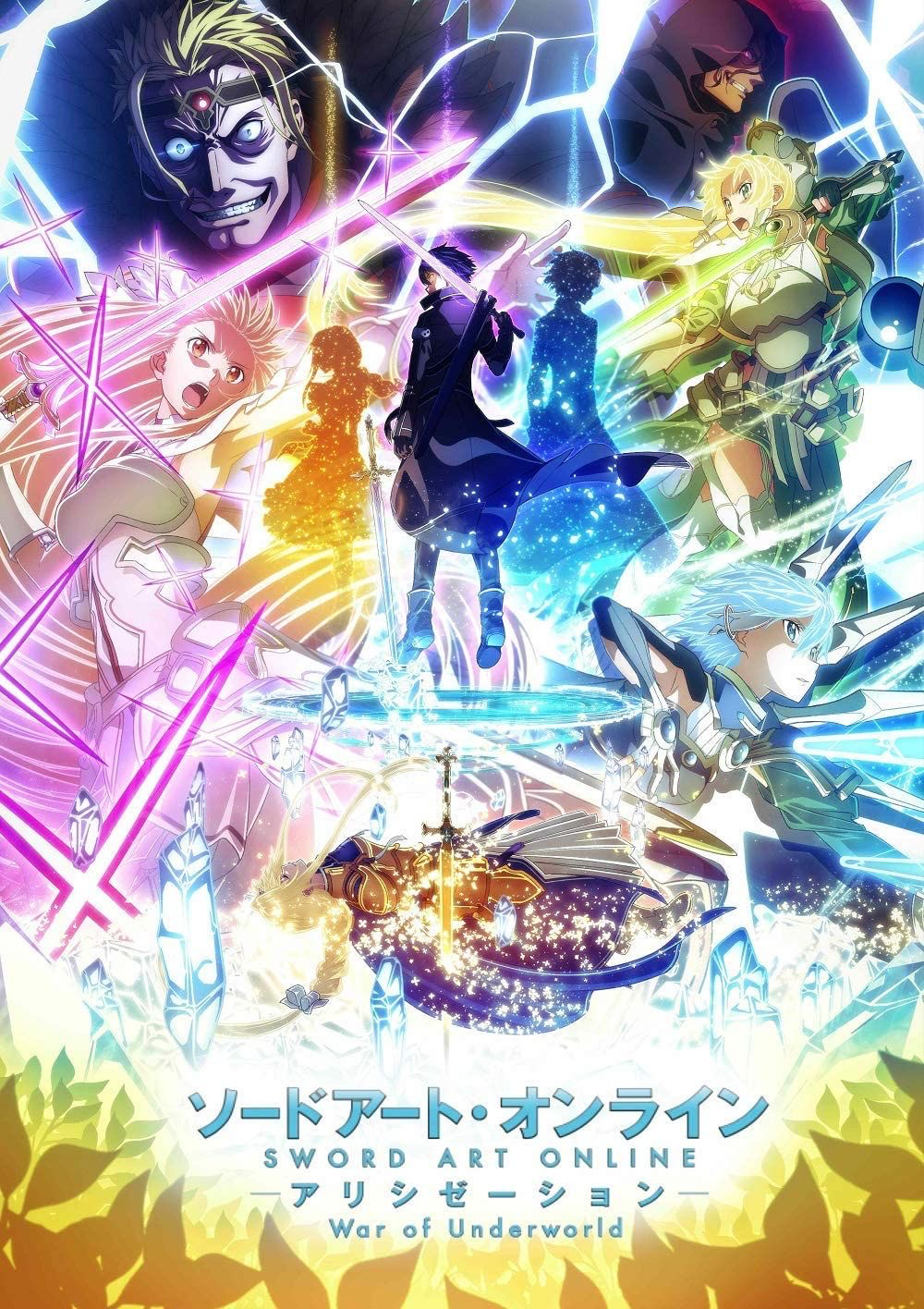
SWORD ART ONLINE — ALICIZATION: UNDERWORLD RPG
There are no health bars floating above the wheat outside Rulid.
There is only sunlight, wind moving through the fields, the measured ring of an axe striking a tree that has survived every blade in the village, and people who have never been told their world exists inside a machine.
Kirito wakes beneath that sky with memories full of missing doors. He knows the texture of a sword, the shape of a system hiding behind reality, and the feeling that somebody important has been taken from him. He does not know why Rulid feels familiar. He does not remember the childhood he once spent there under accelerated time. He does not yet understand that the blond woodcutter offering him food is Eugeo—the friend whose life will become inseparable from his own—or that the absent girl in their shared history has been remade into an armored servant of the law that stole her.
Her name was Alice Zuberg.
As a child, Alice crossed one boundary to help an injured Dark Territory knight. The act broke the Taboo Index, the law Underworld's people are conditioned to obey even when obedience harms the person standing before them. An Integrity Knight descended upon Rulid and carried her to the Central Cathedral. There the Axiom Church took her memories, sealed them in a crystal, placed a Piety Module where the missing life had been, froze her aging, gave her the Fragrant Olive Sword, and named her Alice Synthesis Thirty.
The Church calls that order.
Administrator calls it perfection.
Rath calls the entire civilization an experiment.
Project Alicization was built to create bottom-up artificial intelligence: human-pattern fluctlights copied from a newborn template, raised through generations inside an accelerated world, and tested to see whether one of them could break a rule for a moral reason. The Soul Translator does not merely send images to the senses. It reaches the fluctlight—the quantum structure Rath treats as the human soul—and fills short-term memory with mnemonic visual data so complete that Underworld is experienced as physical life.
That technical origin does not make anyone inside less real.
Rulid's farmers wake tired. Children inherit Callings. Smiths remember every blade they failed to repair. Nobles use authority and the wording of law to protect cruelty. Academy trainees bleed, study, envy, love, grieve, and choose. Dark Territory goblins and orcs remember the barren lands assigned to their peoples. Integrity Knights possess lives stolen from the people they used to be without becoming empty copies of those lost selves. When an Underworld resident's Life reaches zero, there is no safe respawn waiting behind a menu.
Sacred Arts are system commands understood as ritual. Spatial resources become heat, light, wind, water, metal, crystal, healing, restraint, and force through formal language, authority, and imagination. Every person and object possesses Life. Materials carry Priority built from origin and history. Object Control Authority governs what someone can wield. System Control Authority governs the commands they can sustain. A Divine Object is not simply a rare weapon; it is a life transformed from something that existed long enough for memory to become power.
The Blue Rose Sword remembers a flower beneath mountain ice.
Alice's Fragrant Olive Sword remembers an ancient tree and can become a storm of golden petals.
Bercouli's Time Piercing Sword cuts through moments rather than only distance.
Fanatio's Heaven Piercing Sword turns light into lethal reach.
The perfect control arts of the Integrity Knights are built from histories Administrator stole, catalogued, and chained to obedience.
Then there is Incarnation.
Underworld is rendered through memory. A person's image of self and world can press back against ordinary limitations when conviction becomes powerful enough. Belief can strengthen a sword, preserve a body, summon remembered wings, break a seal, or make terror physically real. Incarnation is not a convenient wish. Doubt can destroy what confidence creates. Trauma can become a cage. Another will can oppose it. The greatest acts carry history, identity, and consequence.
The Human Empire is not the whole world.
Beyond the Great Eastern Gate lies the Dark Territory: dark knights seeking honor, pugilists who follow strength, orcs, goblins, ogres, giants, mages, and communities shaped by scarcity and a political order where power often decides command. They are not one evil race waiting for heroes to kill. Shasta seeks peace because he has seen what endless war costs. Lipia risks everything to expose a ruler with authority but no cultural memory. Iskahn protects fighters treated as fuel. Rirupirin has learned that kindness offered by a stronger person often hides a command.
The load test does not care.
The Great Eastern Gate is designed to fall. Human Empire and Dark Territory armies are pushed toward a war Rath intends to observe. Administrator planned to turn half her people into a Sword Golem. Gabriel Miller enters the super-account Vector with no interest in Underworld's personhood and a contract to capture Alice's fluctlight. Vassago brings the hatred of PoH into a war already filled with people who do not understand why foreign gods have begun descending from the sky.
At the same time, the Ocean Turtle is under physical attack.
Steel doors, assault rifles, cable ducts, control rooms, power systems, Soul Translators, medical equipment, and connected real bodies exist on a clock radically different from the war below. Kikuoka hides a military project behind casual explanations. Rinko carries the ethics of having known Kayaba. Higa can explain how a soul is copied faster than he can answer whether anyone has the right to do it. Yanai's sabotage turns obedience into pain and lets an artificial god whisper through a real laboratory.
Asuna enters Underworld through Stacia.
Sinon descends as Solus.
Leafa arrives as Terraria.
Their accounts possess tremendous authority, but power does not provide knowledge, agreement, or control over the people already fighting. Alice protects Underworld rather than becoming somebody's prize. Eugeo's gentleness does not make him weak. Kirito's strength does not make grief disappear. Bercouli commands through judgment, Fanatio through precision, Scheta through a desire she has learned not to obey blindly, and Renly through fear he acts beside rather than magically losing.
Created Jul 28
Updated Jul 28
Published Jul 28