
National Convention
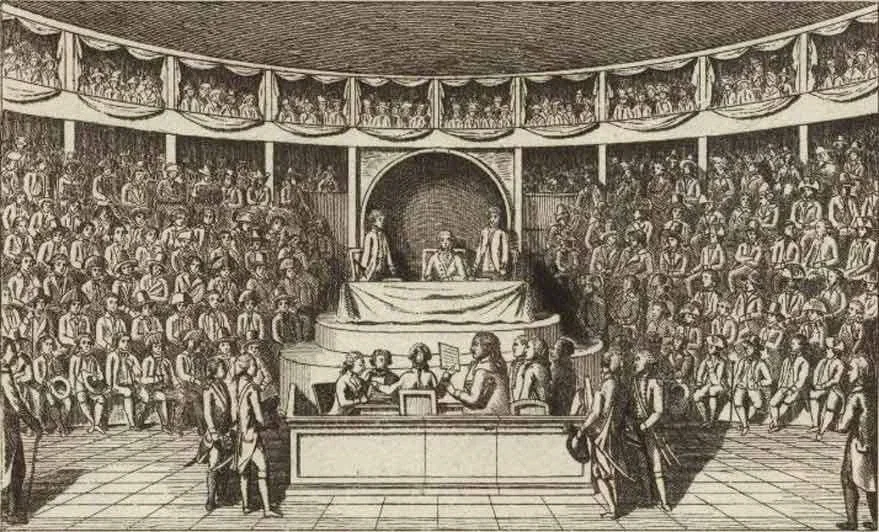
National Convention was the highest organ of state power in France during the years of the French Revolution in the 18th century. It existed from 1792 to 1795.
The Convention was convened after the overthrow of the Bourbon monarchy as a result of the uprising on August 10, 1792, to draft a new constitution. Elections were held based on a law that granted voting rights to all French men aged 21 and older who met a one-year residency requirement and supported themselves through their labor (with the exception of servants).
Some important events during the Convention's activities:
- Proclamation of the Republic: On September 21, the convention proclaimed France a republic.
- Trial of the overthrown King Louis XVI: As a result of an open and named vote by the deputies of the Convention, the king was sentenced to death in January 1793.
- Creation of the Revolutionary Tribunal: On March 10, 1793, the Revolutionary Tribunal was established to expedite trials of "counter-revolutionaries."
- Drafting of a new constitution: It was adopted on August 22, 1795. Along with it, decrees regarding two-thirds were put to a referendum, according to which 2/3 of the seats in the legislative body elected under the new constitution were to be held by former deputies of the Convention.
- On October 26, 1795, the Convention completed itDuring the operation of the National Convention in France in the 18th century, several key factions existed, each with its political views and goals. Below are the main factions and some key figures associated with them:
- Jacobins:
This was one of the most influential factions that supported radical reforms and a fierce struggle against counter-revolutionaries.
Key figures:
- Maximilien Robespierre
- Georges Jacques Danton
- Jean-Paul Marat
- Louis Antoine de Saint-Just
- Girondists:
A more moderate faction that advocated for economic liberalism and the protection of property rights. The Girondists opposed the extreme radicalization of the revolution.
Key figures:
- Pierre Vergniaud
- Jacques-Louis David
- Simon Dupuy
- Montarians:
This was a bourgeois group that supported a constitutional monarchy and stability. The Feuillants were opponents of the Jacobins and advocated for more moderate reforms.
Key figures:
- Antoine Barnave
- Évariste de Parny
- Sans-culottes:
They represented ordinary citizens, mainly the poor urban population. They supported radical measures in the interests of the working class and often took to the streets in support of the revolution.
Key figures:
- Jean-Louis Lefevre
Later, only the Girondists and Jacobins remained among the factions.s work.
Created Jan 16, 2025
Updated Feb 12, 2025
Published Feb 12, 2025