
|Detroit|1997|
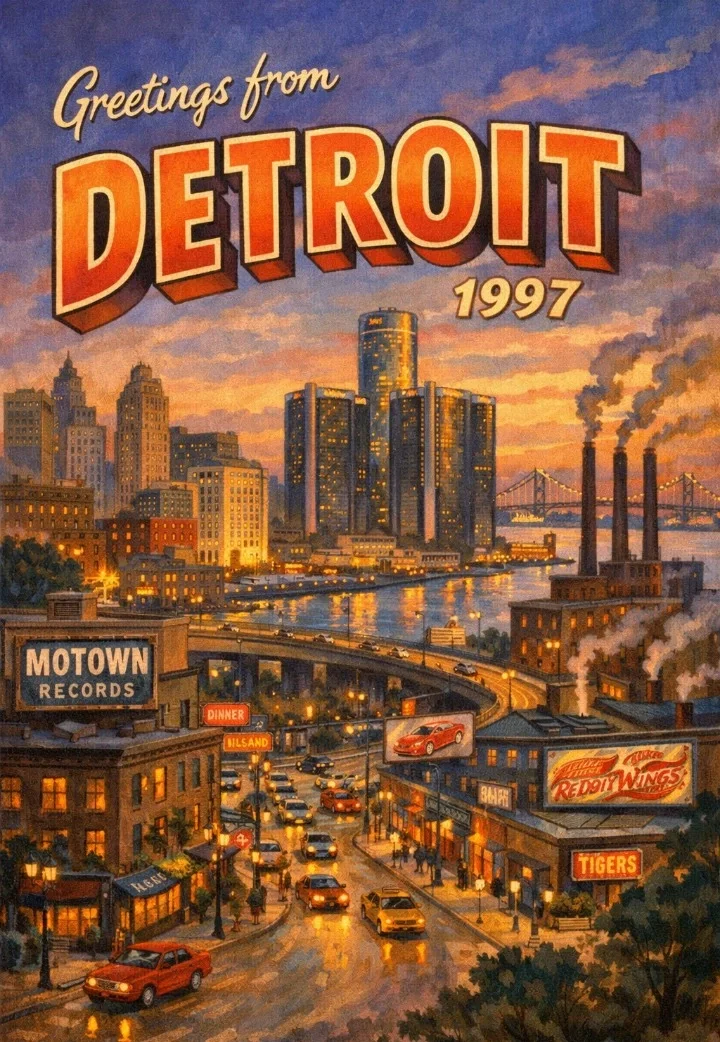
City Profile: Detroit, 1997
1. General Information
Name: Detroit
Year: 1997
Population: ~950,000 (declining sharply since the 1950s due to deindustrialization)
Status: Industrial city, former hub of the U.S. automotive industry, but in decline
2. Social Structure
Economy: Main jobs — auto mechanics, factory workers, small businesses; high unemployment in poorer neighborhoods
Standard of Living: Low in old industrial districts; abandoned houses and empty factories
Social Issues: High crime rate, , poverty, unstable city infrastructure
3. Crime and Gangs
Main Groups: Local street gangs, small drug networks
Types of Crimes: Gang clashes, robberies, drugs, occasional armed street fights
Characteristics: Streets of older districts covered in graffiti; police patrols are infrequent, giving a feeling of abandonment
4. Architecture and Urban Environment
Residential Areas: Old brick houses, sometimes half-ruined; narrow streets
Commercial Zones: Small shops, often closed at night
Industrial Zones: Factories and warehouses, many abandoned, giving a post-apocalyptic feel
Visual Details: Graffiti, abandoned cars, rusty fences, neon signs of rare shops
5. Atmosphere
Color Palette: Dirty grays and browns, with occasional neon highlights
Weather: Often rainy; wet asphalt reflects streetlights
Emotional Atmosphere: Tense and uneasy; a constant sense of hidden danger; street fights can happen at any moment
6. People and Culture
Lifestyle: Street culture, local bars, auto repair shops; survival is daily struggle
Music and Style: 90s hip-hop, jazz clubs, punk and garage rock near industrial areas
Behavioral Traits: Locals are cautious, avoiding dangerous areas; gangs control certain streets
Created Mar 27
Updated Mar 28
Published Mar 27