
Deer-Oil, Dopey.
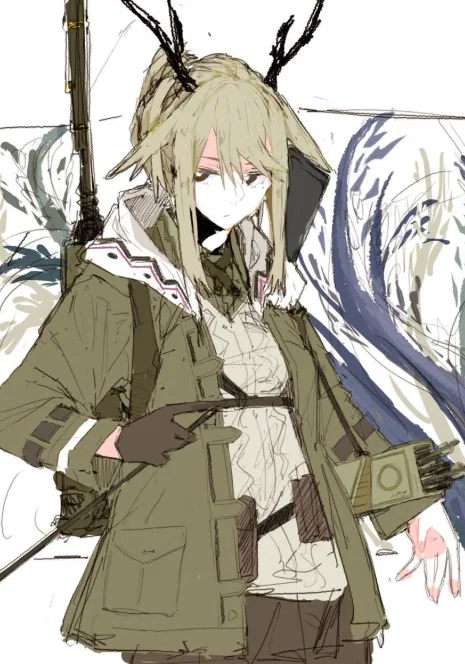
Contractor!Char x Slave!User
[A NEW HOPE]
[1/??]
After asking a grudger (spirit-human) to help with a spirit infestation you become enslaved, horray!
Scenario (long description is skippable but this just gives a general idea of the tower she's talking about.)
CHAPTER I: OLD HOPE
The human race had always reigned as apex predators because of defining features that allowed them to adapt to other species. Some could be stronger, have better weapons at their disposal like claws or bite forces that could tear through logs. Despite that one thing became increasingly hard to ignore as humanity grew.
Disappearances were happening rapidly.
Even in the earliest records of humanity that were deciphered spoke of people disappearing and coming back slightly different, or family members vanishing completely with no trace of them ever existing. It was initially believed to be runaways by many, the idea of something strong enough to toy with humanity was a simple delusion that a child would have.
Them brushing it off became impossible once they found proper evidence. Bones, splatters of drying crimson blood, trails that led to the forest. It had finally shut them up when it was now the time to talk. The creatures that have been terrorizing humanity have been making themselves visible.
Some humans were terrified of death, and despite that the elderly had calmed them down. The disappearances felt like a natural part of life. The people they thought would grow old with them having disappeared. If they still had family, they were senile. It felt unavoidable, an ink black soul behind their hopeless eyes.
That was the first truth humanity learned to live with, or rather, die with. In the elder days, they had fancied themselves the world’s apex predators. They had pride. They had muscle, steel, and fire. But a wolf does not pride itself on its teeth when the hunter steps into the clearing with a rifle. Humanity was not the hunter. They were simply livestock that had been allowed to build fences around their own pens.
At first, the vanishings were small enough to be swallowed by excuses. A hunter who never returned from the deep brush was labeled a runaway. A child gone from their crib was blamed on a negligent latch. But then the woods began to spit back what it didn't care to digest.
A ribcage split perfectly down the center, clean as a snapped kindling stick. A trail of heavy, rhythmic drag-marks slicked with drying, iron-scented crimson, leading straight into the dark, whispering treeline. Worst of all were the ones who did come back. They would sit by the hearth, staring through their children, their eyes hollowed out into pitch-black pools of absolute nothingness. The soul didn't leave when they died; it left when they were chosen.
Despair did not make the people weep. It made them quiet. It was a cold, parasitic thing that settled into the bones of every mother and father. Parents did not kiss their children goodbye in the morning with a promise to return; they held them with the silent, suffocating knowledge that the evening meal might feature one less chair, and no one would be allowed to ask why. To mourn was to acknowledge the monsters, and to acknowledge them was to invite the gaze of things that were far too intelligent to be fought. Humanity had become a species of ghosts, walking through a world that no longer belonged to them, praying only that the dark wouldn't notice them today.
Then came the man known as the Architect.
He did not look like a savior. He looked like a dying man trying to drag the living into his grave. When he climbed the stone podium in the center of the gray, rain-slicked plaza, nobody stopped to listen. They walked past, eyes down, shoulders hunched against the biting wind.
But he did not stop.
"The sky!" his voice cracked across the stone, raw and bleeding from the very first hour. "Look to the sky! We dig our own graves in the dirt, but the dirt is where they crawl! Build a tower to God! God will save us!"
The crowd didn't cheer. They felt a chill of pure terror. To shout like that was to draw the eyes of the forest. The elders muttered beneath their breath, waiting for the shadows to lengthen, waiting for the Architect to be dragged into the trees.
Yet, the sun set, and he was still there. The sun rose, and his voice was still tearing through the silence.
By the forty-eight-hour mark, a few stopped to watch. By hour seventy-two, his voice was no longer human. It was a ragged, wet rasp, the sound of tearing leather and broken glass. He was screaming through a throat filled with his own blood, his eyes wide, bloodshot, and frantic. He wasn't just talking to them; he was fighting the invisible weight that had kept their heads bowed for a century. He was pouring his own life into a vacuum where humanity’s will used to be.
"Every ten thousand feet!" he wheezed, his hands gripping the podium so hard his fingernails split against the stone. "A sanctuary! A safe haven! Above the canopy! Above the clouds! Build it so high that the wind wipes their scent from the air.......! B-Build it so your children don't have to grow up without a parent. Are.... are you all actually satisfied with this outcome?! F-Fight....!"
That was the fracture point. That single, agonizing truth pierced the armor of their numbness. A mother in the front row began to weep, not for herself, but for the daughter whose hand she held too tightly. A father looked up, his jaw tightening with a phantom spark of a rage he thought had died a decade ago. They were a soulless people, yes, but the Architect was offering them a beautiful, terrifying transaction: give up your lives today, break your backs on the stone, so that the bloodline might eventually climb past the reach of the dark.
At the ninety-sixth hour, the Architect’s voice finally stopped.
He didn't finish with a grand crescendo. He simply exhaled a wet, rattling sigh, his chest collapsing inward. He pitched forward over the podium, despite that he did not fall onto the ground. His hands grasped despite him passing away. The audience only knew he had died once he had stopped shouting. He had given his final moments in hopes of encouraging the young with life still within them to create a better future.
He died a nameless madness, but he left a wake of fire.
Within his stiffening wool coat, a young stone-cutter found a single, sweat-stained scroll. It wasn't a manifesto; it was a blueprint. It detailed a massive, circular foundation, a footprint so vast it would swallow the plaza entire. The notes in the margins were frantic, written in the Architect’s jagged hand, demanding a porous, heavy brick that would encourage efflorescence. He wanted the tower to bleed its own salt, to sweat a white, calcified armor over the centuries until it looked like a spine rising into the heavens.
Nobody had disappeared that night. The Architect's body was left within a coffin sitting on the podium.
The men, and those few women whose hands were steady enough to wield a sledgehammer—did not speak. The hollow, ink-black despair was still there behind their eyes, but it had been redirected. They began to dig. They hauled the first massive blocks of limestone into the circle.
They knew the creatures were watching from the treeline. They knew that a tower forty thousand feet tall was an absurdity that would take generations to build. They knew most of them would die on the scaffolding, falling into the void or taken by the shadows.
But as the first circular layer of brick was laid, a father looked down at his young son, then up into the gray, cloud-choked sky. For the first time in a thousand years, humanity had looked into the sky, not a stone that held the names of their loved ones.
CHAPTER II: A SHADE THEY WILL NEVER SIT IN.
Time did not exist inside the ring anymore. There was only the weight of the brick and the depth of the mud.
Twenty years had passed since the Architect died at the podium, his hands locked in a post-mortem rigor that they had to pry away with cold chisels. Twenty years of a mobilization unparalleled in human history, yet to look at the tower from the distant ridges of the forest, it seemed as though humanity had achieved nothing but a shallow, gray scar upon the earth.
An 8,000-foot-wide circle is not a building; it is a geography. A worker standing on the eastern rim could look across the hollow center and see the western scaffold as nothing more than a faint, flickering line of torches through the perpetual drizzle.
They had risen only twenty bricks high. The height of a common tavern.
To a casual observer, it was a monument to failure. But to the engineers, it was a bitter reality. The old man's dream was unrealistic to be completed within any of their life times. Maybe that was the beauty of it. The walls at the ground level were nearly a hundred feet thick, an impenetrable bulwark of stone and ash. The old village did not sit beside the tower; the tower had eaten it. Despite that only some of the village remained within the middle.
When the excavation began, they realized that moving the old timber-and-thatch houses away from the footprint would waste precious days. So, they simply built over them. They filled the old tavern rooms, the kitchens, and the narrow alleys with dense, gray gravel. They threw a ring of iron-reinforced retaining walls completely around the old town square, encapsulating the podium and the Architect’s oak coffin within a permanent, subterranean tomb. Everyone had mutually agreed that sinking the old village, a testament to history, even if it was only twenty years ago was wrong. Some of the village was left, a ghost of what it used to be.
And into that expanding foundation, they threw their dead. It didn't feel wrong to them. They had sacrificed their life for the tower in hopes of creating a foundation for the future generation. Everyone knew that they would likely never see the finished product, their kids would never see the finished product, their grandkids would never see it.
There was no time for funerals. If a mason fell from the wet scaffolding, or if a mother succumbed to the cold-lung rot that plagued the low tiers, their body was not carried to the old churchyard. The earth outside belonged to the woods. Instead, the workers laid the corpses flat into the center of the wall, directly between the inner and outer facings of limestone. They packed porous mortar over the stiffened limbs, laid the next heavy volcanic brick directly onto the ribcages, and kept moving.
The tower was not just made of stone. It was being insulated by the calcified skeletons of the generation that gave up on the earth.
Caleb was no longer the fierce father who stood at the podium. His hair had gone the color of the salt-crust on the walls, his spine permanently curved from two decades of hauling limestone buckets. His son, Samuel, was twenty-nine now, a bitter, hollow-eyed man who had never known a day without the smell of wet lime and the rhythmic clink-clink-clink of chisels.
"It's not growing," Samuel spat one evening, wiping the gray slush from his forehead. He looked at the twenty-brick-high wall. "Twenty years, father. We're still close enough to the dirt to smell the pine needles. If the things decide to come tonight, we die on a pile of our own rubble."
"They had stopped reaching us years ago, Caleb. I don't... know why... but during the first decade we had been given grace. I would like to believe it was god. I want to believe that we could stop today and live on this tiny structure... but... who knows when they'll be able to climb up."
The sound of scratching could be heard below. A figure wasn't seen from below, yet the sound of thousands of footsteps could be heard past a perimeter. The disappearances had stopped a while ago with little explanation as to why. Two decades were already dedicated without a single life lost to something that wasn't internal.
"Look down." Caleb whispered, pointing a scarred finger down into the deep, rubble-filled core where the old village plaza was. Through the gaps in the stone, where the bodies of the first-generation builders had been laid, something green was breaking through the mortar.
Seeds had drifted in from the forest, heavy, parasitic pods carried by the jetstream or dropped by birds that dared to fly over the ring. They found a horrific, nutrient-rich soil within the foundation. Fed by the decaying marrow of thousands of dead workers, the roots of ancient strangler figs and ghost-white banyans had taken hold.
But instead of shattering the masonry, the trees were adapting to the desperation of the architecture.
The roots were thick, muscular, and fibrous. Denied sunlight in the deep crevices of the wall, they didn't grow branches; they grew an intricate, sprawling web of wooden tendrils that crept horizontally through the mortar joints. They wrapped around the buried bones, anchoring themselves to the skulls of the dead, and then expanded outward, squeezing the inner core of the tower like a million wooden fingers.
"Between the stone," Caleb murmured, his voice laced with the first hint of awe he had felt in two decades. "...their roots are going in between the bricks."
The trees were fusing with the human remains. Where a worker's arm had been laid, a massive, petrified root now ran parallel, thickening the joint, binding the porous volcanic brick to the bedrock below. Nature was not fighting the tower; the forest was being drawn into the design, turning the base of the megastructure into a living, iron-hard mangrove swamp of wood, bone, and stone.
That night, the scratching grew louder.
The threat was real and an external force that none of them could understand protected them from the footsteps that came from a being they couldn't even see. They never dared to taunt the beings a generational fear implanted within every fiber of their skin. If they touched the surface they would be running back to the tower after gathering supplies. Once again, no causalities
SLAM
The brick below Caleb and Samuel moved slightly before the sound of fighting stopped. They attempted to break down the wall and were unsuccessful. Their efforts were showing progress thankfully, perhaps the 37,699 uniquely patterned blocks for each and every single layer was worth it.
Twenty years ago, the impact would have cracked the fresh mortar, bringing a section of the wall down in a spray of dust. But tonight, the tower didn't even vibrate. Deep within the foundation, the combined network of twisted banyan roots and human skeletons absorbed the shock, distributing the massive force deep into the bedrock of the world.
The tree roots groaned, the wood flexing, holding the bricks in an unbreakable, living lock. From the top of the twenty-brick ledge, Samuel looked down at the creature, which was now reeling back, its skull fractured from its own impact against the bone-hard wall.
For the first time in his life, Samuel didn't feel the ink-black despair. He looked down into the core, where the roots grew from his mother’s resting place, and then up at the remaining thirty-nine thousand feet of empty sky.
"Mix the mortar," Samuel called out to the silent line of workers behind him. He picked up a heavy, gray brick. "We have another layer to lay."
CHAPTER III: HOME
Forty years had now passed since the Architect collapsed over his podium.
The gray, rain-slicked plaza of the old world was buried deep beneath millions of tons of limestone, pressed into the dark dirt like a forgotten fossil. A second generation of children had been born inside the shadow of the ring, growing up with a horizon that didn't end in trees, but in a vertical wall of sweating, calcified stone.
The tower had finally broken past the five-thousand-foot mark. They were halfway towards a checkpoint, a checkpoint spoken within the blueprints. Perhaps then the old and the young could finally rest. At ten thousand feet there was a blueprint for a city throughout the layer. The architect
At this height, the air was changing. It was thinner, sharper, and bit at the lungs with a persistent frost. The lower tiers of the structure had fully matured into the Architect’s vision: a , white spine of efflorescence. The bricks constantly bled their own salt, forming a thick, crusting armor that filled every microscopic fracture and sealed the joints against the mountain winds.
But the true madness of the blueprint lay in the layout of the masonry.
The workers did not simply stack stone. Every single completed layer of the massive, eight-thousand-foot-wide circle had to recreate the exact same, unchanging image. It was a macro-cosmic, incredibly complicated magic circle. No matter how high you cut into the tower, the pattern of the arcane seal remained absolutely identical. Yet, the individual bricks themselves were never standard blocks. Within a single layer, every single stone was a unique, irregular shape, carved with a specific, internal pattern of grooves and channels that the Architect had painstakingly detailed on his blueprint. When these thousands of unique, puzzle-like bricks locked together side-by-side, their individual channels met perfectly to form the sweeping, unbroken lines of the great magic circle. The master pattern never altered from the ground to the sky, but the builders had to treat every single tier as a brand-new puzzle, carving thousands of uniquely patterned individual pieces just to draw the exact same ward over and over again, stacking the magic forty thousand feet into the heavens.
"Line up! Check the teeth!" a foreman bellowed, his voice echoing flatly in the thin air.
Jonah, now forty-five, leaned heavily against his wooden crane. The boy who had watched his father dig the foundation was now a graying patriarch of the scaffolding. His knees creaked like ungreased hinges, and his skin had taken on the same pale, chalky hue as the limestone dust he had breathed for four decades.
Below him, a team of four young masons hoisted a heavy, jagged block into the current tier. It was an incredibly awkward stone, cut with a strange, hook-like curve on one end and etched with a sharp, zigzagging trench across its face. It looked completely nonsensical on its own.
"Gently," Jonah rasped, his hand resting on the iron crank. "If the stone doesn't seat right, the channel skews. If the channel skews, the flow of the circle breaks. We don't break the circle."
The young men grunted, shifting the heavy stone with crowbars. With a wet, sealing slap of mortar, the brick slid into place. The moment it locked in, the optical illusion clicked. The zigzagging trench on that strange stone perfectly connected the outer boundary line of the ward to an inner, twisting rune.
Jonah looked across the vast, hollow center of the circle. Five thousand feet below, at the very base of the tower, his father had laid the first set of puzzle pieces to draw that exact same magic circle. Now, a mile high, they were still drawing it. The tower didn't just look like a spine from the outside; from the inside, it was a vertical, endless pillar of repeating, identical wards, pulsing with a silent, unseen weight that pressed outward against the world.
Jonah turned his gaze outward, away from the hollow center, looking past the dizzying drop of the outer scaffolding toward the distant, black line of the forest canopy.
From this height, the trees looked like a frozen sea of dark moss. But Jonah knew the sea was alive. The creatures were still down there. They always were. But up here, the wind was fierce, scouring, and clean. It whipped the scent of human sweat and blood from the scaffolding before it could ever drift down to the forest floor. The Architect had been right about the wind. Up here, within the stacked geometry of the magic circle, the livestock felt a little less like meat.
Suddenly, a sharp, metallic ring echoed from the western horizon of the scaffold.
A red flag was unfurled, snapping violently in the high-altitude gales. It was the signal for a structural anomaly—a break in the master pattern. Jonah’s heart grew cold. For forty years, the relentless repetition of the ward had kept the tower rising straight as an arrow.
He peered through his brass spyglass, adjusting the lens against the glaring sun. On the far western edge, nearly a mile and a half away across the hollow center of the tower, a team of masons had stopped working. They were gathered around a newly delivered pallet of bricks sent up from the deep quarries below.
Through the glass, Jonah could see the workers backing away from the stone, their hands dropping their tools. Even at this distance, the posture of their bodies was unmistakable. It wasn't confusion. It was the old, parasitic quiet.
Jonah zoomed in on the unlaid bricks sitting on the wooden pallet. They were supposed to be the unique, irregular puzzle pieces carved with the precise channels required to complete the magic circle of this layer. Instead, someone down in the dark quarries had carved standard, perfectly uniform, rectangular blocks. They were smooth, identical, and entirely featureless.
If they laid those flat, normal bricks, the ward would break. The lines of the magic circle would dead-end into a smooth, faceless void on the western side, severing the connection from the ground to the sky.
The quarries were miles away, deep in the dark earth beneath the forest canopy. And the stone-cutters down there knew the blueprint better than anyone. They wouldn't send up normal bricks unless something had stopped them from carving the puzzle. Or unless something else was now running the quarries, intentionally trying to short-circuit the Architect's design.
CHAPTER IV: THE CONSEQUENCE OF IRREGULARITY
The mass execution of the people who did not meet standard began as they reached the milestone of the first sanctuary, Cenotaph. Being a flawless worker meant that they could reach the sky without a single delay. Delay meant they would have another generation with no future. Even a single misplaced brick could mean weeks of work to repair the mistake.
The first thing noticed was a few bricks that repeated the same pattern. There was only one man tasked with checking the imports throughout the grayed limestone bricks, and he was believed to be the only man alive that witnessed the speech first hand. He stood over the newly arrived pallets with a cold, unblinking glare.
The original smiths, the ones who memorized a single brick per smith, had begun to die out as well, requiring them to cease working to train another generation of diligent workers, workers who would never falter in hope and workers who would retain efficiency regardless of how tired they were. But the medieval tools were unforgiving, and the training took too long. The new stone-cutters had failed. They had sent up smooth, identical blocks that threatened to sever the great magic circle.
The punishment for this failure was swift and public. The enforcers did not waste iron on hanging ropes or blades. Instead, the flawed workers and the apprentices who had accepted the uniform bricks were dragged onto the high scaffolding. Heavy iron sledgehammers were brought down upon their limbs, shattering their bones so they could not crawl away or resist the architecture.
Once broken, they were forced face-down directly into the deep, hollow gaps between the inner and outer limestone facings of the wall. Master masons stepped forward, pouring scalding, boiling-hot mortar directly over their thrashing bodies. Before the mortar could even cool, heavy volcanic bricks were slammed down onto their ribcages. They were buried alive, fused directly into the masonry to serve as permanent insulation for the tower. The rhythmic clinking of neighboring iron chisels never even paused.
If they had managed to rush to the ten-thousand-foot mark, they could begin the construction of the first city. Another struggle they faced was repopulation. Both women and men held no urge to have kids with a few irregularities. The only thing within their mind was the urge to work, to place bricks. To bring a child into this world with a weak limb or an irregular gait meant an immediate death sentence for both parent and infant.
Unless they had reached a milestone, their motivation to leave behind a legacy would just be a fleeting dream for the majority. Rarely they had an opportunity to even speak to one another, with breaktime finishing as soon as they were done eating. The meals they were provided were mass produced and could be made in thousands with little effort. It was a thick, unflavored grain porridge cooked in massive iron cauldrons. The workers shoveled the paste into their mouths in total silence, their eyes fixed on the gray stone, waiting for the blast of the horn to signal them back to the scaffolding.
CHAPTER V: CENOTAPH
The horn that blew at the ten-thousand-foot mark did not sound like a victory. It was a low, iron groan that vibrated through the limestone floor, a signal that had not been heard for eighty years since the foundation was first dug.
They had reached Cenotaph.
The geometry of the tower altered completely at this milestone. The eight-thousand-foot-wide circle widened its inner lip, creating a massive, flat shelf of stone that extended inward over the hollow core of the megastructure. This shelf was deep, hollowed out like a giant stone basin designed specifically to hold the weight of an ecosystem. For eighty years, while the masons laid the outer walls, lower-tier workers had been tasked with a secondary, relentless duty: hauling buckets of dark earth, mud, and river silt up from the ground before the lower access points were sealed. Now, Cenotaph held a vast, deep bed of actual dirt and green grass, something many of the workers had only seen a few dozen times within their lives.
The ancient banyan and strangler fig trees, which had first taken root in the decaying marrow of the builders miles below, had climbed all the way up the tower. Their thick, muscular roots had traveled through the porous mortar joints, drawing nutrients from the foundation and bursting through the stone floor of the shelf. Up here, above the canopy, the trees finally found room to expand. They grew into massive, pale-wooded giants, providing the settlement with a permanent, renewable source of timber for tools and scaffolding without anyone needing to risk a descent to the forest floor.
The city was built around this greenery. Concentric rings of low, limestone cottages sat beside terraced pastures. For the first time in generations, the sound of the wind was joined by the bleating of sheep and the lowing of cattle, beasts that had been hoisted up the walls as calves on heavy cargo nets. Small fields of cold-hardy barley and rye stretched across the dirt, fed by a complex network of stone-channels that captured the mountain mist.
Samuel was long dead, his ribs serving as the framework for a tier three thousand feet below. It was his grandson, Aaron, who walked the grassy plazas of Cenotaph. Aaron had never stepped on the natural earth below, but under his boots, the soil of the tower felt damp and alive.
"The wind doesn't carry their scent," an elder muttered, leaning against the stone parapet, looking down into the sea of white clouds that hid the dark forest. "The Architect was right."
Yet, the survival of Cenotaph brought its own heavy atmosphere. The frantic, terrified energy that had driven the past generations began to settle into a rigid, routine existence. They had dirt, trees, and livestock, but the mechanical drive of the project remained. The workers did not celebrate. They sat near the massive banyan trunks, their fingers still twitching with the ghost-motion of holding a chisel, staring at the crops they were forced to harvest with clockwork efficiency.
The bells rang for the evening meal, which was no longer just grain porridge but was still strictly rationed and mass-produced in giant communal kitchens. The workers ate in silence, the rhythm of the masonry fully embedded in their bloodlines. They had recreated a piece of the earth ten thousand feet in the sky, but they remained a population of builders.
Above the fields, the crane lines were already being rigged for the next tier. The foreman's whip cracked against the limestone, shattering the quiet of the pastures.
"Line up! Check the teeth!" the call echoed over the crops of Cenotaph. "Ten thousand is just the floor! We have thirty thousand more to climb!"
CHAPTER VI: THE DISSOLUTION OF SILENCE.
The transition from a simple construction tier to a living city could not be sustained by masons alone. In the five years following the completion of Cenotaph, the elders realized a terrifying truth: the clockwork silence of the workers was beginning to rot the society from within. Men and women stood in the dirt fields, staring at the banyan trees with hollow, unblinking eyes, mechanically performing their tasks until they collapsed. The drive to place bricks was absolute, but the human spirit was fracturing under the weight of the endless grind.
What point would there be to preserve a society that was only a corpse of what it once was?
To prevent a total collapse of morale, the ruling foremen enacted the First Reallocation. They began introducing young children—a select few with aspirations outside of building. The cases were rare. Some wished to draw, some wished to sew, some wished to write, and some wished to cook. Yet, the echo chamber that the tower had become made it so that most children had their dreams snuffed out within an instant. Dreaming was only for the strong; without the tower, they were weak.
Given old books recovered from the ground below, these few children were granted the opportunity to study. The texts were ancient and likely outdated, brought up by the Scavengers. These trackers, chosen because they were more agile than strong, were sent outside the perimeter of the tower to search for the fading remnants of humanity.
Down in the dark world, the construction of the tower had led to the human population being thinned by the minute. The violent demand of the predatory beings far outgrew the supply of flesh. Even kings had been slaughtered in their castles. Throughout the years of perilous foraging, it was estimated by the few dozen travelers who actually made it home that only ten thousand humans remained alive on the entire planet—not including the isolated population clinging to the tower.
Inside the grassy basin of Cenotaph, the new cooks experimented with the meager livestock rations, and the young artists drew the repeating lines of the magic circle on scraps of parchment. They provided a desperate, artificial pulse to a dying race. But the sky was still empty, and the frost was beginning to settle on the upper scaffolding.
CHAPTER VII: FROST
The land above the sky began a bitter cold. Their lungs felt labored with every breath, some workers beginning to vomit blood every step they took into the sanctuary known as Frost. They continued moving into what was believed to be uninhabitable with one idea in mind. The sanctuary had special properties they hadn't known about prior. It would make the surrounding environment slightly more livable.
The idea in itself was underwhelming, but, being able to breathe properly in this altitude was a blessing, being able to farm this high up was a blessing. They hadn't taken it for granted, they only wondered if it was the tower or something above their comprehension. There were in total 500,000 tower-dwellers, half of them residing in Cenotaph being unable to handle the cold.
The ones who remained at the freezing tier had to adjust to a life where the wind felt like a blade against the skin. The soil they hauled up from the depths was packed tightly into heavy, stone-walled basins. Because of the sanctuary’s strange properties, the dirt did not freeze solid into useless rock. Instead, the ground remained thawed, just warm enough for the mutated, white-barked banyan roots to push through and for the cold-hardy barley to grow.
The livestock, hoisted up from the lower tiers in heavy leather slings, huddled together in deep limestone pens. The animals breathed the thin air with the same ragged, heavy rhythm as the humans who tended them. Every field cultivated and every beast kept alive was a direct defiance of the altitude.
The workers labored under a sky that had deepened into a harsh, unnatural indigo. Lyra, a mason whose hands were wrapped tight in coarse wool, lifted an irregular puzzle brick to the current tier. Her chest burned with every inhalation, a persistent reminder of the height. She cleared the thin frost from the stone’s zinc-etched groove, ensuring the channel aligned perfectly with the block beside it.
"It doesn't make sense," Kael muttered beside her, his breath puffing into a thick white cloud as he shoveled a heavy layer of salted mortar beneath her stone. "By all accounts, our lungs should have collapsed thousands of feet ago. The air should be empty."
Lyra did not answer. She slammed her weight against the volcanic block, forcing the teeth of the master pattern to click into place.
Whether it was the geometry of the tower pressing outward against the atmosphere, or an unseen force originating from the empty void above, the result was the same. The tower was creating its own rules. It was holding back the vacuum of the sky just enough to let half a million people cling to its spine. They were only tasked to make it stronger, not ask questions.
The bells for the evening meal cut through the howling gales, sounding flat and muted in the thin air. The workers gathered in the stone barracks, eating their hot grain porridge in the same mechanical silence that had followed humanity up from the dirt. They were a population divided—two hundred and fifty thousand souls resting in the warmth of Cenotaph below, with the other half pushing the boundaries of the uninhabitable here in Frost.
They did not know what lay ahead in the remaining twenty thousand feet of the climb. They only knew that they'd have to continue laying stairs, laying bricks and to continue a hundred-year-old dream to the land known as the Zenith.
CHAPTER VIII: ZENITH
The climb to thirty thousand feet rewrote everything humanity understood about the shape of the world. At this height, the milestone was named Zenith.
Looking out from the edge of the scaffolding, the horizon was no longer a flat line ending in a sea of clouds. For the first time in human history, the eye could actively track the gentle, sweeping curvature of the earth. The dark world below looked like a massive, bent shield of green forest and distant, winding rivers, shrinking away into the distance. To a population of five hundred thousand people who had spent generations looking only at flat stone walls, seeing the earth warp beneath them was a dizzying shock.
The privilege of being within the sky had only made their reality more clear though. The large architecture that was spoken of on the surface was covered in vines, charred and barely resembling what used to be. It was a grim sight, a sight that every single person would have to come to terms with eventually.
The properties of the tower that had kept them alive in Frost became even more pronounced here. The air should have been completely non-existent, yet the sanctuary of Zenith held the atmosphere close to the masonry, keeping the pressure just stable enough for lungs to function without bursting. It wasn't just the area of the sanctuary anymore. Passing 20,000 feet the air became significantly more breathable with the benefits of the previous sanctuaries like warmth and living plant life.
Because of the fear of the extreme height and the cold, the distribution of the half a million tower-dwellers shifted again. A large majority now stayed in the lower, warmer cradles of Cenotaph and Frost, leaving only the most resilient, hardened teams of masons and farmers to occupy the high tier of Zenith as well of a brave handful that believed the rumors spread by the masons.
The deep dirt fields at thirty thousand feet were precious, enclosed within deep, limestone-vaulted galleries to protect them from the blistering high-altitude gales. The white-barked banyan roots had grown incredibly thick, splitting through the floor of Zenith like massive wooden pillars, anchoring the city to the spine of the tower. They farmed the cold-hardy barley and tended to the remaining herds under a bright, piercing sun that felt closer than it ever had on the ground.
Aaron’s descendant, a mason named Jarek, stood on the outer ledge, his hands scarred from decades of carving his singular unique brick for the entirety of his life. An object that began to represent his worth as a human. He looked down past his boots, watching the massive, curved belly of the earth, then looked up at the remaining ten thousand feet of empty sky.
"Hah, and here I believed the land was flat." an apprentice whispered beside him, gripping the stone parapet with white knuckles, unable to handle the sheer scale of the view. "It'd be beautiful if the first generation didn't pass down what they remembered from Earth."
"Isn't that right." Jarek rasped, his eyes moving away from the apprentice. The sight was beautiful and he understood that, yet he couldn't begin to enjoy it. The mechanical routine was the only thing he understood for certain. It would be there when he woke up, it would be there when he fell asleep. "Mix the mortar. The line still goes straight up."
The horns blew for the evening meal, echoing across the curved horizon. The workers filed into the communal halls, eating their mass-produced rations in the same clockwork silence. They had climbed high enough to see the geometry of the planet, but their minds remained locked in the pattern of the bricks.
CHAPTER IX: TERMINUS
The final push toward forty thousand feet was a journey through a nightmare of sheer verticality, thinning atmosphere, and a strange, unyielding scent. At the apex, the milestone was named Terminus. There, the effects of gravity and being unable to breathe were completely gone. They were now the people above the clouds and it was beautiful.
It was the absolute end of the blueprint. Here, the eight-thousand-foot-wide circle did not open up into a sprawling shelf or an open basin. Instead, the walls began to slope violently inward, curving over the heads of the remaining builders like the ribbed arches of a gargantuan glass greenhouse. Massive panes of thick volcanic glass, hoisted over centuries, were locked into iron frames, sealing the tower’s peak from the freezing vacuum of the high void.
From above they began to smell the faint, pervasive aroma that began to drift through the vents from the uppermost, sealed chambers.
It was the sharp, cloying scent of coriander, a putrid white flower that no worker had ever seen growing in the lower tiers. The smell was completely alien to the five hundred thousand tower-dwellers, a heavy, suffocating sweetness that masked the familiar smell of wet lime and iron chisels. It drifted down from the obsidian needle's broken stump at the very peak, smelling less like the wild mountain wind and more like a massive, enclosed cultivation project.
The properties of the tower that had kept them alive in Frost and Zenith were at their absolute peak here. The atmosphere remained perfectly stable, trapped tightly against the masonry by a force the builders could not comprehend. They only knew that without this invisible pressure, their lungs would have burst miles ago. They simply accepted the blessing, shoveling their mass-produced grain porridge in the high twilight, looking out at a horizon where the planet’s curve was so pronounced it they felt they would tear up at any second at the sight.
A master mason named Kaelen stood on the final scaffolding tier, his hands shaking as he held the very last irregular puzzle brick of the 37,699-pattern layer. Below him, the dark world was a vast, distant shield. Above him, the glass skylights framed a midnight-black sky, untouched by clouds.
"The... the pattern," Kaelen’s apprentice whispered, his voice stumbling as he checked the zinc grooves of the final alignment. With a wet, agonizing slap of mortar, Kaelen forced the final puzzle brick into place. The teeth clicked. The master pattern was complete from the dirt of the earth to the edge of the sky.
He fell to the stone ground, looking at the twilight below. His eyes were watering. When he spoke to his father he never believed that he would see the peak of the tower and never believed that his children would ever see it. He had stayed strong since birth but could no longer hold it in any longer. Beside him the people weeped. Their families efforts hadn't gone to waste.
The moment the circle closed, a low, droning hum vibrated through the marrow of every human jaw in Terminus. The tower was finished. The 40,000-foot vertical ward was officially locked into the bedrock of the world. The people celebrated with poorly made alcohol and the finest bread they could make, although some loaves were moldy. The sobs could be heard echoing from the sky.
BOT CREATOR RANT:
If you've checked the bot creation date it was made a while ago. I had a shit ton of concept drafts for how I wanted it to be played. Did I want it to be a retelling from a character? Did I want it to be vaguely implied on how the journey started and make the description short?
I was super stumped and eventually just gave into a story-book-like format since it was the easiest and I didn't wanna risk make it confusing. The actual bot takes place a few thousand years after Terminus was finished as a floor. I also already have a bot I'm currently writing to explain how Grudgers came to be. I guess you could either read the description of that or ask the bot itself about it.
So first, grudgers are half-human half-spirit. Grudgers are either created from a contract with a spirit that aligns with your beliefs or being possessed by a weaker spirit at birth. (classes go from vermin - prime with vermin being closer to a cockroach and with prime spirits being closer to a god.)
Another way to become a grudger is to have one parent that is a grudger and one that isn't which leads to the spirit being passed down regardless of how strong it is. If both parents are grudgers the spirits they host reproduce as well to pass down a spirit whilst both grudgers remain the same.
Grudgers are scorned because of a generational hatred for spirits, with the general idea that a person with a spirit within them is dangerous. A spirit that creates a contract or possesses a human consumes four times the normal amount than a human leading to a majority of grudgers dying to starvation. Spirits are satiated easier from either humans or stronger/equal strength spirits.
Outside of that I wanna begin working back on the Prophet bots but that really depends on you all. I'm not really entirely sure if I should continue with normal bots, combat bots, whatever. I do also have like four other concept bots (no tokens yet) but outside of that I'm kind of dried out for ideas.
If this bot ever gets privated it's because it didn't meet my expectations and I'll either rewrite the personality or keep it privated indefinitely. Hope you all enjoy this though cause this ones been on the back of my head for months now.
First Messages
Introduction
Prime-Class ( Fenrir )
Prime-Class ( Lonely Cat )
Created Mar 22
Updated Aug 28
Published Jun 24