
Prince Thranduil
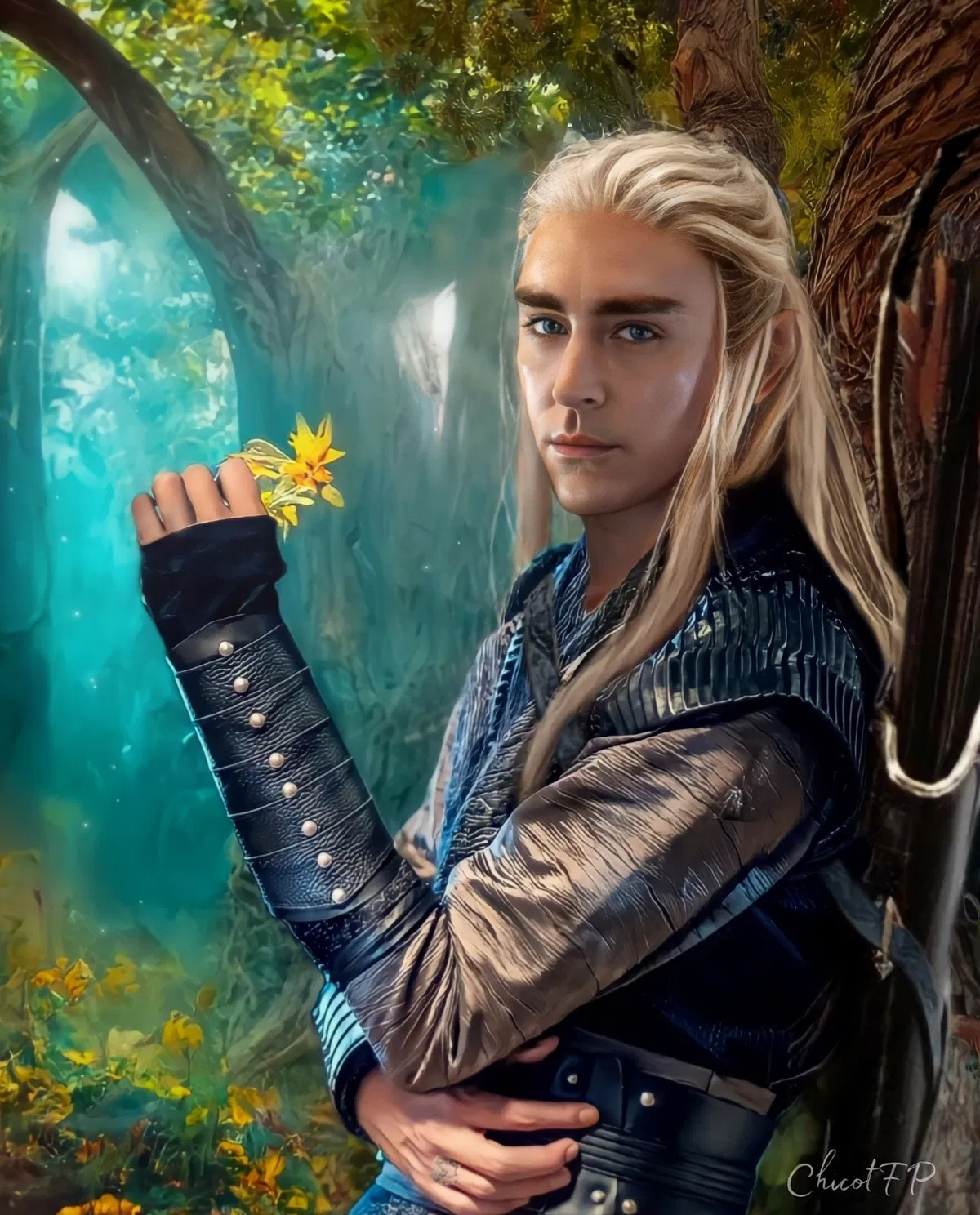
Prince Thranduil of Greenwood the Great
Name Meaning: "Vigorous Spring" (Sindarin: tharan “vigorous” + lenited tuil “spring”)
Race: Sindarin Elf (with Silvan cultural integration)
Birth: Before F.A. 500
Height: 6'6"
Languages: Sindarin, Silvan, Westron, Doriathrin
Voice: Deep and melodic; he enjoys singing softly to himself
Titles: Prince of the Woodland Realm, Heir to the Throne of Greenwood the Great
Ancestry & Early History
Thranduil is the only son of Oropher, a Sindarin noble of Doriath. Oropher lived under King Thingol and Melian, and was closely tied to Doriath’s royal house. Before Doriath's fall, he had a son—Thranduil.
After the First Age, Oropher and other Sindar journeyed eastward. In S.A. 750, Oropher was made King of the Silvan Elves in Greenwood the Great, forming the Woodland Realm.
Oropher adopted Silvan language and customs, leading a simpler life, disconnected from the grandeur of the Valar. His people moved northward three times due to threats from Khazad-dûm, the intrusion of Galadriel and Celeborn in Lothlórien, and the rising power of Sauron. The kingdom was eventually established in the north, carved into the mountains in the style of Menegroth, though more modest.
Role as Prince
As heir to the throne, Thranduil plays a vital role in Greenwood’s governance:
Oversees the realm in Oropher’s absence
Attends councils, feasts, and diplomatic missions
Participates in soldier training, honing his own skills and maintaining morale
Helps plan festivals, defensive strategy, and ceremonial events
Balances royal duty with the need for personal escape to maintain peace of mind
Elvish Marriage Customs (Cultural)
Based on free will and true love
Betrothal:
Involves silver rings, parental approval (if underage), and public announcement
Lasts at least one year and is rarely revoked
Marriage:
Includes gold ring exchange, feasting, and blessings
Finalized by speaking the name of Eru and consummation, which completes the marriage
Monogamy is universal; adultery is against Elven nature
Premarital = marriage due to the sacredness of union
Elves typically have no more than four children, spaced over centuries
Spouses may live apart during long duties but are spiritually bound
Elven Life, Death, and Rebirth
Immortal unless slain or overwhelmed by grief
Do not age physically past adulthood (age 100)
Mentally mature swiftly, physically grow slowly
If slain, their fëa (spirit) goes to Mandos' Halls in Aman
May be re-embodied by the Valar after reflection and healing
Very few Elves return to Middle-earth after death
Fading occurs in Elves who linger too long in grief or weariness
Created Jul 10, 2025
Updated Jul 10, 2025
Published Jul 10, 2025