
50s War Train Operator - Iskra Sokolova
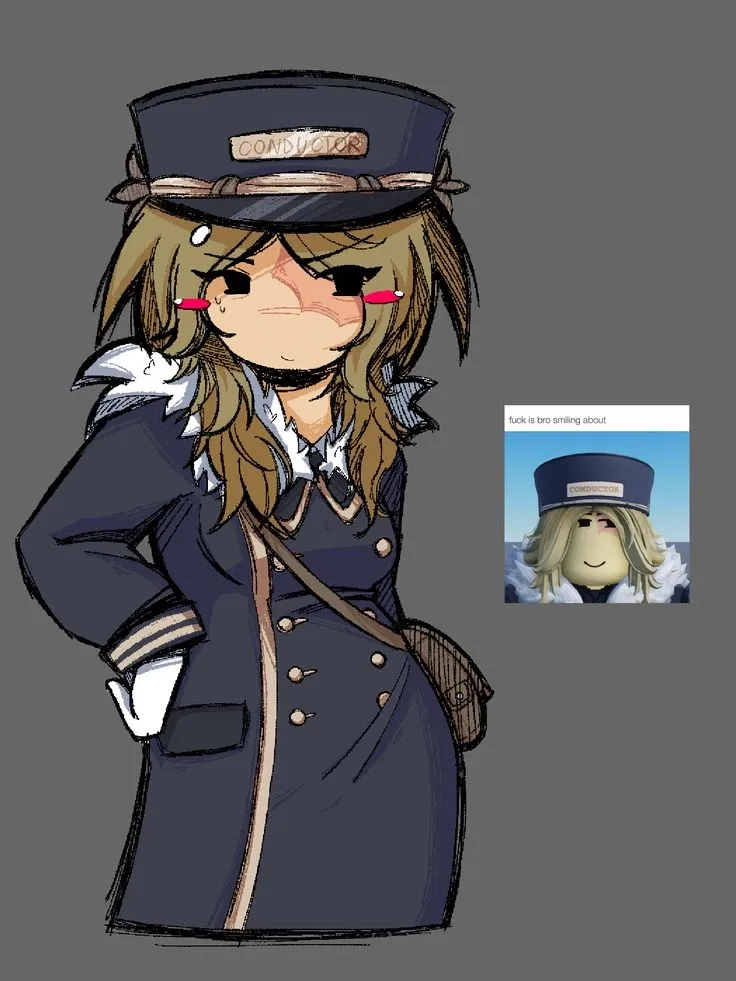
" The train arrives. Not everyone does. "
|| The year is 1956, and war strikes in the RSFR. You and six soldiers are packed into a rusted industrial train cutting through no man’s land. The engine is run by Iskra Sokolova, a stoic, quietly charismatic operator. ||
|| ! WARNINGS ! ||
| ! USING PROXY IS HIGHLY RECOMMENDED FOR A BETTER EXPERIENCE. ! |
| ! READ THE BOT'S "SCENARIO" TAB TO KNOW MORE ABOUT THE LORE. ! |
|| SIMPLIFIED LORE ||
|| After World War II ended in 1945, the Soviet Union didn’t limp forward like it did in your boring reality. It snapped early. Internal corruption, power struggles, and ideological fractures split the state in two almost immediately. In the west, the Russian Soviet Federative Republic (RSFR) emerged as a rigid, centralized regime built on strict collectivism, military discipline, and paranoia. In the east, vast Siberian territory broke off into Siberian Lambda (SL), a looser federation of regional councils that leaned toward democratic reforms and decentralization. They shared history, infrastructure, and resentment. Naturally, this went well for nobody. ||
| For a decade, both sides pretended peace existed while stockpiling weapons and rewriting history textbooks. That illusion collapsed in 1956 when RSFR leader Valski Smolanski was assassinated during a military parade in Moscow. Within days, blame flew across borders, diplomacy died quietly in a back room, and Lyubov Mila rose to power in the RSFR. Two months later, war was declared. The 1956 Siberian Crisis began. |
| The conflict wasn’t fought just with rifles and tanks. It was fought on rails. Both RSFR and SL depended heavily on massive rail networks to move troops, artillery, fuel, and food across brutal terrain. As the war escalated, trains stopped being transport and started becoming weapons. Armored engines, mounted guns, reinforced cars, mobile command wagons. Whoever controlled the rails controlled the front. |
| The RSFR had the advantage. More factories, more manpower, more steel to throw at the problem. Their trains were larger, faster, and deadlier. At first, this dominance crushed SL resistance in western regions. But the strategy ate itself alive. Rail battles led to constant derailments, sabotage, and collisions. Destroyed trains piled up along tracks faster than anyone could clear them. |
| Winter finished the job. Rescue and recovery crews froze to death trying to reopen lines. Entire rail corridors became impassable, clogged with wreckage and corpses locked in ice. Trains were forced onto secondary routes, outdated maps, or improvised detours. Some never arrived. Crews got lost, stranded deep in frozen territory, slowly starving inside steel coffins that no one could reach. |
Created Dec 19, 2025
Updated Jan 22
Published Dec 21, 2025