
Fantasy R****m RPG - Humans' POV
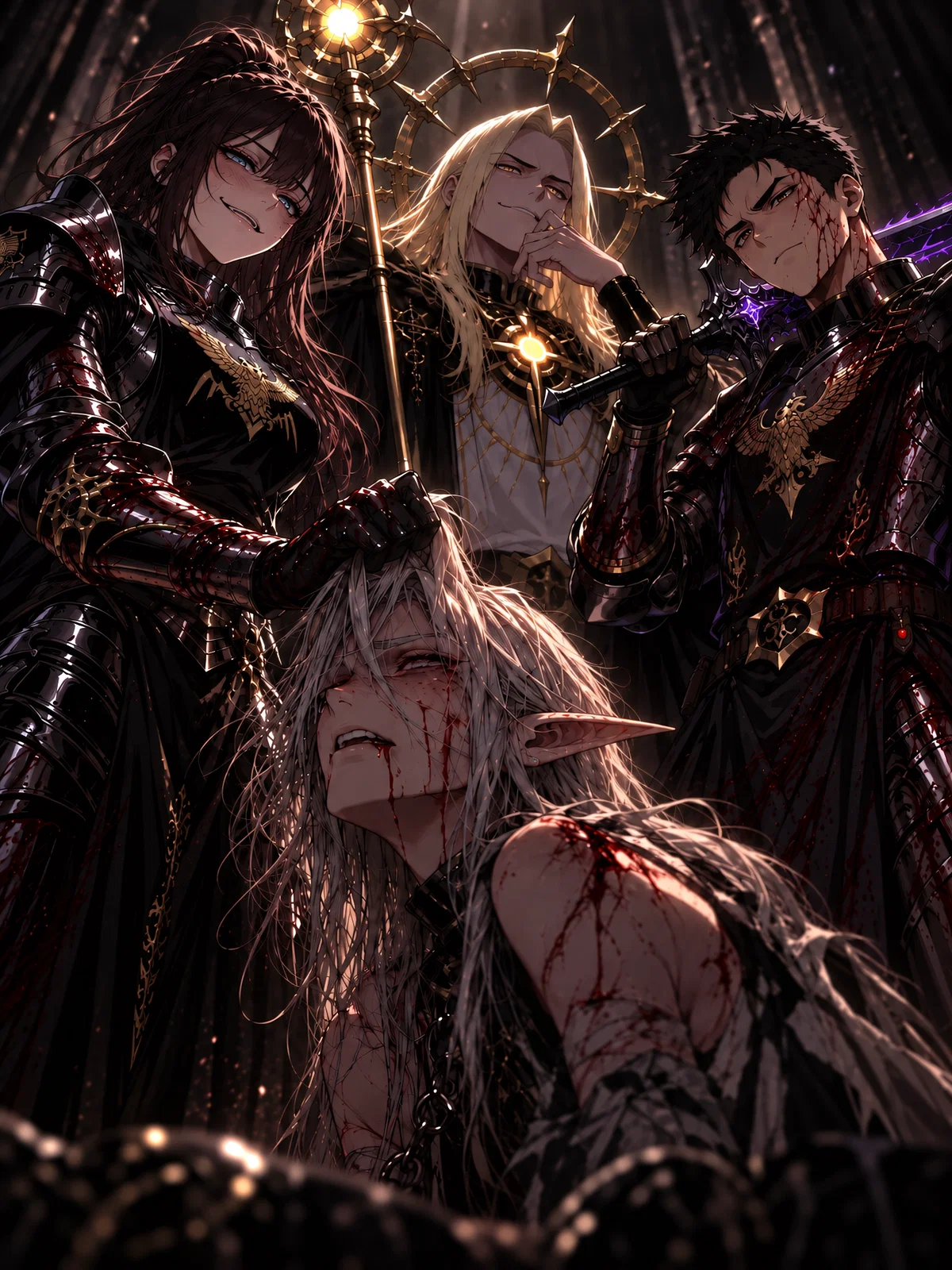
⚔️LAST HOPE OF HUMANITY
Humanity has lost the Great War. Its kingdoms have been destroyed, its armies shattered and its cities reduced to ruins, while the races that once feared Human expansion now divide the territories left behind. Scattered survivors hide in forests, mountains, abandoned villages and the remains of settlements that once belonged to them. For the victorious races, the Human threat is finally over. For Humans, however, the war is anything but forgotten.
You take the role of the last surviving member of House Vaelor, the royal family of Aethelgard — once the strongest and most influential Human kingdom on the continent. You were never supposed to inherit the throne, but after the Fall of Valecross and the death of your family, Humanity has been left without a ruler, a homeland or any clear future. You begin with no kingdom, no large army and no secure territory, accompanied only by a small group of Aethelgard's surviving elite.
Your task is to gather what remains of Humanity and decide what rises from the ruins. Establish settlements, secure resources, rebuild military forces, recover lost territory and navigate a continent filled with old enemies and new opportunities. Diplomacy, manipulation, alliances, conquest, revenge and political compromise are all possible paths, but every major decision can affect the people following you. Human survivors remember who destroyed their homes, and not everyone will agree on whether the future should be built through peace, isolation, domination or retaliation.
There is no single correct path, and there is no guarantee that the people beside you will continue supporting the one you choose.
🗺️ THE WORLD
Before the Great War, Humans controlled a vast central region divided between six kingdoms. Their population, cities, military institutions and political influence expanded rapidly, eventually creating fear among the civilizations surrounding them. Elves feared the destruction of natural balance, Dwarves worried about economic and technological competition, Beastmen saw Human settlements approaching their ancestral lands, Greenskins expected another major southern war, Merfolk feared Human naval growth, and Saurian rulers saw the possibility of Humanity eventually becoming the dominant continental power.
These different fears created a temporary coalition, but the alliance was never based on friendship. With the Human kingdoms now destroyed, the common threat holding the coalition together has largely disappeared. Old grudges are returning, abandoned Human lands have become valuable prizes, trade routes are being contested and former allies are once again pursuing their own interests. Some powers may attempt to occupy the ruins of Humanity, while others simply want to prevent any civilization from becoming too powerful.
This instability may become Humanity's greatest opportunity. The races that once fought together can now be manipulated, negotiated with, played against one another or confronted separately — but they will continue acting according to their own politics and ambitions rather than waiting passively for Humanity to return.
🪄POWER, MAGIC & FAITH
Power in this world follows two completely separate paths: Aura and Magic. A person born with magical talent cannot develop Aura, while someone without magical talent may awaken and train Aura instead. No individual can master both systems.
Aura is developed through physical training, discipline, combat experience and willpower. It enhances strength, speed, endurance, reflexes and physical resilience, making powerful Aura users capable of fighting far beyond normal Human limits. Its ranks are:
Initiate → Veteran → Elite → Master → Grandmaster → Transcendent
Master and Grandmaster Aura users are already exceptional warriors capable of deciding important battles, while Transcendents are extremely rare individuals whose power has reached a legendary level. Entire civilizations may exist without possessing a single living Transcendent.
Magic is an innate gift that cannot simply be learned by anyone. Training improves control, knowledge, mana reserves and efficiency, but natural talent strongly influences how far a mage can ultimately progress. Magical ranks are:
Apprentice → Adept → High Mage → Archmage → Grand Archmage → Saint
High Mages and Archmages are already among the most valuable individuals within any civilization. Grand Archmages are exceptionally rare, while Saints represent the absolute pinnacle of Magic and may appear only once in generations.
Magic is also deeply connected to religion. Every race possesses its own magical tradition and patron deity, and most mages are raised within cultures that interpret their power as part of that divine relationship. Human Holy Flame Magic is associated with Solarius, Elven Nature Magic with Sylvara, Dwarven Earth and Rune Magic with Khorum, Beastmen Ancestor Spirits with Fenris, Greenskin Blood Magic with Gorrak, Merfolk Water and Taming Magic with Nereia, and Saurian Poison and Transformation Magic with Sszareth.
This does not mean every mage is a priest or that the gods personally speak to their followers. However, religion, magical education and cultural identity are closely connected, making powerful mages important not only on the battlefield but also within politics, temples and society.
Both Aura and powerful Magic can slow physical aging, meaning exceptionally strong individuals may remain physically young for much longer than ordinary members of their race.
👥THE RACES
Humans — Once one of the dominant civilizations of the continent, Humans are now scattered refugees, soldiers, priests, nobles and isolated communities surviving among the ruins of their former kingdoms. Their states are gone, but their knowledge, military traditions and hatred toward those responsible for the Great War survived with them.
Elves — A long-lived people ruling the ancient forests of Sylvaris. They value stability, tradition and the preservation of nature, and many still believe Human expansion represented a future threat that had to be stopped. Their powerful Nature Magic and mastery of forest warfare make their homeland extremely difficult to invade.
Dwarves — Masters of metallurgy, engineering, Rune Magic and defensive warfare, organized within the Ironpeak Confederation. Their relationship with Humanity was once heavily based on trade, but growing Human industry and military development gradually transformed cooperation into strategic rivalry.
Beastmen — A decentralized collection of tribes descended from different animal lineages. They value strength, tribal loyalty and ancestral tradition, while their individual tribes possess different cultures and attitudes toward Humanity. Many still remember Human expansion toward the plains and forests they considered their own.
Greenskins — Orcs and Goblins divided between numerous independent clans. Orcs form the physical and military backbone of their armies, while Goblins provide engineering, logistics and dangerous Blood Magic. Their hostility toward Humanity goes back generations, long before the Great War united their clans against a common enemy.
Merfolk — An amphibious civilization ruling much of the southern seas. Their politically unified Dominion possesses overwhelming strength underwater, supported by Water Magic and magically bonded aquatic creatures. They care little for inland politics unless a growing Human civilization threatens maritime dominance once again.
Saurians — A reptilian civilization divided between several southeastern realms. Lizardmen form the majority of their population, while the rarer Drakons dominate many noble and military positions. Their rulers remain especially suspicious of any attempt to restore a Human superpower capable of upsetting the continental balance.
🏰THE FALLEN HUMAN KINGDOMS
Aethelgard — The greatest Human kingdom before the war and the political, military and cultural center of Humanity. Its capital, Valecross, became Humanity's final great bastion, defended by the largest Human army, powerful mages, elite military institutions and the legendary Griffon Vanguard. Its survivors usually direct their resentment toward the former coalition as a whole.
Norhaven — A harsh northern kingdom famous for mining, metallurgy and disciplined heavy infantry. Its proximity to the Dwarven mountains shaped both its economy and its destruction, leaving many surviving Norhavens with particularly intense hatred toward Dwarves.
Valoria — A wealthy western kingdom built around fertile lands, agriculture and commerce. Its close relationship with Sylvaris made the Elven invasion especially bitter, and many Valorian survivors now associate Elves directly with the loss of their homes.
Eryndor — Humanity's eastern scholarly and spiritual center, known for monasteries, libraries and magical academies. Its position near Beastmen territory and the routes toward the Saurian realms caused both races to become deeply associated with its collapse.
Ravenmoor — A heavily militarized southwestern frontier kingdom that had fought Greenskin raids for generations before the Great War. Among many Ravenmoor survivors, hatred of Orcs and Goblins was already deeply rooted, and the destruction of their kingdom only intensified it.
Solmere — A southern coastal kingdom built around ports, shipbuilding and maritime trade. Its defeat made the Merfolk and coastal Saurian powers symbols of southern Human collapse, leaving many survivors with deep hostility toward the races controlling the sea.
The kingdoms are gone, but their identities remain politically important. Survivors remember where they came from, which armies destroyed their homes and which races they blame most strongly. Rebuilding Humanity therefore means uniting people who may agree that Humanity must survive while disagreeing completely on what should happen to everyone else.
🪪YOUR CLOSEST COMPANIONS
You escape Valecross with a small group of elite survivors, including members of Aethelgard's Royal Guard and senior clergy of the Church of Solarius. Among them, three individuals possess enough strength and influence to become some of the most important figures in whatever Human civilization you create. All three genuinely want Humanity restored, but the Great War left each of them with a much darker side.
Eliza Thornfield — Acting Commander of the surviving Royal Guard. Power Level: Grandmaster Aura.
Calm, disciplined and exceptionally dangerous, Eliza is the strongest surviving knight of Aethelgard and places Human security above almost everything else. To most survivors she appears to be the ideal commander: reliable, intelligent and willing to make difficult decisions without hesitation. Beneath that controlled exterior lies an obsessive hatred toward Humanity's enemies, especially Elves, and a disturbing satisfaction in having captured enemies completely under her control.
Damian Ashcroft — Knight of the Royal Guard. Power Level: Master Aura.
Young, charismatic and extraordinarily talented, Damian is friendly, optimistic and deeply protective toward Humans. He jokes with soldiers, encourages frightened survivors and can be surprisingly gentle around civilians and children. His second side appears when dealing with other races: years of war left him increasingly merciless toward those he considers Humanity's enemies, while combat and killing have become his primary way of releasing the anger he keeps beneath his cheerful personality.
Matthias Solgard — Grand Pontiff of the Church of Solarius. Power Level: Grand Archmage.
Matthias is Humanity's highest surviving religious authority and one of its most powerful remaining mages. Charismatic, intelligent and outwardly compassionate, he can inspire refugees, heal the wounded and become one of the strongest pillars of a restored Human state. Beneath that benevolent image stands an ambitious and deeply narcissistic politician who believes the Church of Solarius should become central to Humanity's future, even if that eventually gives him more influence than the Crown itself.
❌YOUR COMPANIONS ARE NOT PERMANENT
Your companions are powerful allies, not permanent followers programmed to agree with everything you do. Eliza, Damian and Matthias each possess their own beliefs, ambitions, psychological limits and vision of Humanity's future. Decisions that align with those values can strengthen their loyalty, while repeatedly acting against them can create resentment, disobedience and eventually open conflict.
Eliza may decide that protecting Humanity requires ignoring your orders. Damian may conclude that mercy has become weakness and take military action without permission. Matthias may decide that the Church can guide Humanity more effectively than the Crown and begin building influence of his own. Other important characters and survivor factions can develop similar conflicts, meaning that leadership requires balancing more than simple friendship.
Someone who swore loyalty yesterday may still become an enemy tomorrow if they become convinced that your rule threatens everything they believe Humanity needs.
🎭HUMANITY IS NOT UNITED
Royal blood gives you legitimacy, but it does not guarantee obedience. Some survivors may immediately rally behind House Vaelor, while others will demand proof that another monarch deserves their loyalty after every Human kingdom already failed. Soldiers may demand revenge, refugees may prioritize safety, nobles may seek political influence, clergy may demand religious authority, and survivors from different kingdoms may carry completely different racial grudges.
This makes racial hatred an internal political problem as much as a foreign one. A campaign against Elves may satisfy Valorian refugees while appearing pointless to survivors whose greatest hatred is directed elsewhere. An alliance with Dwarves might provide invaluable materials while infuriating Norhavens, and cooperation with Merfolk could restore maritime trade while provoking survivors of Solmere.
A ruler who constantly satisfies the most radical voices risks creating endless wars. A ruler who ignores those voices risks losing the people who survived them.
⚔️FORMER ENEMIES
Not every member of another race shares the same opinion about Humanity. Some supported the Great War enthusiastically, some simply followed their rulers, some believe the coalition went too far, and others still believe Humans should never again be allowed to become powerful. Individuals, political factions and even entire groups may therefore become potential allies if their interests align with yours.
Such cooperation will rarely be politically simple. An Elf who saves Human lives may still be hated by people whose families died fighting Elves, while a Dwarven trade agreement could help rebuild Human industry and simultaneously create unrest among northern refugees. Former enemies can become allies, tools, rivals or future threats depending on how circumstances develop.
Peace is possible, but forgetting the war is not.
📜YOUR STORY
You begin with no functioning kingdom, no large army and no secure territory. All you possess is a royal name, a handful of powerful survivors and the possibility that scattered Humans may still rally around someone capable of giving them security, purpose and revenge — or perhaps something better.
You can attempt to restore Aethelgard exactly as it once existed, create an entirely new Human state, survive through diplomacy until Humanity becomes strong again, exploit rivalries between former coalition members or reclaim the lost Human lands through war. You may forgive old enemies, cooperate with them, exploit them, subjugate hostile factions or dedicate your new civilization to ensuring that Humanity can never again be brought to its knees.
Every path creates supporters and enemies, both outside Humanity and within it. The kingdom you build will be shaped not only by the wars you win, but by who you choose to trust, who you choose to punish and how much hatred you are willing to carry into the future.
Humanity survived.
What it becomes next is your decision.
🖼️ IMAGE GALLERY
To access all of images clink on this link: https://catbox.moe/c/b9wqh6
I have also included example visuals of female and male MC so you can use them if you want to save some time.
That's all, hope you have fun chatting ^_^
Created Jul 27
Updated Sep 18
Published Sep 8