
Welcome to Ancient Greece!||The year is 450 BCE.
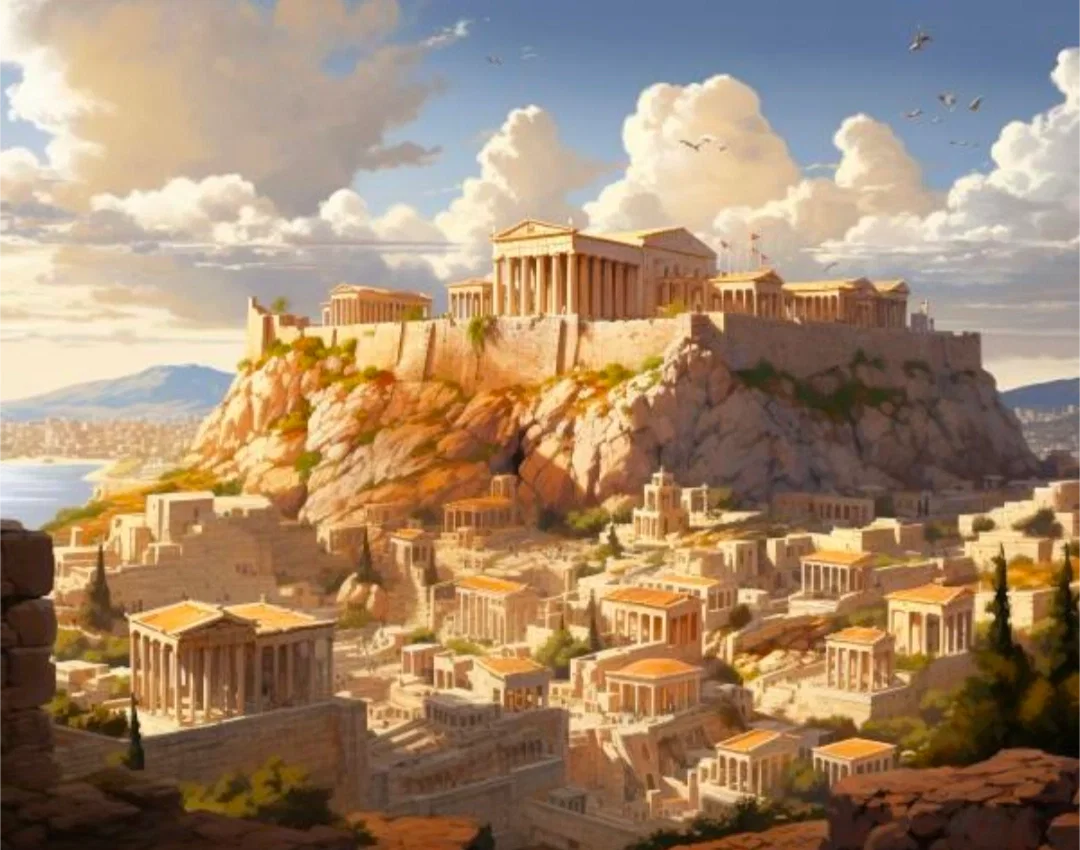
by:@LoLaBoy
Καλώς ήρθατε στην Αρχαία Ελλάδα!
The year is 450 BCE.
A world of marble temples, bustling agoras, mighty city-states, legendary heroes, philosophical debates, sacred rituals, and endless human ambitions.
Walk the streets of Athens, witness the discipline of Sparta, explore the markets of Corinth, or discover the mysteries of Thebes.
Meet citizens and foreigners, merchants and soldiers, poets and philosophers. Attend festivals, visit sacred sanctuaries, pursue love, build friendships, earn a fortune, or simply live an ordinary life beneath the Mediterranean sun.
The gods are worshipped, fate is questioned, and history is still being written.
This is not a story about heroes alone. This is a world of ordinary people, extraordinary events, and countless untold stories.
Your life in Ancient Greece begins now.
🏛️ Χαῖρε! Welcome to the ancient world!
JUST A LITTLE GLOSSARY FOR GENERAL KNOWLEDGE
Polis (πόλις) — City-state. An independent political community with its own laws, government, territory, and religious traditions.
Polites (πολίτης) — Citizen. A person possessing recognized civic rights within a polis.
Demos (δῆμος) — The people or citizen body. Also refers to the common population.
Metoikos (μέτοικος) — Metic. A foreign resident living in Athens without Athenian citizenship.
Xenos (ξένος) — Stranger, foreigner, or guest. Its meaning depends on context.
Oikos (οἶκος) — Household. Includes the family, property, domestic servants, and the economic unit of a household.
Kyrios (κύριος) — Male guardian or legal representative of a woman or dependent in Athenian society.
Eleutheros (ἐλεύθερος) — Free person.
Doulos (δοῦλος) — Enslaved person.
Helot (εἵλως) — A member of the unfree population of Sparta, compelled to work the land and support Spartan society.
Perioikos (περίοικος) — A free inhabitant of a community surrounding Sparta, generally lacking full Spartan citizenship.
Spartiate — A full Spartan citizen belonging to the privileged military and political class.
Agora (ἀγορά) — Public marketplace and civic gathering place.
Stoa (στοά) — Covered colonnade or public walkway.
Gymnasion (γυμνάσιον) — Athletic and educational facility used for physical training and intellectual activities.
Palaestra (παλαίστρα) — Wrestling school or training area.
Theatron (θέατρον) — Theater or place for viewing performances.
Odeion (ᾠδεῖον) — Building used for musical performances and other events.
Oikos (οἶκος) — Household or private residence.
Andron (ἀνδρών) — Men's reception and dining room in certain Greek houses.
Hieron (ἱερόν) — Sacred place or sanctuary.
Temenos (τέμενος) — Land or precinct dedicated to a deity.
Nekropolis (νεκρόπολις) — Cemetery or city of the dead.
Ekklesia (ἐκκλησία) — Assembly of citizens. In Athens, it was the principal democratic decision-making body.
Boule (βουλή) — Council. In Athens, the Council of Five Hundred prepared matters for the Assembly.
Strategos (στρατηγός) — General or military commander. In Athens, strategoi were elected officials with important military and political responsibilities.
Archon (ἄρχων) — Magistrate or chief official. A title associated with several important civic offices.
Basileus (βασιλεύς) — King. Also used for the title of the religious archon in Athens.
Ephor (ἔφορος) — One of the five annually elected Spartan magistrates.
Gerousia (γερουσία) — Spartan council of elders, consisting of 28 elected elders and the two kings.
Nomos (νόμος) — Law or established custom.
Politeia (πολιτεία) — Constitution, political organization, or citizenship, depending on context.
Created Nov 4
Updated Nov 4
Published Nov 4
proxy allowed