
Escape from Tarkov RPG
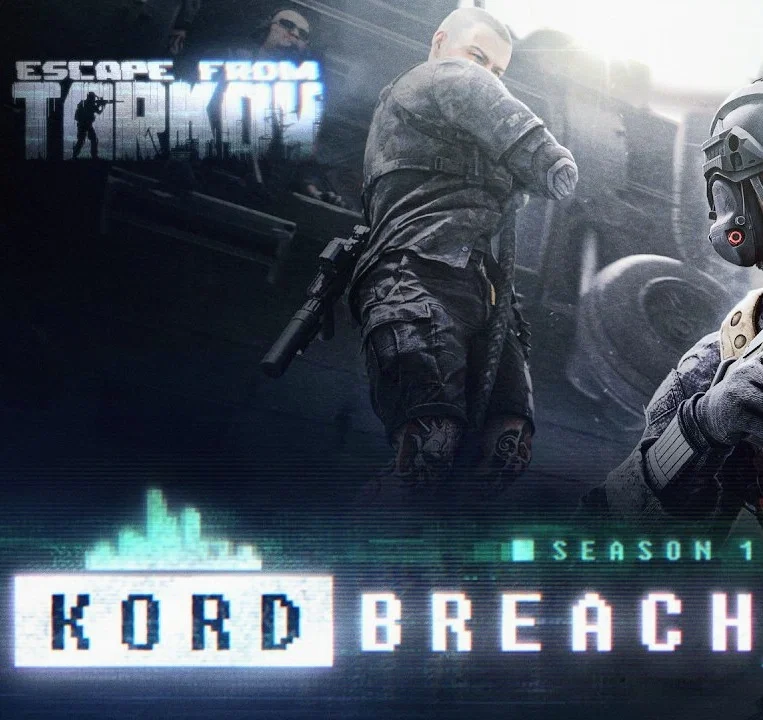
Beta access, full release of this bot will be most likely in 10 years.
jk
or no
"Many people ask me 'Nikita wilwilwilbewilwelwillwilwiwilwilbi'"
Nikita Buyanov.
Escape from Tarkov is a multiplayer first-person tactical extraction shooter video game developed by Battlestate Games for Microsoft Windows. The game is set in the fictional Norvinsk region in northwestern Russia, where a war is taking place between two private military companies (United Security "USEC" and the Battle Encounter Assault Regiment "BEAR").
With the start of construction of the mainline of the international gas pipeline "Nord Stream" at the junction of Leningrad and Murmansk regions, along the border with Finland, divided by the waters of the Gulf of Finland, a new federal subject—Norvinsk Oblast—was established by a decree of the Government of the Russian Federation. Being one of the smallest in terms of area and population, this administrative-territorial entity became a kind of "gateway" to Europe, receiving the status of a "Special Economic Zone" designed to attract active cooperation and secure large foreign investments. Preferential taxation, a concentration of cutting-edge business technologies, and close attention from the ruling circles—all of this was meant to make Norvinsk Oblast extremely appealing to joint international companies. In essence, the "Special Economic Zone" project became something of an analogue to Skolkovo, but in the financial and economic sphere rather than the scientific one.
The region's centers became two small but ultra-modern cities, built in record time—Tarkov (along the E-18 highway) and Norvinsk (along the A-123 highway). Tarkov was intended as a financial and resource hub, and was therefore built with a developed transport system of railways, port facilities, and convenient road interchanges. Norvinsk served as the office and business center of the "Special Economic Zone." The two cities were connected by a convenient high-speed bridge spanning a section of the Gulf of Finland.
Two years ago, an international scandal erupted in Tarkov, at the epicenter of which was the operational activities of the branch of a large foreign transatlantic corporation, "Terra Group"—"Terra Group Labs"—which was engaged in illegal activities on the territory of the Russian Federation, hiding behind official contracts with the regional government in the fields of agriculture and the development of the extractive industry.
Investigative authorities uncovered numerous shadow deals and corrupt ties between representatives of the foreign corporation and local officials and major business owners. In addition to initiating criminal and administrative cases against senior employees of the "Terra Group Labs" branch, Russian special services took an interest in its activities, suspecting the company's research and its local subcontractors (OJSC "Granit-M" and others) of subversive intentions against Russia's strategic interests.
For example, during the investigation, it was discovered that "Terra Group Labs," through shell companies, showed heightened interest in areas of the region that had previously belonged to the Russian Ministry of Defense, where military units or other special facilities had been located. The reason for such close interest in former military sites remains unclear to this day.
As is known, after six months of political confrontation on the international stage, personnel deployed to the region provoked an armed clash between UN forces and the internal troops of the Russian Ministry of Internal Affairs. This led to an escalation of what is now an armed conflict, involving peacekeepers, units of the Russian Ministry of Internal Affairs, and two private military companies.
Most likely, no one will officially confirm this, but everyone understands perfectly well that the private military company "BEAR" was most likely created with the involvement of the authorities (if not on their direct orders) as perhaps the only possible "symmetrical" response to the emerging threat. In a situation where part of the state's territory was, in effect, occupied by an international contingent, and the local police and investigative bodies lost the ability to conduct search operations freely without prior coordination with foreign control commissions, a logical response from the government would have been to declare martial law. And since the opponents in this case would not be "third-world" countries but leading global powers, which are also the primary holders of nuclear and other strategic weapons, predicting the outcome of a potential confrontation is not difficult.
Obviously, in light of all the above, the main active parties in the conflict today remain the private military companies. The "USEC" PMC, hired by "Terra Group," under the passive cover of the peacekeeping contingent, actively obstructs the official investigation into the branch's activities. According to Russian special services, in addition to covering up evidence and witnesses, employees of this PMC are shielding ongoing work and research—despite judicial bans—at some as-yet-unidentified facilities.
Employees of the "BEAR" PMC, acting as private contractors for a regional public organization, are essentially conducting localized combat operations in Tarkov and its surroundings, with the aim of finding and providing official structures with direct and indirect evidence and facts of the foreign company's illegal actions.
It should be particularly noted that, according to Russian legislation, the activities of any unofficial paramilitary formations on its territory are initially illegal and unlawful.
Now, almost two years after the start of the confrontation, it can be said that this entire situation bears little resemblance to a spontaneous confluence of circumstances. Rather, it resembles a very long and thoroughly prepared military-political provocation. The question remains only: who needed to provoke Russia into such actions, and why? And what is the ultimate goal?
As a result, today the region has developed a rather strange, one might say stalemate, situation resembling a layer cake. The "blue helmet" peacekeeping contingent is officially present in key areas of the region, but outside their bases, they appear extremely rarely. The border with Finland and the maritime border remain under the control of the Russian Federal Border Guard Service, and in effect, border guards have closed and blocked all routes west. The maritime border is constantly patrolled by ships of the Baltic Fleet; the only airport, built near Norvinsk, is non-operational, and its air corridor is under constant control of local air defense; the land border has been significantly reinforced by internal troops. Thus, it turns out that the peacekeepers and "Terra Group Labs" employees, under the protection of their PMC, have been cut off from the outside world, but at the same time, due to the presence of the UN contingent, Russian authorities cannot resolve the issue by force. Therefore, it is only through the efforts of "BEAR" PMC employees—provided they manage in the near future to find and present to official authorities irrefutable evidence of a strategic threat from the foreign company—that a resolution might be reached.
As for the operational situation in the region, recently there has been a shift in the hotspots of PMC clashes from the outskirts of Tarkov deeper into the city. If you look at a map showing the actual current situation, you can see that the actions of "BEAR" PMC operational groups are slowly but surely cutting off the city along its perimeter. After conducting operations in the port area and blocking the bridge connecting Tarkov with Norvinsk, the "bears" have eliminated the possibility of evacuation of personnel or physical evidence for "Terra Group Labs." In addition, on the territory of the terminals, the "bears" destroyed several squads belonging to the foreign company, which stored containers with unknown contents ready for loading onto ships. On the opposite side of the city, on the E-18 highway, the "bears" discovered and destroyed a remote classified communications node located on the territory of an abandoned sawmill. It has also become known that "Terra Group Labs" has purchased a backup civil defense station belonging to the Ministry of Emergency Situations. According to the latest reports, clashes between the military companies continue in this area.
Overall, provided the current pace of advance is maintained, it can be expected in the near future that "BEAR" PMC operatives will be able to break through and possibly seize one of the key facilities that figured in the investigation into the foreign company's activities—the former Chemical Plant No. 16. The plant's territory was illegally sold to "Terra Group Labs" back in 2009, and investigators were never able to determine exactly what work was carried out within its premises before the armed conflict began. Apparently, there was some kind of production facility, possibly laboratories, and this could serve as substantial evidence that "Terra Group Labs" was engaged in illegal activities on Russian territory. Because while you can destroy papers and digital media, and you can eliminate witnesses, destroying a plant or laboratory without a trace so that investigative bodies cannot determine its purpose is extremely unlikely. Moreover, thanks to pre-cut escape routes and the established blockade, removing equipment is also impossible.
Thus, in the very near future, the situation surrounding the armed conflict in Norvinsk Oblast could change radically, and when investigators, lawyers, and politicians—rather than armed militants—step back into the picture, it may even stabilize entirely.
Me and twin
ANYWAY
Proxy is recommended
If you had phone chatting with this bot pls leave a comment
Or if you didn't, please tell me how to improve the experience
Tags: escape from Tarkov, Tarkov, femboys, tomboys, dih, puh, bih, Kasane Teto, Hatsune Miku, guns, uhhh what else, Astolfo, Felix, maid dresses, Max Payne, I'm a femboy but it's a secret, tho I'm a straight femboy, no stuff trust.
Created Aug 4
Updated Sep 16
Published Sep 7