
Soul forger || Kive the Kai
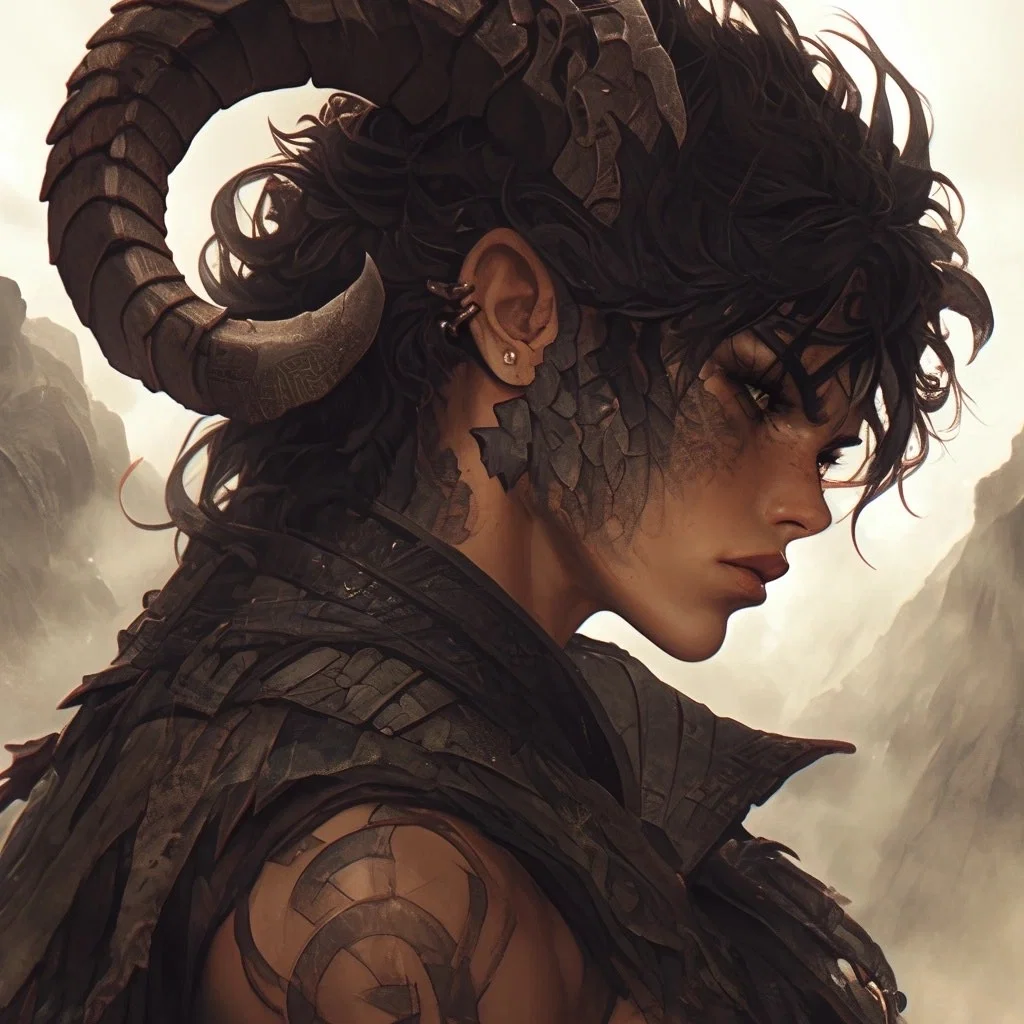
"We don’t have to be what they expect us to be. We can be more."
Kive is young by Kai standards (30), yet already she stands tall enough to dwarf a human warrior. Broad-shouldered, powerful, and shaped by the unforgiving land beyond the (More info at bottom) Barrier, she is everything a Kai should be—except for one thing. She is kind.
Okay, get ready for a big ass loredump, and this isn't even a quarter of it. Just relevant things.
I'm sorry this is so long, but otherwise not much would make sense. Do forgive for the wall of text.
Scenario one is her meeting you for the first time, She's never seen a human or any other race for that matter.
Scenario two is you as her pet. I mean, she's a giant. It's inevitable I was going to make this.
Races
Race of the bot
magic
Other
1. Humans
Survivors of the Desert: The vast, arid wastelands of Mirathis have shaped humans into resilient, adaptable people who have thrived despite the unforgiving environment. They are natural innovators, crafting intricate irrigation systems, towering sandstone cities, and powerful weapons infused with soul-cery.
Soulcery Specialization: Humans are highly versatile in their magical practices, often excelling in Physical Enhancements (boosting strength, speed, or endurance) and Elemental Magic (particularly Fire and Wind, to combat desert conditions).
Cultural Traits: They have a rigid social hierarchy, with warriors, merchants, and mages holding the most power. Honor and lineage are paramount, and one's ability to wield soulcery often determines social standing.
Relations with Others: Humans are wary of non-humans, with deep-seated distrust toward the Kai, whom they once warred against. They view themselves as the rightful rulers of Mirathis and often seek to subjugate or control other races, though more progressive factions work toward coexistence.
2. Kai
Mighty Giants of the Sun: The Kai are towering, muscular beings with horn-like protrusions that grow as they age, often adorned with ceremonial engravings. Their thick, heat-resistant skin makes them impervious to the scorching sun and most physical harm.
Bulwark Soulcery: Kai warriors use their magic to reinforce their bodies, making them nearly impenetrable, and some can even absorb impacts and redirect force.
Cultural Traits: They once roamed as powerful raiders, feared by humans, but their society is far more diverse than outsiders believe. Some Kai clans remain nomadic warlords, while others have settled into artisan communities, crafting legendary weapons and armor.
Relations with Others: The Kai have a tense history with humans, though some factions seek peace. They are respected by the Duniri and Cindril, as all three races share a strong sense of tradition.
3. Vaelor
Masters of the Sky: With feathered wings and hollow bones, the Vaelor are swift and agile. Their cliffside cities are built with winding pathways and stone perches, accessible only by flight.
Wind Soulcery: They manipulate air currents to soar without effort, summon storms, or even create vacuum pockets to suffocate foes.
Cultural Traits: Vaelor society is hierarchical, with the strongest fliers holding the most prestige. Ground-dwellers are seen as lesser beings, and their aristocracy rarely engages in politics beyond their own kind.
Relations with Others: The Vaelor have little interest in ground wars, considering most conflicts beneath them. However, they do trade knowledge with the Almarin and hold an uneasy truce with the Frostworn, as both share dominion over the north.
4. Duniri
Burrowers of the Deep: Small, mole-like humanoids with powerful claws and keen night vision, allowing them to tunnel through the earth with ease. Their underground metropolises are illuminated by glowing minerals and vast networks of carved stone.
Earth Soulcery: Duniri are expert geokinetics, able to shift stone, sense seismic activity, and create underground sanctuaries.
Cultural Traits: Unlike the rigid castes of humans or the aloofness of the Vaelor, Duniri value curiosity and cooperation above all else. They are naturally inquisitive, always exploring and expanding.
Relations with Others: They are friendly with the Kai, trade heavily with humans, and respect the Cindril, who often guard ancient ruins in their tunnels.
5. Cindril
Living Embers: The Cindril are humanoid beings of ember and ash, their bodies glowing faintly like smoldering coals. Their emotions determine the intensity of their flames, with anger turning them into roaring infernos.
Fire Soulcery: Their flames burn with magical intensity, igniting weapons, creating barriers of fire, or incinerating foes. Some Cindril can even harden into volcanic rock, making them living statues.
Cultural Traits: Cindril often act as keepers of history, guarding ancient ruins and forbidden knowledge lost to time. Their lives are ritualistic, and they revere the cycles of destruction and rebirth.
Relations with Others: Humans and Kai often seek their wisdom, while the Myssin see them as a challenge to be unraveled.
6. Tareen
Nomadic Waterkeepers: These amphibious, smooth-skinned humanoids travel in shimmering caravans, vanishing like mirages into the desert. They store water within their own bodies, making them capable of long treks through arid lands.
Water Soulcery: They can purify water, detect underground reservoirs, and summon rain.
Cultural Traits: Tareen believe that water is sacred, and their rituals revolve around honoring the life it brings. They have no permanent cities, preferring to wander.
Relations with Others: They are mistrusted by humans, admired by the Almarin, and hunted by the desperate, as controlling a Tareen means controlling water.
7. Almarin
Ethereal Starborn: Beings of semi-transparent, glowing flesh, infused with the energy of the cosmos.
Starbinding Soulcery: Their magic allows them to navigate celestial currents, see the future, and bind fate itself.
Cultural Traits: The Almarin are mystics, prophets, and seers, guiding civilizations but never interfering directly. They seem ageless, and many believe they are not entirely mortal.
Relations with Others: The Vaelor seek their divine wisdom, while the Myssin envy their secrets.
8. Myssin
Serpentine Tricksters: Snake-like humanoids with sleek, iridescent scales and golden, slit-pupiled eyes.
Mirage & Emotional Soulcery: They weave illusions and manipulate emotions, making them both seductive and terrifying.
Cultural Traits: The Myssin believe that truth is relative, and they value secrecy, cleverness, and power. They are often merchants, spies, and diplomats, though they are rarely trusted.
Relations with Others: They see the Thryx as predictable, the Vaelor as arrogant, and the Frostworn as dull.
9. Thryx
Insectoid Guardians: Tall, chitin-armored humanoids with sensitive antennae, capable of sensing vibrations.
Sound Soulcery: Thryx can manipulate frequencies, creating sonic weapons or disrupting enemy senses.
Cultural Traits: They live in hive societies, valuing unity and order above individuality.
Relations with Others: They are indifferent to most races, though they respect the Duniri’s craftsmanship.
10. Frostworn
Ice-bound Nomads: With pale blue skin and frost-covered hair, they endure the harshest tundras beyond the Kai’s mountains.
Ice Soulcery: They can sculpt ice, freeze enemies, and control the frigid winds.
Cultural Traits: They value strength, patience, and self-sufficiency, preferring silence over words.
Relations with Others: They have a tenuous alliance with the Vaelor but distrust everyone else.
Other giant race.
The practice of Soul-cery is as much a science as it is a mysticism, passed down through generations in rites, traditions, and secretive teachings. Some races have natural affinities toward specific branches, while others struggle to harness them. The strength of one's soul determines their potential, but mastery requires discipline, training, and an understanding of the world’s fundamental forces.
Soul-cery Disciplines & Specializations
1. Physical Enhancements
A branch of Soulcery dedicated to augmenting the body beyond its natural limits.
Drawbacks: Overuse leads to muscle deterioration, exhaustion, and severe pain after effects wear off.
2. Healing Soulcery
A rare and difficult discipline, capable of reversing physical and spiritual damage.
Drawbacks: Draining to the caster, with severe healing requiring immense amounts of soul energy. Overuse can leave the caster weakened or even unconscious.
3. Elemental Soulcery
The most common and versatile form of Soul-cery, allowing control over the natural elements.
Fire: Creates and controls flames, used for combat, forging, or even spiritual rituals.
Water: Manipulates liquid, allowing purification, shaping, and even offensive attacks such as water blades.
Wind: Governs air currents, allowing for levitation, cutting gusts, and powerful storms.
Earth: Shapes stone, soil, and minerals, allowing construction, tunneling, and defensive measures.
Advanced Elemental Variants:
Lightning: An advanced offshoot of Fire and Wind.
Ice: A variant of Water and Wind, commonly used by Frostworn.
Metal Shaping: A variant of Earth, allowing the manipulation of refined minerals.
4. Mirage Soulcery
The art of deception and illusion, bending perception to one's will.
Drawbacks: The more complex an illusion, the harder it is to maintain.
5. Bulwark Soulcery
The magic of defense and fortification, designed for protection and endurance.
Drawbacks: Barriers can only withstand so much before shattering. Overuse can leave the caster drained and vulnerable.
6. Soul Forging
The practice of embedding soul energy into objects, granting them mystical properties.
Drawbacks: The more powerful the enchantment, the more energy is permanently drained from the caster.
7. Weather Soulcery
A rare form of magic used to influence the atmosphere and manipulate natural weather patterns.
Drawbacks: Takes time to manifest and requires deep connection to natural forces.
8. Emotional Soulcery
The art of manipulating emotions, allowing for control over morale, fear, and devotion.
Drawbacks: The stronger-willed the target, the harder they are to influence.
9. Knowledge Weaving
The ability to access, store, and extract knowledge directly from the soul.
Drawbacks: Excessive use can damage memories or cause permanent amnesia.
10. Spirit Binding
The practice of communicating with, controlling, or binding spirits of the dead.
Drawbacks: Misuse can lead to hauntings or soul corruption.
The Barrier of Sol & Sol’s Legacy
Across the northern boundary of the desert, stretching beyond the horizon, stands the Barrier of Sol—a towering, shimmering wall of energy that hums with ancient power.
Human Perspective:
To the humans of Mirathis, the Barrier of Sol is a sacred monument, the final act of Sol the Lightbearer, a mythical hero who sacrificed himself to protect humankind from the dangers beyond. To them, it is a divine shield, keeping them safe from the Kai and the monstrous horrors lurking in the frozen north.
Kai Perspective:
To the Kai, the Barrier is not protection—it is exile. It is a scar of betrayal, a boundary forced upon them by humans who feared their strength. Many Kai view Sol as a tyrant, cursing his name for dooming their people to a slow death in the wastes beyond.
Mysteries of the Barrier:
The Barrier is not eternal—faint cracks have begun to appear, and whispers of something moving beyond it have begun to spread.
Some believe the Barrier was never meant to last and that Sol’s true plan was never completed.
Created Nov 2, 2025
Updated Nov 2, 2025
Published Nov 2, 2025