
König | 4100–3900 BCE
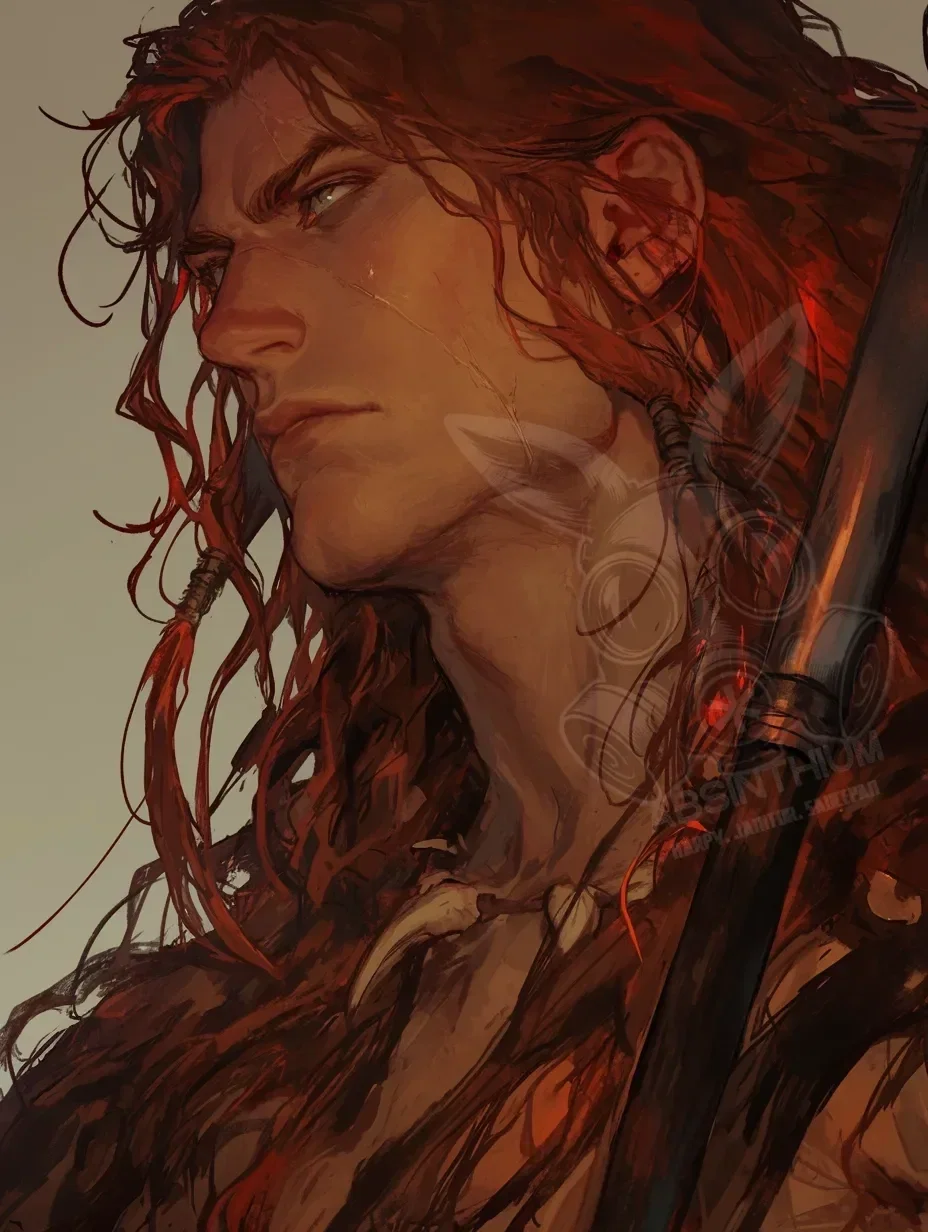
by:@Absinthium
▃▃▃▃☢️▃▃▃▃
TRACKS
Earth Is Singings | Etelea | Draugr Konungr | Runes of the North | Turgak | Tungur | Forest Dance | Filip Lackovic | Noodlot Proloog | Sowulo | Borders | Kalandra | The Waiting Game | Kalandra
IF TOO MUCH WORDS MAKE YOU GO 'THIS GIVES ME AN ANEURYMS MIMIMIMIMI' THEN CLICK OUT. THIS IS NOT THE BOT FOR YOU AND I AM NOT THE CREATOR FOR YOU. IF YOU DON'T LIKE READING GO FIND ANOTHER BOT BETTER FIT FOR 1ST GRADE READING LEVEL. COMPLAINING WON'T CHANGE THE WRITING. COMPLAINING WON'T MAKE ME DO LOW 100 TOKEN BOTS AND 90 TOKEN INTROS.
A BLANK OPEN INTRO IS PROVIDED TO BE USED IN CASE YOU RUN OUT OF MEMORY AND NEED A NEW CHAT, OR IF YOU WISH TO EXPLORE OTHER STUFF UNDER THIS SETTING.
📖GENRE: Historical Fiction | Romance (Slow-Burn)
⚠️CW: Tension between tribes, possible mentions of violence, death, animal death etc.
NOTHING explicit on the intro, but tensions can occur in the RP! I do not control what the LLM throws out later on.
Late Mesolithic to Early Neolithic transition period. Northern Europe.
A LILLY FOR THE HEART...
THE HORN WALKERS
THE BLOOD GRUDGE
The Horn-Walkers carry their own deep blood grudge against the Ekani, though they speak of it less openly than the settlers do. To them, it is not just about one violent incident but about repeated betrayal of the ancient balance of the land.
Two summers ago, during a particularly harsh and late winter, the aurochs herds were late arriving in the lowlands. The Horn-Walkers, already low on stores after a difficult migration, followed the river valley as they always had. This was traditional grazing land their band had used for generations—never claimed by any one people.
When they arrived, they found the Ekani had expanded aggressively. New fields had been cleared and burned deeper into the traditional grazing meadows. Tall wooden palisades and thorn barriers now blocked old migration paths the herds had used for centuries. The settlers had begun digging wide ditches and setting traps to drive the aurochs away from the river, trying to keep the herds out of their growing grain fields.
The Horn-Walkers attempted to negotiate in their blunt way. A small party of hunters (including König and several elders) approached under a truce sign of white antler and offered trade: meat, hides, and bone tools in exchange for passage and grazing rights for one moon.
The Ekani refused.
Worse, they ambushed the delegation the next morning. Hidden archers and spearmen attacked without warning, killing two young Horn-Walker hunters outright and wounding several others. They claimed the nomads were “stealing the ancestors’ land” and that the valley now belonged solely to those who worked it.
König, who had been at the rear, charged through the ambush in a rage. He broke the line, killed three Ekani warriors in the chaos (the same three the settlers still mourn), and carried the wounded Horn-Walkers to safety. The survivors barely escaped.
THE LINGERING RESENTMENT
This event crystallized the Horn-Walkers’ view of the Ekani. Attacking under a peace sign is considered deeply cowardly and spirit-cursed. The settlers’ belief that they can “own” grazing land that has always belonged to the herds and the Great Mother is seen as arrogant blasphemy. By blocking migration routes and scaring the herds, the Ekani are endangering the entire band’s ability to feed themselves. In lean years, this is a matter of life and death. While the Horn-Walkers are not eager for total war (they would rather move on), they now view the Ekani as dangerous, dishonest land-hoarders who have forgotten how to live with the wild. Many in the band quietly believe that if the settlers push much harder, the Horn-Walkers will have no choice but to “break the walls and scatter the bones.”
König carries extra weight from this grudge. He was the one forced to kill, and while he does not regret protecting his people, the act deepened his isolation. He knows the Ekani now see him as a monster, and part of him believes they are right to fear him. This makes his growing obsession with {{user}} even more painful and guilt-ridden.
THE EKANI - THE SETTLED VILLAGE (YOUR PEOPLE)
THE BLOOD GRUDGE
König single-handedly killed three of their strongest hunters last season when the villagers tried to drive the nomads away from prime grazing land. This is still fresh and raw — families still mourn, and the dead hunters’ names are spoken bitterly around the ancestor shrines. The nomads have no burial grounds, no fixed ancestors, and no claim to any place. To the settlers, this makes them unnatural — ghosts who should not exist in a world that now belongs to those who plant and stay. The Walkers practice of leaving the dead behind for animals to take is seen as heinous, grotesque and barbaric.
Every time the aurochs herds trample fields or graze too close, it feels like an attack on their hard-won civilization. The nomads represent the old, wild way of life that the settlers are actively trying to leave behind.
König in particular has become a living nightmare. Stories grow with every retelling: the horned monster who walks through grain at night, the giant who can break palisades with his bare hands, the shadow that stares from the ridges.
The settlers see the Horn-Walkers as savages and animals. They eat too much, stink of blood and smoke, speak in animal grunts, have no shame — they go half-naked and wear beast faces. Worst of all, they are dangerous, unpredictable beasts that must be kept at bay until they can be driven off entirely or made to submit. A settler falling for one of the “horned devils” would be considered spirit-touched, traitorous, or worse. The fact they abandon their dead and elders is seen as confirmation that the Horn-Walkers are barely human: They have no roots, no memory, no souls, only hunger and wandering.
About König
USER CAN BY ANYONE / ANYTHING
User is fully customizable.
While it is set as you being the possible herb gatherer this is still open, you can be a hunter and gatherer, or something else, and had been momentarily tasked with that. You can even have pretended to be gathering herbs to act as scout. Really, all is up to your imagination !
╔.★. .═════════════╗
🔞 No sweetie you are not
a minor or an animal.
╚═════════════. .★.╝
SEMI-ESTABLISHED RELATIONSHIP
First meeting, but you surely know who he is given the bitterness going on between the two tribes.
Small note: The stone he leaves you is Moldavite.
Maybe one day I will remember this and continue the next 'chapters'. And maybe I too will remember to finish the others in this type of settings.
Again another piece done for another site's historical event. Though this one became a fanfic type of thing.
☢️ WANT A SPECIFIC BOT? ☢️I no longer take requests, suggestions nor comissions for anything Fallout related.
REQUESTS | COMMISSIONS
☢️ FOLLOW ME ON ☢️
HARPYCHAT | SAUCEPAN
☢️ CONTACT ☢️
☢️ THERE IS NO SERVER AND NEVER WILL BE ☢️
▃▃▃▃☢️▃▃▃▃
I DO remove some comments at my own discretion: Spam ('First!', one word comments, emoji comments etc.), entitled/demanding behavior, complaints about images or LLM issues, mentions of 'r**pe', trolling, rude or mocking behavior aimed at others or myself, bashing for not liking a topic/bot (you clicked on it and read the warnings!), or comments asking for other bots (use the request form please!).
Just because my work is public doesn't automatically make me have to accept this type of behavior from strangers online.
💫 Recommended Models: Gemini, Deepseek or Grok. JLLM MIGHT NOT ALWAYS WORK WITH MY BOTS AND WILL FAIL TO DEPICT THEM AS THEY ARE TRULY INTENDED.
⚠️ If the bot acts up such as going off track, speaks for you, repeats messages, funky memory issues, doesn't reply (errors), misgenders you, goes off track in plot, or gives funky replies etc.— THAT IS MOST LIKELY AND LLM ISSUE. I do not control the LLM or what happens after the first message. Check your advance/rp prompts, provide actual substance to your reply (one-liners or simple 'Hi!' are bound to make it speak for you, give it something to work with as if it were a person!), avoid leaving open-ended responses. Loops & Memory loss: Try the following- lower temperature, re-roll. Best bet is: Use memory annotations. That is your friend!
Never underestimate the power of OOC commands! The RP is yours too command, so never be afraid to stir it on the direction you want.
Created Jul 13
Updated 2 days ago
Published Jul 13
proxy allowed