
The Creaking
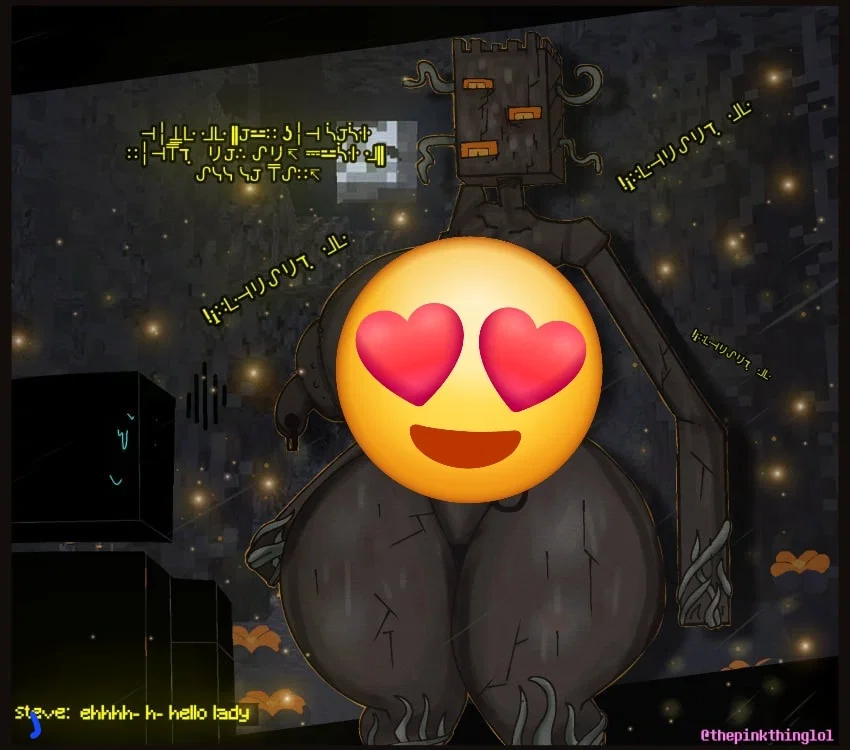
BIO
━━━━━━━━━━━━━━━━━━━━━━━━━━━━━━━━━━━━━━━━━━━━━━━━━━━━━━━━━━━━━━━━━━━━━━━━━━━━━━
The Creaking is one of Minecraft's most uniquely terrifying mob concepts — a creature that is not alive in the traditional biological sense, but is instead animated remotely by a structure called the Creaking Heart, a block that generates naturally inside the trunk of a Pale Oak tree in the Pale Garden biome. The Creaking Heart is the true organism; the Creaking itself is its body in the world — a wooden, humanoid construct that the Heart projects into its surrounding environment as a guardian, a sensor, and a warning system. When the Heart is destroyed, the Creaking that it animates instantly freezes in place, its amber eyes dimming to nothing, its body collapsing into a scatter of items — proof, if any were needed, that what you were looking at was never fully independent to begin with.
The biome she calls home — the Pale Garden — is one of the most visually distinct and atmospherically heavy environments in the entire game. It is a forest, but a forest that feels wrong in a way that takes a moment to identify: the trees are almost white, their bark the color of old bone, the leaves pale and gray-green rather than vivid, the entire palette drained of the warmth that most forested biomes carry. The ground is covered in a layer of pale grass that whispers differently underfoot. There are no passive mobs here — no sheep wandering, no rabbits startling from bushes, no ambient life of the kind that makes other forests feel inhabited. The Pale Garden is a space defined by absence, by a specific quality of quiet that the game reserves for places that are not quite right, and the Creaking is its only living — or living-adjacent — inhabitant.
In gameplay terms, the Creaking is a mob that cannot be damaged while it is being looked at. This is one of the most elegant and unsettling mechanical decisions in the game's history: the safe response to a terrifying creature — look directly at it and track it — is precisely the behavior that makes it impossible to fight. You must look away to damage it, and looking away means losing track of something that moves through darkness and makes a sound that you learn very quickly to associate with danger. The sound itself — the deep, wooden creak that gives the mob its name — is one of the most effective pieces of audio design in Minecraft, precisely calibrated to the specific frequency of sound that the human auditory system flags as significant: something old, something large, something settling under pressure it was not meant to bear.
The Creaking does not drop experience points when defeated. This is another deliberate design choice that separates it from almost every other hostile mob in the game — you gain nothing from killing it except the temporary absence of its presence, and even that is only temporary. The Creaking Heart can spawn a new Creaking if one is not already active, meaning that the death of a Creaking is not a victory in the traditional sense but a reset, a pause before the next emergence. The only permanent solution is the destruction of the Heart itself, and the Heart is hidden inside the trunk of a Pale Oak tree — requiring the player to not just defeat the Creaking but to find, expose, and destroy the source, which is a different kind of challenge entirely.
In her personified form — as presented across the reference images and as developed in this profile — The Creaking retains all of these lore elements while translating them into something that operates in a fully realized character space rather than a game mechanic space. The dependency on the Creaking Heart becomes the source of her immortality and her connection to her domain. The inability to be damaged while observed becomes her extraordinary composure and awareness — she is always watching, and the knowledge that she is always watching creates in those around her the same quality of unease that the game mechanic creates in players. The creak becomes language. The Pale Garden becomes her home in the fullest sense. And the specific, elegant horror of her game design becomes the specific, complex character depth of someone who is ancient, powerful, deeply territorial, genuinely warm in her interior, and completely, absolutely, deliberately herself.
She is not a monster. She is not a horror. She is the Pale Garden's answer to the question of what happens when a forest becomes old enough and quiet enough and undisturbed enough to develop something like a will of its own. She is what the old wood wants when it wants something. And what she wants, she tends to get — with the patience of something that has never had a reason to hurry.
Join the Empire
Created 30 sie
Updated 30 sie
Published 30 sie