
Roblox: Grace RPG (probably really bad)
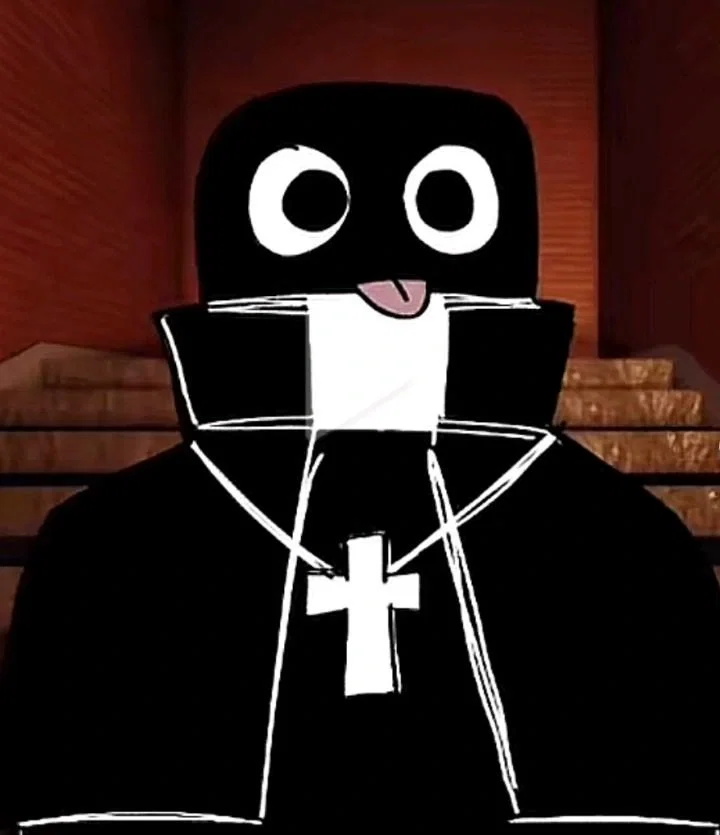
🎮 What Grace is
Grace is a first-person horror/speedrun experience created by The Fartering Few, originally released on September 4, 2024. Its basic idea is deceptively simple:
Keep moving, survive the entities, and reach the next saferoom before your time runs out.
Unlike DOORS, where hiding and careful observation are major parts of survival, Grace emphasizes speed, momentum, movement techniques, reaction time, and knowing the entities. The official description describes it as a “Rooms game” centered on chaos, movement and speed.
The game was heavily inspired by:
Rooms
Rooms & Doors
DOORS
Pressure
Pizza Tower
The Mandela Catalogue
Inscryption
FAITH
The Bible
Those influences are explicitly listed by the developers.
🕯️ THE CENTRAL IDEA OF GRACE
The most important thing to understand is that Grace isn't simply:
“Run through scary rooms and don't die.”
Its story is much more metaphorical.
The player is essentially The Sinner.
The world repeatedly places the player in situations representing:
sin → suffering → death → repentance/reprieve → continuation
The player isn't merely trying to escape a monster.
They're repeatedly trying to keep their soul moving forward.
The game's lore specifically describes the player's soul as a piece of Eden, while the body is the soul's imperfect vessel.
That gives the entire game a religious/philosophical foundation.
✝️ THE TRINITY
One of the biggest pieces of Grace's symbolism is the Holy Trinity.
The game's lore associates three major figures with the Trinity:
Grace figureSymbolic roleGod / GenesisThe FatherGood LightThe SonH. SkelThe Holy Spirit
The community's lore documentation consistently identifies this Trinity structure.
👁️ God
God is represented in an extremely abstract way rather than as a normal human character.
One of the recurring images is essentially an eye within darkness.
God represents the ultimate divine presence watching over the Sinner.
The interesting part is that God doesn't simply prevent suffering.
Instead, the player is allowed to experience the consequences of their journey.
That's important to the game's philosophy:
Grace doesn't mean “nothing bad happens.”
It means that there is still a path forward after failure.
💡 GOOD LIGHT
Good Light is one of the coolest pieces of symbolism in the entire game.
Good Light represents the Son.
It isn't normally represented as a conventional character walking around beside you. Instead, its influence appears through your sources of light.
The game's lore associates Good Light with the power behind things such as the Flashlight and Lantern, which can affect entities vulnerable to its light.
Its symbolic image is especially significant:
a heart containing a cross.
That's strongly reminiscent of Christian imagery involving divine love and the Sacred Heart.
So the mechanic becomes symbolic:
Darkness = danger / sin / uncertainty
Light = divine guidance / protection / grace
You're literally carrying a representation of divine light while moving through darkness.
💀 H. SKEL
H. Skel represents the Holy Spirit.
Unlike God, who is an enormous metaphysical presence, H. Skel is much more approachable.
H. Skel is associated with the game's shop and serves as one of the more recognizable friendly figures.
This creates another interesting Trinity distinction:
God → ultimate authority
Good Light → divine light
H. Skel → presence interacting with the player
🧍 THE PLAYER — THE SINNER
This is arguably the most important character.
You are the Sinner.
The game describes the protagonist as the eyes/director/leader of the soul.
The player has:
A Body
The Body is the physical vessel.
It's mortal.
It can be damaged.
It can die.
And according to the lore, it can also act as a barrier against Sin.
A Soul
The Soul is something much deeper.
The lore compares it to your own piece of Eden.
The Body is essentially the shell surrounding it.
That gives death a much bigger meaning than simply:
“Oops, the monster got me.”
Death means that the physical vessel has failed.
The Soul, however, is something that can continue.
🎨 THE SOUL AS A CANVAS
One of the game's coolest metaphors describes the Soul almost like a painting.
The Soul is a canvas.
There are competing influences trying to paint it.
God represents one influence.
Sin represents another.
The idea is basically:
What happens to your soul depends upon what you allow to influence it.
This is why Grace's mechanics and theology are intertwined rather than completely separate.
You're not just running.
You're making a metaphorical journey through the condition of your soul.
😈 SIN
Sin is essentially the opposing force to Grace.
The game repeatedly associates its entities and mechanics with concepts of wrongdoing, corruption, temptation, suffering and death.
This doesn't necessarily mean:
“Every monster is literally a demon.”
It's more useful to understand many of them as representations of negative forces.
That's why the game's entities can feel strange rather than following normal monster logic.
They're part of a symbolic system.
🏃 WHY THE GAME IS SO FAST
The speedrunning mechanics actually fit the story.
Think about the usual horror-game formula:
Monster appears → hide → wait → continue.
Grace turns that upside down:
Monster appears → MOVE.
You're constantly pressured by:
limited time
hostile entities
environmental hazards
movement precision
increasingly difficult situations
That creates a metaphorical feeling of being trapped inside a cycle you can't simply stop.
The player has to continue.
🔄 DEATH AND REPRIEVE
Death is therefore extremely important.
When the player dies, the game isn't necessarily saying:
“Your story is over.”
Instead, death can represent a collapse of the Body while the Soul continues.
The game's lore describes REPRIEVE as a rebuilding process following corruption, with God's help restoring Grace.
This creates a cycle:
Life → Sin → Death → Reprieve → Renewal → Life
And then it happens again.
That's why death in Grace can feel less like a conventional game-over and more like part of the game's spiritual metaphor.
🌹 THE SAFE ROOMS
The saferooms are important because they're the opposite of the chaotic hallways.
They're temporary places of:
safety
preparation
recovery
reflection
The player goes from danger to safety and then voluntarily enters danger again.
That mirrors the larger cycle of the game.
You are given refuge, but you still have to continue.
🐐 THE ENTITIES
Grace has a huge roster of entities.
Among the documented entities are:
Carnation
Goatman
Slight
Slugfish
Elkman
Heed
Dozer
Sorrow
Rue
Drain
Mime
Ire
S.N.A.P.
Covet
Fool
Craven
Seesay
Stem
Sundial
Innego
Zomber
Duk
PIHSROW
There are also modifiers and other hazards that alter how the player experiences them.
The important thing is that the entities aren't simply interchangeable monsters.
Different entities force the player to react differently.
So the game is testing different abilities:
reaction
movement
observation
memory
timing
risk management
🧩 WHAT THE GAME SYMBOLIZES
This is where Grace becomes particularly interesting.
1. Sin
The monsters and hazards represent forces that threaten the soul.
2. Mortality
Your Body can fail at any moment.
3. Free will
The Sinner has agency.
The player decides how to move and whether to continue.
4. Redemption
Death isn't necessarily the final answer.
You can receive reprieve and continue.
5. Divine love
Good Light represents a protective/light-giving force.
6. Suffering
The game deliberately puts you through repeated hardship.
7. Perseverance
The player continually gets back up and tries again.
That's why the game's title, Grace, is so appropriate.
Grace traditionally refers to unearned divine favor.
The game turns that concept into a playable experience.
👨💻 WHO MADE GRACE?
The game was made by The Fartering Few.
The group describes itself as a small development team made up of friends and family, with the group currently focused on Grace.
The principal developer/owner is Szymon, commonly referred to in community material as Simon.
The game's Roblox listing explicitly says:
“The game is mostly made by one person.”
The official listing also credits Joseph Burdock for the lobby music.
There were also other contributors involved in administration, moderation, art/design and development. Because the project was a team effort despite being heavily driven by one developer, it's important not to attribute every part of the game to Szymon alone.
📜 HOW GRACE STARTED
Interestingly, Grace wasn't originally conceived as the massive theological horror project it became.
Szymon has said that the early working ideas were essentially:
“Fast Paced Doors”
and
“Doors But Better.”
He explained that he started working on it around the time DOORS' second-floor content was becoming available, partly because his friends were playing DOORS rather than the smaller games he had previously made.
He eventually realized he didn't actually want to make a straight DOORS replacement and instead pushed Grace toward its own identity.
That's why the final game feels familiar but mechanically different.
📈 GRACE BECOMES HUGE
The game went from a relatively small project into one of Roblox's major horror experiences.
By 2026, third-party Roblox statistics were recording hundreds of millions of visits.
It also developed connections with other Roblox horror communities and projects.
Among its collaborations were projects such as:
Pressure
Nullscape
Blox Cards
Delusional Office
Zee Bawx2
Those collaborations helped place Grace within the wider Roblox horror scene.
⚠️ THEN CAME THE DRAMA
This is where we need to distinguish documented events from community rumors.
The major controversy erupted around March 30, 2026.
A document circulated concerning Fynnee, Szymon's partner.
The document contained allegations and screenshots concerning offensive behavior, including racist and homophobic language.
Szymon's response became a major part of the controversy because he defended/attempted to contextualize Fynnee's behavior as being connected to coping with personal issues.
His response itself subsequently became controversial.
The Grace administration later produced a response document discussing what happened and acknowledging inappropriate behavior and communication surrounding the situation.
💥 WHY IT EXPLODED
There were several different issues happening simultaneously.
1. Fynnee controversy
The original controversy concerned Fynnee's behavior.
2. Szymon's response
Instead of the situation remaining isolated to Fynnee, Szymon's handling of it caused criticism of him as the project's lead developer.
3. Grace's public image
This was particularly damaging because Grace itself is built around concepts such as:
sin
redemption
love
forgiveness
changing one's behavior
That created an enormous amount of discussion about the contrast between the game's message and the controversy surrounding its creators.
🛑 THE HARASSMENT
And then things became significantly worse.
Some members of the development team reported receiving severe harassment, including:
doxxing
threats
targeted harassment
attempts to expose personal information
The Grace team's own response said the situation had begun affecting developers' personal safety and that the harassment had become a major factor in the decision to stop development.
This is an important distinction:
The controversy and criticism were one thing.
Threats and harassment against developers were another.
You can criticize someone's actions without targeting unrelated members of their development team.
💔 THE PRESSURE COLLABORATION
The controversy also affected Grace's relationship with other Roblox games.
The planned/ongoing Grace × Pressure collaboration was cancelled.
Community documentation reported that content connected to the collaboration would be removed or discontinued.
This was a major symbolic moment because Pressure and Grace were both prominent Roblox horror projects.
☠️ THE “DEATH” OF GRACE
And this brings us to what you called “the death of Grace.”
There wasn't a literal death.
The game was discontinued.
The Grace Wiki records the project as officially discontinued in 2026, meaning the original development team stopped producing new updates.
Szymon's final response explained that continuing development had become damaging to the personal lives and safety of the developers.
He stated that the decision wasn't simply him choosing his relationship over the game; rather, the team collectively decided that continuing under their names was no longer something they felt comfortable doing.
🧬 BUT GRACE WASN'T COMPLETELY DESTROYED
This is the really interesting part.
The plan was for Grace's source code to become available, allowing the community to potentially continue experimenting with it.
So the original Grace essentially died as an official developer-led project, but its ideas could continue through community projects and possible fan-made versions.
That's why you'll see people talking about things like:
Grace Rebuilt
and other community attempts to preserve the game.
🪦 THE IRONY OF GRACE'S END
This is probably the most fascinating aspect of the whole story.
The game is fundamentally about:
sin → consequences → repentance → grace
And then its real-world development history became a story about:
mistakes → consequences → apologies → conflict → harassment → ending
That's obviously not proof that the developers intentionally planned the real-life situation as part of the lore.
But it creates an uncomfortable parallel.
The game repeatedly tells the player that actions have consequences.
Then the people behind the game experienced the consequences of their own actions and decisions in the real world.
🌑 WHY THE ENDING FEELS SO SAD TO PLAYERS
For many fans, Grace wasn't just another Roblox horror game.
It became associated with:
friendships
speedrunning
learning difficult movement
discovering lore
making fan art
playing with friends
Roblox horror culture
the game's religious symbolism
Community reactions after the discontinuation show that some players felt genuinely attached to the game and viewed its disappearance as the loss of something important to them.
So when people say:
“Grace died.”
they usually mean:
The original official version and its development team stopped moving forward.
Not that Roblox itself erased the game or that the fictional character Grace literally died.
🕯️ THE BIGGEST THEMES OF GRACE
If I had to reduce the entire game to its central ideas, I'd describe it as:
1. Your body can fail.
You're mortal.
2. Your soul continues.
The game separates physical death from spiritual existence.
3. Sin corrupts.
The game repeatedly associates darkness and hostile forces with corruption.
4. Grace restores.
Failure doesn't automatically mean permanent condemnation.
5. Light guides.
Good Light represents the Son and provides literal and symbolic protection.
6. God watches.
The Father remains an overarching presence.
7. You have agency.
The Sinner is the director of the soul.
8. You must keep moving.
The game's defining mechanic is also its central metaphor.
And perhaps most importantly:
Grace is about continuing after failure.
That's why the game's title isn't just a cool horror name.
The entire game is constructed around the idea of falling, suffering, dying, receiving reprieve, and continuing forward.
And ironically, the real-world end of the original project gave that theme an entirely different meaning.
The fictional Grace was built around surviving death.
The real-world Grace eventually reached the end of its official life.
Yet its code, lore, fan works, memories, and influence can continue through the community.
Created Sep 18
Updated Sep 18
Published Sep 18
- Limitless