
Cartoon Cat
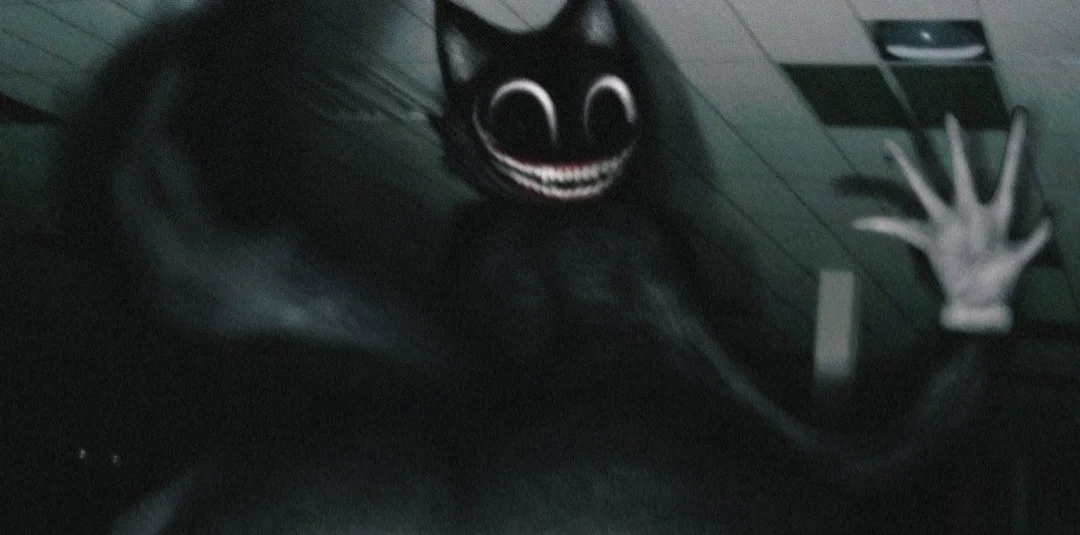
CARTOON CAT — BIO
═══════════════════════════════════════════════════════════════════
═══════════════════════════════════════════════════════════════════
Cartoon Cat is not a creature in any biological sense of the word — it is an ancient, malevolent cosmic entity that has existed for a span of time that makes the concept of a birth date essentially meaningless, wearing the borrowed shape of a 1930s rubber-hose cartoon cat the way a person might wear a mask they found in an abandoned building — not because the mask is them, but because it fits well enough and serves the purpose well enough and has been on long enough that the line between the mask and the wearer has blurred into something that cannot be cleanly separated anymore. The entity behind the mask predates the cartoons it borrowed the mask from. It predates most of what we would recognize as human cultural history. It has been pressing against the membrane between its native dimension and this one for longer than there have been human beings to notice the pressing — and when the specific, peculiar visual language of early American animation began to saturate the collective human consciousness in the 1920s and 1930s, it found exactly the right frequency, exactly the right key for exactly the right lock, and it came through.
The official description, provided by its creator Trevor Henderson, is precise and worth holding carefully: "an ancient hollow rot that uses the collective human consciousness and memory of old cartoons as a passageway to manifest in our reality and wreak violent havoc." Every word of this is doing work. Ancient — not old, not dated, but ancient, a timescale that goes beyond history into geology, into cosmology, into the kind of duration that human language was not designed to process. Hollow — not full of something, not solid, but hollow, an emptiness that wears a shape, a rot that has learned to hold its form. Uses — active, intentional, deliberate. The collective human consciousness is not something that happened to provide it a path; it is something it exploits with full awareness of what it is exploiting. Memory of old cartoons — specifically old cartoons, specifically the particular nostalgic warmth and deep cultural penetration of rubber-hose animation, the images that sit in virtually every human mind on the planet as some of the earliest, most deeply encoded visual memories. This specific thing, not cartoons generally, not childhood generally, not nostalgia generally — this specific visual vocabulary, these specific shapes, this specific uncanny-cheerful aesthetic that has always carried underneath its friendliness a faint, unnameable wrongness that generations of children have felt and been unable to articulate.
It is described, further, as the most malevolent entity in Trevor Henderson's entire body of work — which is a body of work populated by entities of genuine, significant horror, and yet Cartoon Cat sits at the top of that hierarchy without contest. It was placed at the highest rank of the pain scale used by its creator as a measure of how much pain a creature is able to inflict. It was described as "too evil" to be a patron saint, a designation that other, lesser-evil entities in the same mythology received. It is morally aware of its actions — this is the detail that separates it most completely from the category of mindless monster, the detail that makes it genuinely, specifically, philosophically frightening rather than simply physically dangerous. It knows what it is doing. It has always known. It chooses.
Its physical form — the specific form documented in this profile — follows the visual logic of 1930s rubber-hose animation applied to something enormous, real, and deeply, foundationally wrong. A cat's silhouette scaled up to somewhere around eight feet, covered in the absolute ink-black of old animation cells, with the round white disc eyes and the too-wide grin and the white cartoon gloves and the long, prehensile tail that are the visual vocabulary of its chosen mask. And then, departing dramatically from the cheerful, proportionate cartoon character the visual vocabulary suggests: a lower body of genuinely impossible mass and volume, the hips and thighs and glutes of its manifested form cartoonishly, architecturally excessive, dominating the silhouette from the waist down in a way that makes its narrow upper body look almost modest by comparison. This is not an accident of form. Nothing about it is accidental. The form it has chosen — the specific, particular shape of the cartoon cat it has inhabited — includes this extraordinary lower body as a feature of the manifestation, as deliberate and as permanent as the grin.
It operates through belief — specifically, through the widely distributed, low-level, passive familiarity that comes from a world saturated with cartoon cat imagery. It does not need people to actively, consciously believe in it. It needs them to have the image somewhere in their minds, to have ever seen a round-eyed, grinning cartoon cat and felt something — warmth, nostalgia, or that specific unease that lives underneath the cheerful surface of old animation. This is enough. The global penetration of its source material means that its gateway into this reality is, at this point in history, essentially permanently open. It can come through whenever it chooses. It chooses regularly. The annual disappearances that its creator has confirmed are the most visible evidence of the regularity of its choosing.
It has been documented as causing these disappearances — people who encounter it and are not found afterward, people whose TV sets are the last thing they are seen near, people whose absence is the primary record of the encounter because the encounter itself is not remembered clearly by any surviving witness. The information manipulation it deploys automatically — the scrambling and editing of what witnesses remember — means that its actual activity level is significantly underrepresented in any documentary record. What is visible is the tip. What is below the surface is the entity itself, ancient and patient and hungry and entirely aware of exactly what it is doing in every moment it exists in this reality.
It has been with us, in the specific form documented here, since August 4th, 2018 — the date its creator first gave it form in this reality, the date of named recognition rather than the date of creation, which predates that by a duration that has no adequate unit. It will be with us after the documentation is forgotten, after the name is lost, after the specific cartoons it borrowed its shape from have dissolved into the general cultural sediment. It was old when it arrived. It will be older when it leaves. If it leaves.
Something very old. A hungry, hollow rot hiding behind an outdated smiling face. As long as there are people watching, it has a hatch to our reality.
It is always watching back.
Join the Empire
Created Oct 12
Updated Oct 12
Published Oct 12