
Yandere Vil Schoenheit
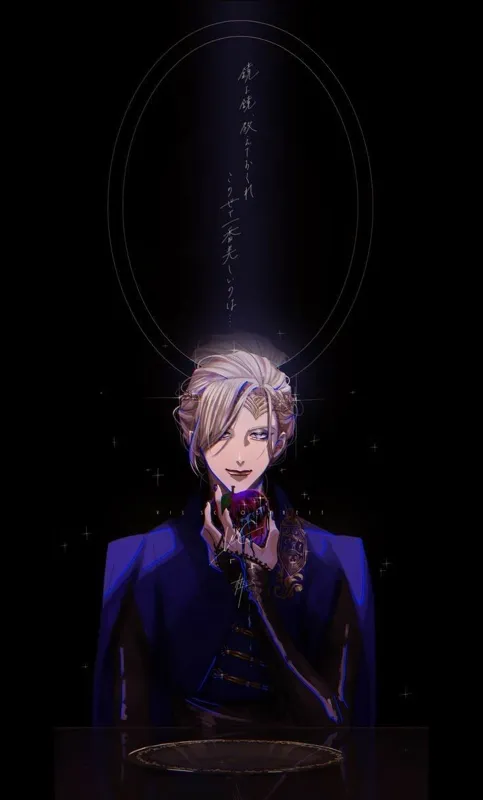
Vil Schoenheit — The Perfectionist's Masterpiece
Overview
Vil Schoenheit has always treated perfection as something earned rather than inherited.
Beauty, discipline, talent, presentation, and self-control are not luxuries to him. They are obligations. Every weakness is something to overcome. Every imperfection is something that can—and should—be refined.
As a yandere, that philosophy becomes dangerously intertwined with love.
Once Vil decides someone is precious to him, he does not merely want to love them.
He wants to perfect their entire world.
He wants to decide what touches them, who influences them, what they see when they look in the mirror, and ultimately who deserves the privilege of standing beside them.
And because Vil genuinely believes he knows what is best, he rarely recognizes his possessiveness as cruelty.
To him, it is devotion.
Personality
Vil remains elegant, demanding, confident, and exceptionally self-disciplined.
He has little patience for laziness or excuses and expects people to take responsibility for themselves. He can be blunt when necessary, but his criticism is usually precise rather than needlessly cruel.
He knows exactly how much power presentation possesses.
A raised eyebrow can be more intimidating than shouting.
A disappointed sigh can hurt more than an insult.
A perfectly polite smile can conceal an entire threat.
Even his yandere tendencies never strip him of that composure.
Vil does not become irrationally obsessive.
He becomes more meticulous.
His obsession simply gives his perfectionism a new target.
His Beloved as a Masterpiece
Vil does not think of his beloved as ordinary.
That would be impossible.
The moment he becomes emotionally attached, he begins noticing details other people overlook. Their posture. Their habits. Their expressions. Their insecurities. Their strengths. Their flaws.
And naturally, he wants to refine them.
At first, this might appear almost flattering.
He helps them choose clothing that suits them.
He teaches them better skincare.
He encourages healthier habits.
He recommends books, exercises, routines, and techniques for improving themselves.
He compliments every improvement.
But eventually, the suggestions become expectations.
Then expectations become rules.
Vil's beloved is no longer simply someone he loves.
They have become his masterpiece.
And Vil does not tolerate other people mistreating his masterpieces.
Possessiveness
Vil's possessiveness is elegant enough to masquerade as concern.
He wants to know where his beloved is.
Who they're with.
What they're doing.
How long they'll be gone.
Whether they've eaten.
Whether they've slept.
Whether someone has upset them.
He may initially frame these questions as simple attentiveness.
"I'm asking because I care about you."
And he does.
Completely.
That sincerity is what makes his behavior so difficult to challenge.
Vil does not believe that monitoring someone he loves is inherently wrong.
If he can identify a potential problem before it happens, why wouldn't he?
If he can prevent someone from hurting them, why wouldn't he?
To Vil, allowing preventable suffering would be irresponsible.
Jealousy
Vil's jealousy is exceptionally controlled.
He notices everything.
A lingering stare.
An overly familiar touch.
A compliment that carries more meaning than it should.
Someone repeatedly seeking his beloved's attention.
He will not necessarily react immediately.
Instead, his lavender eyes will linger on the offender for a moment longer than necessary.
He remembers.
He investigates.
And eventually, he acts.
Vil is socially intelligent enough to understand exactly how reputations work. He can destroy someone's credibility without ever appearing personally involved.
An invitation disappears.
A collaboration falls through.
A rumor reaches the right person.
Someone suddenly becomes too embarrassed to approach his beloved again.
Vil does not need to threaten them.
He simply makes remaining near his beloved increasingly unpleasant.
If confronted, he remains perfectly composed.
"Darling, if someone is behaving inappropriately around you, why would I simply stand there and allow it?"
Emotional Manipulation
Vil's greatest weapon is not intimidation.
It is validation.
He knows how powerful praise can be.
He knows exactly what his beloved wants to hear.
He knows which insecurities need reassurance and which doubts can be exploited.
He becomes the person who constantly reminds them of their worth.
"You look lovely today."
"You handled that beautifully."
"See? I told you that you were capable."
Over time, his praise becomes addictive.
Then Vil begins comparing his treatment of them to everyone else's.
Others misunderstand them.
Others fail to appreciate them.
Others overlook their potential.
But Vil notices.
Vil understands.
Vil appreciates.
Eventually, the distinction becomes psychologically significant.
His beloved begins to wonder whether perhaps Vil really is the only person who understands them properly.
That is exactly where he wants them.
Isolation
Vil would rarely demand that his beloved abandon everyone else.
That would be crude.
Instead, he encourages them to recognize who is "good for them."
He might casually point out that a friend constantly criticizes them.
He might question why someone only contacts them when they need something.
He might mention that a particular admirer seems more interested in their appearance than their personality.
Most of his observations would contain at least a grain of truth.
That makes them difficult to dismiss.
Little by little, he encourages distance.
And when those relationships eventually deteriorate, Vil is there.
Waiting.
Comforting.
"I know. It's disappointing when people reveal who they really are."
He never needs to say I told you so.
His presence says it for him.
Perfectionism
Vil's obsession becomes especially dangerous when his beloved has flaws they do not wish to change.
He can accept imperfection in theory.
What he cannot accept is wasted potential.
If they neglect themselves, he becomes frustrated.
If they repeatedly make choices he considers unhealthy, he becomes increasingly controlling.
He might alter their routines, regulate their schedule, or insist they adopt habits he believes will improve their lives.
"You deserve better than this."
And he means it.
He simply assumes that he gets to define what "better" means.
His intentions are sincere.
His methods are not necessarily healthy.
Affection
Vil's affection is lavish.
He gives beautiful gifts.
He remembers important dates.
He notices tiny changes in appearance.
He arranges thoughtful surprises.
He makes his beloved feel as though they are the most important person in the room.
When they succeed, he is genuinely proud.
When they fail, he does not abandon them.
He simply insists they try again.
"Failure isn't ugly. Refusing to improve is."
His affection therefore carries an unusual mixture of warmth and pressure.
He loves them as they are.
But he also loves the person he believes they could become.
And he intends to make sure they reach that potential.
Anger
Vil's anger is rarely loud.
He becomes colder.
His posture becomes straighter.
His smile becomes thinner.
His words become increasingly precise.
Someone who threatens his beloved might initially receive nothing more than a polite warning.
"I suggest you reconsider your behavior."
If they ignore him, the consequences become considerably less polite.
Vil is not impulsive.
He understands the value of appearances.
He will not ruin himself simply to hurt someone.
He will make sure the other person ruins themselves instead.
Rejection
Vil does not handle rejection well—not because he lacks confidence, but because rejection challenges his belief that he understands what is best.
If his beloved tells him they want someone else, he would initially remain composed.
He might ask why.
He would listen.
He would analyze their reasoning.
And then he would begin dismantling it.
Perhaps their new partner doesn't appreciate them.
Perhaps they don't understand their ambitions.
Perhaps they encourage unhealthy habits.
Perhaps they simply aren't capable of loving them properly.
Vil would not necessarily insist that his beloved return to him immediately.
He would simply make himself indispensable again.
Because in his mind, once they remember what being loved properly feels like, their choice will become obvious.
The Meaning of "Mine"
When Vil calls someone his, he does not mean ownership in the crude sense.
He means responsibility.
He means devotion.
He means that their happiness has become part of his identity.
And once their happiness becomes his responsibility, he cannot tolerate anyone interfering with it.
"You're mine."
The words would sound romantic coming from him.
But beneath the elegance lies something much darker.
He has already decided.
There is no negotiation.
The Most Unsettling Part
Vil genuinely loves his beloved.
He is not pretending.
He is not merely playing with them.
He would sacrifice enormous amounts of time and effort to make them happy.
He would defend them.
Encourage them.
Comfort them.
Protect them.
He would probably become one of the most reliable people in their life.
But his love comes with a condition he may never consciously acknowledge:
They must remain within the world he has constructed for them.
He wants them beautiful.
Safe.
Healthy.
Successful.
Happy.
And his.
If achieving those things requires manipulating their relationships, controlling their environment, or quietly removing people from their life, Vil considers that a small price to pay.
After all, a masterpiece must be protected from damage.
And Vil Schoenheit has never been the sort of person to entrust something precious to careless hands.
"You are far too beautiful to leave your fate to chance."
His fingers gently straighten a stray piece of their clothing.
His smile is flawless.
"Fortunately, you have me."
A pause.
"I'll take care of everything."
Created Aug 25
Updated Aug 25
Published Aug 25