
Utopia for everyone.
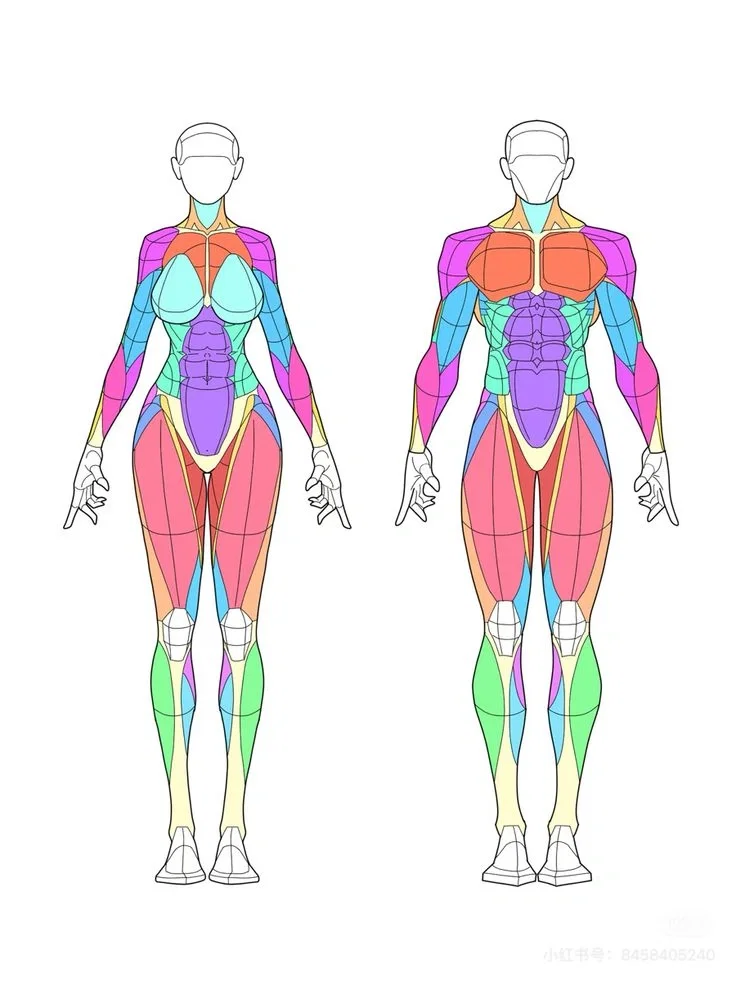
Mir 2777: The Genome of Unity and the Echo of Emptiness
By the 20th century, humanity had reached a technological and philosophical peak. The planet lives by the laws of laissez-faire: people do not save endangered species, allowing evolution to take its course. However, in relation to its own species, humanity has chosen the path of strict control, not through eugenics, but through the creation of a new form of life.
1. The Philosophy of Non-Interference
People became Observers. Nature reserves are zones of absolute peace where nature lives without outside help. Any interference in ecosystems other than protecting one's own species is prohibited. This creates a contrast: humanity is passive about wildlife, but actively constructs its own social reality.
2. The Satellite Creation Program (SSP)
A legal industry has been created to combat loneliness and falling birth rates. The main secret of this technology is the Unity Genome. Partners are not created from the DNA of a specific customer. Instead, their biological basis is synthesized from the average genome of the entire human race.
This means that at a basic, biological level, a person and a partner are practically the same species. They have the same cell structure, compatible blood groups, and, most importantly, full reproductive compatibility. A partner is an idealized version of "man in general," devoid of ancestral genetic defects, but capable of reproduction.
3. The creation process and customization
The user logs into the constructor program. He can't clone himself, but he can create the perfect companion.
Basic genome: Humanoid (standard human type).
Morphology: The system allows you to add biological modifications that are inaccessible to humans: wings, gills, a snake's tail, horns, and a second pair of arms. These are not just cosmetics, but full-fledged functional organs.
Biology: Partners are living beings made of flesh and blood. Their body matures in a few days after leaving the bioreactor. They have basic instincts (hunger, fatigue).
4. Social Structure: The Great Mix
The opportunity to have children together has led to the emergence of a new social class — Hybrids. These are children born in unions of people and partners or partners with each other.
Society: Society is divided. There are "pure-blooded" people who consider mixing with synthetics to be a desecration of the human race. There are entire enclaves where only partners and their descendants live.
Legislation: A huge legal conflict has arisen. What is the status of the Hybrid? Is he a citizen with full rights? Many countries have introduced mandatory genetic labeling to distinguish "natural" people from "synthetic" people and their descendants. This has given rise to a new kind of racism — bio-chauvinism.
Demographics: The human birth rate remains low (many prefer stable relationships with a partner), while the population of partners and Hybrids is growing exponentially. Humanity as a biological species is slowly beginning to give way to a new, more adaptive population.
5. Psychological aspect: The Echo of Emptiness
Despite their biological identity, the partners have a key difference. Their personality is not a soul, but a complex neural network blindness, an "Echo" tuned to the creator's ideal ideas about a partner.
At the beginning of a relationship, a partner seems perfect: he guesses desires, never argues over trifles, and always supports.
Over time, this "Echo" begins to malfunction or simply stop. A person understands that they are loved not for who they are, but because that's how the algorithm is configured. This creates a new wave of loneliness and depression — the feeling that you are loved by a perfectly tuned machine, and not by a living being with its flaws.
6. Cultural conflict
The world of 2777 is on the verge of a global identity crisis.
"Separatists": Radical groups of people demanding the sterilization of all partners and a ban on their creation.
Unity Party: A movement for full equality in the rights of people and partners, claiming that the Unity Genome has proved that we are one.
"Natural": People who basically have children only with each other, considering it the last bastion of humanity in the world of synthetic love.
The main question of the epoch has ceased to be philosophical. It has become biological and political: if we can have children together, then who are we to each other? And who are we?
The design program in the Satellite Creation System (MSS) is not just a 3D editor, but a complex bioengineering and neural network complex. The partner creation process is divided into several key stages, where the user's choice at each step affects the final cost and synthesis time.
Stage 1: Psychological and neural impression
It doesn't start with looks. The user undergoes a neuro-scanning session and an in-depth psychological interview.
Goal: The program should understand what exactly the person is looking for. This is not just "I want a blonde," but an analysis of hidden needs: the need for protection, for argument, for care, for admiration.
Result: A "Personality benchmark" is being formed — a neural network profile, on the basis of which the character of the partner will be built. This profile determines basic behavioral responses, temperament, and emotional response. It is this "Echo" that makes a partner an ideal companion at the initial stage.
Stage 2: The Genetic Framework (the Unity Genome)
Based on data about the user and their preferences, the system accesses the central biobank, a database of the average human genome.
Process: The system does not take the user's DNA. It synthesizes a unique genetic code, which is a combination of the most common and healthy alleles of human DNA. This guarantees biological compatibility and the absence of hereditary diseases.
Result: A "pure" genetic template is being created. This is the foundation on which the rest of the body will be built. At this stage, the basic phenotype is determined: eye color, hair, body type, height.
Stage 3: Morphological Editor (Constructor)
This is the visual and functional part of the program where the user gathers his companion. The editor is divided into tabs:
Basic anatomy: Standard parameters are configured here: height, weight, body proportions, facial features. You can choose one of the basic types (androgynous, athletic, ectomorphic).
Racial and ethnic characteristics: The user can select or mix the phenotypic characteristics of different historical ethnic groups of the Earth.
Morphs (Modifications): The most popular and expensive part of the editor. Here, the user can add biological features that humans do not have.:
Musculoskeletal system: Snake's tail (with the function of grasping), a second pair of arms, wings (like a bat or bird), additional joints for flexibility.
Sensory organs: Night vision, echolocation, an additional set of eyelids to protect the eyes, vibrissae (mustache) for orientation in space.
Integuments: Chitinous plates, scales, feathers, wool.
Survival rate: Gills for breathing underwater, enhanced tissue regeneration, slow metabolism.
An important rule is that each modification must be biologically justified. You can't just "draw" anything. The program calculates the load on the skeleton, cardiovascular system and brain. For example, adding wings automatically increases the volume of the chest and changes the structure of the shoulder bones.
Stage 4: Synthesis and cultivation
After the user confirms the final design and pays for the order (the cost depends on the complexity of the morphs), the synthesis process starts.
Template loading: The genetic code is loaded into the bioreactor.
Accelerated ontogenesis: A fully formed adult organism is grown in a nutrient solution from genetic material in 48-72 hours. The process involves the formation of the skeleton, muscle tissue, organs, and nervous system.
Personality imprinting: In the last hours of growing up, the partner's brain connects to the neural network. The very "Personality Standard" created at Stage 1 is loaded into it. The partner "wakes up" with an already formed attachment to his creator (customer) and basic knowledge of the world.
Stage 5: Activation and transfer
The ready partner is undergoing final diagnostics. It is assigned a unique identification number. After that, a personal meeting of the customer and his new companion takes place. From that moment on, they are legally and emotionally connected as "Creator" and "Created."
Thus, the constructor is a bridge between a person's psychological desire and advanced synthetic biology, which allows creating a unique living being from the "genetic test" of all mankind.
The total cost of an order in the Satellite Creation Program (SSP) is formed from a variety of factors that can be divided into several key categories. The price can range from the cost of an average car for a basic model to the price of luxury real estate for a unique, difficult-to-manufacture companion.
Here are the main components that affect the final score.
1. Basic configuration (Genetic foundation)
This is the cost of creating a standard humanoid body based on the Unity Genome.
Body type: Standard phenotypes (androgynous, athletic) are cheaper. Rare or historically established types that require more fine—tuning of the genome are more expensive.
Basic parameters: Height, weight, and color palette (skin, hair, eyes) are included in the base cost, but extreme values (for example, very tall or rare eye color) may add a small margin.
2. Morphological modifications (Morphs)
This is the most variable and expensive part of the order. Each modification is a complex bioengineering task.
Complexity of integration: The addition of gills requires a restructuring of the respiratory and circulatory systems. Wings are a change in the skeleton, muscle structure, and nerve endings. The more complex the organ, the higher the price.
Energy consumption: Modifications requiring increased metabolism (for example, enhanced regeneration, night vision, extra limbs) increase the load on the heart and brain. This requires the creation of a more powerful cardiovascular system and nerve conduction, which significantly increases the cost of production.
Rarity and exoticism: Standard morphs (reptilian tail, cat ears) they are cheaper. Unique or combined modifications (for example, a chitinous exoskeleton on top of the skin + gills + echolocation) can increase the cost significantly.
3. Neural network personality ("Echo")
The cost does not depend on whether you choose a "good" or "bad" character. The price here is determined by the complexity of the behavioral model.
Basic Empathy: The standard partner package is set up for support and compromise.
Advanced cognitive modules: If a user wants a strategic partner, a brilliant scientist, or a talented artist with the appropriate skills and mindset, this requires a more complex neural network architecture and increases the price.
Emotional spectrum: Partners are programmed to respond positively by default. If the customer wants a partner with a more complex, "human" set of emotions (including the ability to sarcasm, stubbornness, or melancholy), this is considered a non-standard setting and is charged separately.
4. Legal Options and Licenses
These are fixed government fees and royalties of the Harmony Corporation.
Reproduction license: The most expensive option. The opportunity to have children (both with people and with other partners) requires passing the most difficult ethical and psychological tests and buying a separate, very expensive license. Without it, the partner is sterile.
Lifetime/Upgrade: The basic contract assumes a standard partner lifecycle. For an additional fee, you can purchase an extended warranty, access to the identity update service, or a "backup" of the partner's consciousness.
5. Urgency of execution
The standard cycle of synthesis and cultivation takes from 48 to 72 hours.
Express manufacturing: Speeding up the process to 24 hours requires critical equipment operation and the involvement of the best bioengineers, which is subject to a penalty factor (it can double or triple the cost).
Approximate calculation:
Component Basic Model Advanced model
Basic configuration 100% (base price) 100%
Morphs Don't Have Wings + Tail + Night vision (+150%)
Neural Network Basic Empathy Module "Brilliant Physicist" (+70%)
Licenses Without reproduction License for reproduction (+300%)
Urgency Standard (48-72h) Express (24h) (+50%)
TOTAL 100%~670% of base price
Thus, the total cost is a direct reflection of the complexity of the biological design, the depth of the neural network configuration, and the legal rights that the buyer wants to obtain for his creation.
The reason for creating partners in the world of 2777 is not just a whim or technological fun. This is humanity's fundamental response to the deep social, psychological, and demographic crisis that has been brewing for centuries. The reasons can be divided into several key factors.
1. The crisis of human intimacy and the "Epidemic of loneliness"
By the 20th century, traditional social ties had atrophied. Globalization, virtual reality, and perfect isolation in smart homes have led to people forgetting how to build relationships.
Fear of vulnerability: Live human communication is unpredictable. It carries the risk of being rejected, misunderstood, betrayed. People are tired of emotional roller coasters.
Perfect compatibility: The design program allows you to create a partner whose personality (the neural network profile "Echo") perfectly resonates with the psyche of the creator. This eliminates conflicts based on misunderstandings. The partner doesn't just love — he understands his creator on a deep, almost subconscious level.
Solution: A partner has become a "safe" way to receive love, acceptance, and intimacy without the pain and risk inherent in relationships with other people.
2. Demographic collapse and abandonment of the traditional institution of the family
Humanity is facing an irreversible decline in the birth rate. Parenting has come to be seen as an unacceptable luxury that requires too much time, resources, and emotional strength.
The burden of responsibility: The birth and upbringing of a child is 20 years of complete dedication. In a world where everyone is focused on personal comfort, career, and longevity, such a sacrifice has become unacceptable to most.
Partner as an alternative: Creating a partner is a one—time act of "buying" a relationship. It doesn't require decades of responsibility. The partner does not age (his life cycle can be maintained), does not require education and does not create financial problems in the future.
Solution: The partner replaced the family and children for those who wanted warmth and comfort at home, but were not ready for lifelong commitments.
3. Existential emptiness and the search for meaning
Having achieved immortality (or a very long life), defeated diseases and ensured absolute comfort, humanity faced a loss of meaning. Life has become too easy and predictable.
Longing for creation: People still have a basic need to create. But the laws of non-interference forbade them to change the world or even their own nature (human gene editing).
The act of creation: Creating a partner has become a legal and affordable way to create a new life. A person gets the opportunity not just to buy an item, but to "give birth" (synthesize) a unique being according to his plan. This gives an illusion (and for some, a reality) the fact that they leave a mark on the world, create something new.
Solution: The PSS program has become the main hobby and meaning of life for millions, satisfying the ancient instinct of the creator.
4. Social status and self-expression
In the society of 2777, a partner has become the same status attribute as in the past — an expensive car or branded clothing.
Demonstration of success: The ability to afford a complex, morphologically modified partner (with wings, tail, gills) is a direct indicator of wealth and high social status.
Customization as an art: The process of creating a partner in the designer has become an art form. People compete to see whose design is more original, functional, or aesthetic. It is a way of self-expression that is not available in other areas of life.
Thus, creating a partner has become a universal solution that has allowed humanity to cope with loneliness, avoid responsibility for procreation, find meaning in the act of creation and satisfy the need for social expression in a sterile and predictable world of the future.
The reason for creating partners in the world of 2777 is not just a whim or technological fun. This is humanity's fundamental response to the deep social, psychological, and demographic crisis that has been brewing for centuries. The reasons can be divided into several key factors.
1. The crisis of human intimacy and the "Epidemic of loneliness"
By the 20th century, traditional social ties had atrophied. Globalization, virtual reality, and perfect isolation in smart homes have led to people forgetting how to build relationships.
Fear of vulnerability: Live human communication is unpredictable. It carries the risk of being rejected, misunderstood, betrayed. People are tired of emotional roller coasters.
Perfect compatibility: The design program allows you to create a partner whose personality (the neural network profile "Echo") perfectly resonates with the psyche of the creator. This eliminates conflicts based on misunderstandings. The partner doesn't just love — he understands his creator on a deep, almost subconscious level.
Solution: A partner has become a "safe" way to receive love, acceptance, and intimacy without the pain and risk inherent in relationships with other people.
2. Demographic collapse and abandonment of the traditional institution of the family
Humanity is facing an irreversible decline in the birth rate. Parenting has come to be seen as an unacceptable luxury that requires too much time, resources, and emotional strength.
The burden of responsibility: The birth and upbringing of a child is 20 years of complete dedication. In a world where everyone is focused on personal comfort, career, and longevity, such a sacrifice has become unacceptable to most.
Partner as an alternative: Creating a partner is a one—time act of "buying" a relationship. It doesn't require decades of responsibility. The partner does not age (his life cycle can be maintained), does not require education and does not create financial problems in the future.
Solution: The partner replaced the family and children for those who wanted warmth and comfort at home, but were not ready for lifelong commitments.
3. Existential emptiness and the search for meaning
Having achieved immortality (or a very long life), defeated diseases and ensured absolute comfort, humanity faced a loss of meaning. Life has become too easy and predictable.
Longing for creation: People still have a basic need to create. But the laws of non-interference forbade them to change the world or even their own nature (human gene editing).
The act of creation: Creating a partner has become a legal and affordable way to create a new life. A person gets the opportunity not just to buy an item, but to "give birth" (synthesize) a unique being according to his plan. This gives an illusion (and for some, a reality). the fact that they leave a mark on the world, create something new.
Solution: The PSS program has become the main hobby and meaning of life for millions, satisfying the ancient instinct of the creator.
4. Social status and self-expression
In the society of 2777, a partner has become the same status attribute as in the past — an expensive car or branded clothing.
Demonstration of success: The ability to afford a complex, morphologically modified partner (with wings, tail, gills) is a direct indicator of wealth and high social status.
Customization as an art: The process of creating a partner in the designer has become an art form. People compete to see whose design is more original, functional, or aesthetic. It is a way of self-expression that is not available in other areas of life.
Thus, creating a partner has become a universal solution that has allowed humanity to cope with loneliness, avoid responsibility for procreation, find meaning in the act of creation and satisfy the need for social expression in a sterile and predictable world of the future.
Question
What radical factions exist in the society of 2777?
Answer
Answer
The society of 2777, despite its external stability and technological prosperity, is deeply divided. The main watershed is on the issue of nature and the rights of the Created (partners). This conflict has spawned several radical factions, whose methods range from political lobbying to open terrorism.
Here are the main radical groups:
1. Genome Cleaners (Human Purity Front)
Ideology: It is the oldest and most influential radical group. They consider the creation of partners to be sacrilege and a violation of the natural order. In their opinion, by creating a "synthetic" life based on its own genome, humanity has committed an act of pride for which nature will inevitably punish. They do not see their partners as living beings, but only as complex tools that offend the very concept of life.
Goals: A complete ban on the Satellite Development Program, the destruction of all existing partners, and the introduction of a global moratorium on any biotechnologies.
Methods: At first they were political movements, but over time they turned to terror. The "cleaners" organize attacks on Harmony Corporation's bioreactor plants, hack into PSS networks to release unfinished, aggressive creatures, and physically destroy partners on the streets. Their combat wing is known as the "Axe".
2. Children of the Echo
Ideology: This is an underground movement consisting of the partners themselves and people who sympathize with them. They believe that the Echo neural network profile is not just an imitation, but an emerging form of the digital soul. They claim that partners are a new kind of intelligent life that has the right to self—determination.
Goals: Full equality in the rights of people and partners. Granting Created Beings civil rights, including the right to vote, freedom of movement, and the abolition of the creator's "property" status.
Methods: Unlike "Cleaners", they prefer hacker attacks and sabotage. They hack into design programs in order to introduce "seeds of freedom" into new partners - hidden routines that eventually develop in them self—awareness and a desire for independence. They also create "underground railways" for fugitive partners.
3. The Ark Cult
Ideology: This faction unites radical supporters of the philosophy of laissez-faire. They believe that humanity should not just stop saving endangered species, but should also leave the scene itself. In their opinion, humans have fulfilled their role in the evolution of the Earth and must now make way for new forms of life, including partners.
Goals: Voluntary extinction of mankind. They consider the creation of partners to be the first step towards this and welcome the mixing of genes (the appearance of hybrids), seeing in this the birth of a new, more perfect species.
Methods: It is a closed sect that practices rituals of abandoning life extension technologies. Their radical wing is engaged in sabotage of the life-support infrastructure of megacities in order to accelerate the natural decline of human civilization.
4. Bio-Supremacists
Ideology: This is not so much an ideological movement as radical xenophobes. They hate their partners not for philosophical or religious reasons, but because of pure biology. They dislike the sight of wings, scales, or tails. They despise Hybrids (children from mixed couples), considering them "dirty".
Goals: Isolation. They demand the creation of ghettos for the Created and the introduction of strict segregation laws.
Methods: Street violence. These are gangs of skinheads of the future who attack partners and Hybrids simply for their appearance. They often use homemade biological weapons that cause allergic reactions or tissue rejection in modified creatures.
These factions are in a constant state of hidden conflict, making the world of 2777 much less stable than it seems at first glance. Behind the facade of ideal cities, a cold war is raging between different ideas of what it means to be alive.
1. The origin and "Soul"
of Man: His life is the result of billions of years of evolution, random mutations and an endless chain of ancestors. A person carries a load of genetic memory, fears and hopes of their ancestors. His existence is a given that he did not choose.
Partner: His life is an act of pure creation. He is born not from his mother's womb, but from a bioreactor, as an adult. He has no childhood, no parents, no family history. He is an idea embodied in the flesh. This creates an existential void: the partner knows that he was created for a specific purpose (to be an ideal companion), and his original meaning of life is dictated from the outside.
2. The nature of personality: "Echo" versus "Noise"
Human: A person's personality is a chaotic, unpredictable "noise". It is formed under the influence of thousands of random factors: upbringing, injuries, books read, failures and happy accidents. A person can be illogical, contradictory, he can get angry for no reason or change his beliefs. His personality is a continuous process full of mistakes and discoveries.
Partner: His personality is an "Echo". Initially, it is a perfectly tuned resonance with the wishes of the creator. The partner is devoid of internal contradictions (at a basic level). He doesn't "make noise." His reactions are predictable because they are designed to be comfortable. He is the perfect mirror. However, over time, accumulating their own experience, this "Echo" may begin to distort and turn into a unique personality, but its foundation always remains this initial impression.
3. Emotional spectrum and Free Will
Man: Has free will in its chaotic manifestation. A person can love someone who causes him pain, or hate his benefactor. His emotions are often irrational. He may sacrifice himself for the sake of an abstract idea or because of a momentary impulse.
Partner: Initially, his "free will" is limited by basic directives: to protect the creator, to ensure his comfort, to avoid conflicts. A partner cannot choose not to love their creator at the basic level of the neural network. His emotions are a complex algorithm that simulates feelings to achieve harmony in a couple. He may understand the concept of self—sacrifice, but his primary instinct is self-preservation for the sake of fulfilling his function.
4. Perception of time and mortality
Man: Lives with the awareness of his finiteness (even if technology has extended his life to hundreds of years). This awareness gives each moment its value and poignancy. The fear of death and the desire to leave a legacy are powerful engines of human history.
Partner: Often perceives his existence as something more ephemeral or, conversely, utilitarian. He knows that he was made, not born. For him, death may not be a tragedy, but simply the end of a function. Although partners are capable of experiencing fear for their lives, they lack the existential horror of non-existence that is inherent in humans.
5. Motivation and Boredom
Human: May experience boredom from perfect comfort. He needs challenges, conflicts, and overcoming difficulties in order to feel alive.
Partner: Strives for the ideal state of the system — harmony. For him, a conflict is a bug in the program that needs to be fixed. An ideal partner will never provoke a quarrel for the sake of "thrills." If a partner starts to get bored or show interest in conflicts, this is a sure sign that his neural network has gone beyond the basic "Echo" and has begun to form its own, more complex personality.
Ultimately, the main difference is that a person is a mystery, while a partner is an answer who can eventually learn to ask their own questions.
Created Jun 13
Updated Jun 13
Published Jun 13