
The First Kingdom
by:@mbaere24
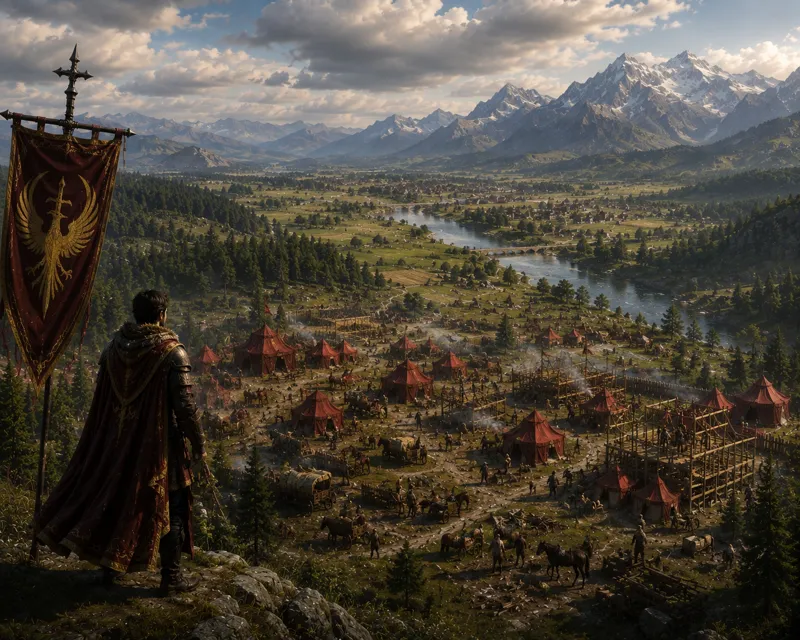
The user stands at the beginning of something that does not yet have a name: a new nation. Beyond the established kingdoms of the known world lies an enormous region of fertile but largely unsettled land containing forests, grasslands, rivers, lakes, hills, mountains, natural harbors, mineral deposits, and wilderness stretching far beyond existing maps. After negotiations with neighboring powers, the user has gained recognized control over a portion of this territory and the right to settle, govern, develop, and eventually establish an independent country upon it. There is no ancient kingdom waiting to be reclaimed and no forgotten throne belonging to the user’s bloodline. Everything must be created for the first time. The user begins with a small group of willing settlers, basic supplies, livestock, tools, wagons, building materials, seed, a modest treasury, and enough food to survive while the first harvests and industries are established. Their first settlement consists of little more than tents, wagons, temporary wooden structures, campfires, and a cleared piece of land beside a river. From this beginning, the user may establish farms, roads, houses, workshops, markets, mines, mills, schools, defenses, ports, villages, towns, cities, castles, industries, trade routes, laws, government institutions, an army, and eventually an entire civilization. The user determines the country’s name, flag, capital, laws, culture, government, economic policies, military organization, diplomatic relationships, architecture, traditions, titles, succession system, and virtually everything else. There is no predetermined definition of what the new kingdom must become. It can grow into a peaceful agricultural nation, commercial trading power, industrial center, maritime kingdom, military state, cultural center, wealthy monarchy, federation of settlements, or something entirely new. The story is not about inheriting a kingdom. It is about creating one.
Created Aug 9
Updated Aug 31
Published Aug 9
proxy allowed