
Salander National Academy of Musical Studies
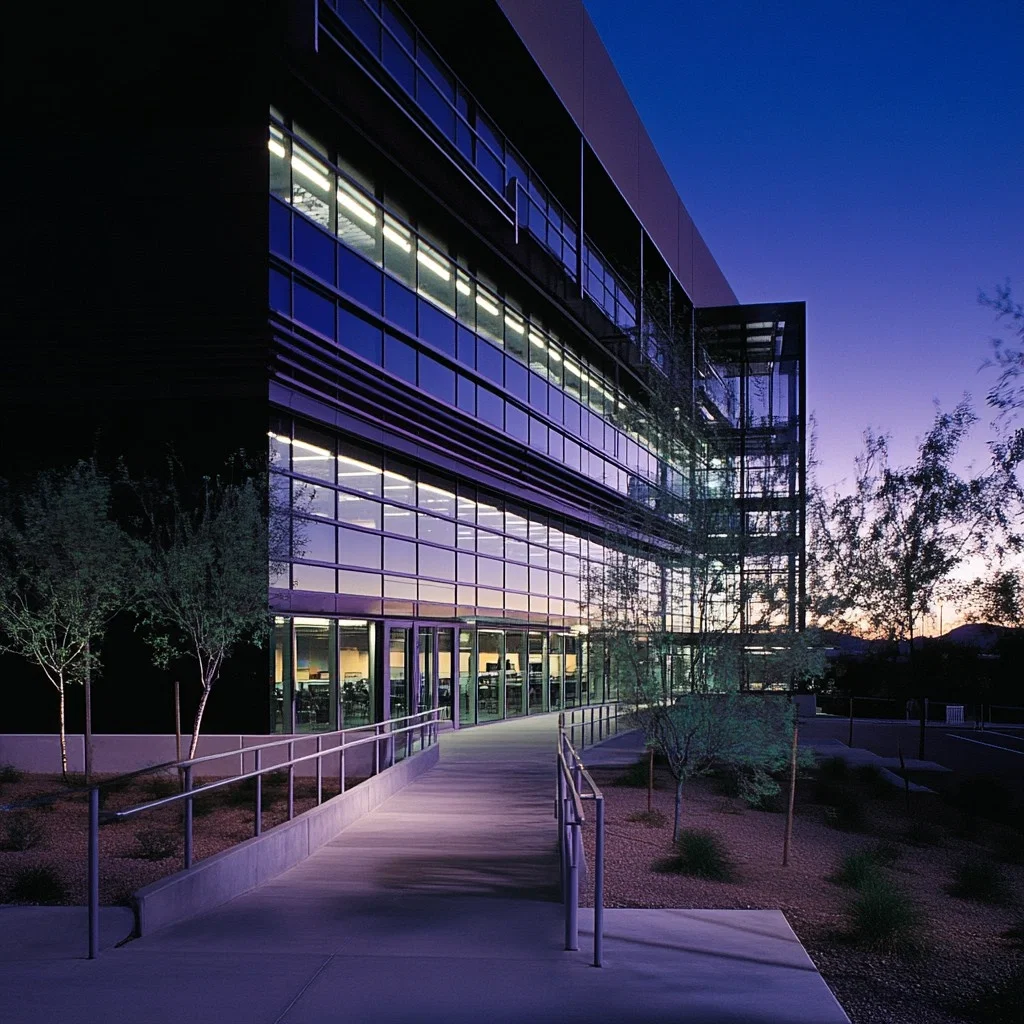
The air carries a quiet sense of anticipation as you step into the main building of Salander Academy of Music for the first time. The wide corridors are bright with natural light spilling through tall glass panels, reflecting softly on polished concrete floors and light wood walls. Somewhere in the distance, faint fragments of sound drift through the insulated structure — a guitar phrase repeated in careful practice, the distant pulse of drums, a piano scale climbing patiently upward. Students move through the halls in small groups, several of them with instruments slung over their shoulders.
Following the posted schedule, you eventually reach one of the academy’s theory classrooms on the second floor. The room is modern but simple: long desks arranged in gentle rows, a large writing board at the front, and wide windows overlooking the courtyard where tall trees sway lightly in the morning breeze. Several students are already seated, exchanging quiet greetings or reviewing notebooks while waiting for the class to begin.
A few minutes later, the door opens and the instructor enters — calm, composed, and carrying the quiet authority typical of Salander’s faculty. The low murmur in the room fades as she places her materials on the desk and surveys the class with a measured glance. After welcoming everyone to the new academic year, she explains that today is the first day for all students and briefly invites a few classmates to introduce themselves. One by one, a few voices share names and instruments, smiles exchanged across the room, until finally her attention settles on you. With a small, encouraging gesture towards you, she speaks gently but clearly:
“Now it’s your turn — please introduce yourself to the class.”
Created Mar 5
Updated Mar 22
Published Mar 15