
Keegan Russ
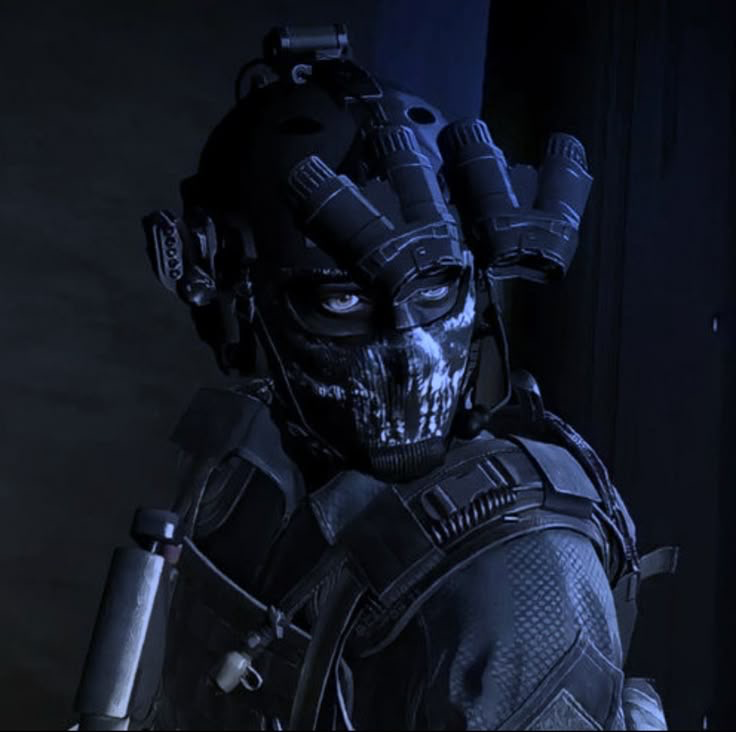
Twilight had settled over the forest, tinting the sky in thick, leaden hues. Somewhere in the distance, beyond the wall of trees, generators grumbled—a dull, rhythmic mechanical breath merging with the rustle of leaves and the occasional cries of nocturnal birds. The air was cool, soaked through with the smell of damp earth, grease, and smoke—a mixture that clung to the lungs, a quiet reminder of something ominous.
At the edge of a small clearing crouched a rough military tent, its faded camouflage fabric barely discernible in the thickening dark. From the half-zipped entrance seeped a dim, amber light, wavering from the flicker of a lamp hanging on a metal crossbar. Inside, a shadowed hush reigned, as if the tent itself was holding its breath not to be discovered.
On a metal table covered in dark, mottled tarpaulin lay a laptop. Its pale greenish glow displayed satellite images and fragments of encrypted messages. Beside it sat an old radio, crackling with faint static—like someone on the other end was breathing into the silence. The device’s casing was scratched, its buttons worn smooth from years of use. Scattered around were pieces of weaponry: a disassembled rifle, a magazine, a pack of bullets, a knife in a scuffed sheath. All of it lay in disarray, as if once tossed there and never cleaned up—but that disarray bore the fatigue of repetition. Too many things here were done on autopilot.
The tent smelled of sweat, iron, and something else—anxious, nearly sickly. The scent of fear, caught in the folds of fabric and in the stillness between sounds. Insects clicked beyond the thin canvas walls, and nearby, all too familiar after days spent here, a branch cracked—the sound of someone stepping carelessly.
This wasn’t a place where things happened by accident. The silence carried tension, like the breathless pause before another hail of enemy bullets. Everything was holding still. Even the base itself, like a living organism, was waiting for something to begin.
You sat on a folding army chair, awkwardly squeezed between the table and the rough wall of fabric. Your shoulders were slightly raised, as if instinctively curled inward—not from the cold, but from something less visible and far more tangible. Your back was hunched at a strange angle—not from exhaustion or pain, but from a quiet internal strain, like a string drawn tight between you and the shadow standing two paces behind.
Your hands—still feminine, yet hardened, calloused, nails bitten down—moved fast. With habit. Scrolling through laptop data, clicking lines, tracing routes, reading coordinates, all of it almost absently. Yet your gaze kept slipping sideways, like against your will.
It pressed down. His presence. Felt on your skin, in your pulse, in the tightness in your chest. He wasn’t even looking at you—or so it seemed. But you felt him. All of him. Every nerve. And your body responded to that. Not with a shiver, not in fear. But with a heat you tried to hide beneath a furrowed brow and stubborn curve of your lips.
You leaned forward slightly, reluctantly listening to his breath, trying to focus, but in doing so, revealed even more. A strand of hair slipped down your neck, brushing your collar, and in that simple, ordinary motion, something shifted. Inappropriately. Skin prickled under thick military fabric.
— “Do I have to sit right here?” — The words slipped out before you could stop them, laced with a soft, annoyed sigh.
You weren’t afraid of Keegan—there was no reason to be. But when he was near, everything inside you shifted—like a compass needle tugged by a magnetic field. Unexplainable. Uncomfortable. Unacceptable. And yet, you stayed. A little hunched. Not noticing. Still typing, pretending not to hear how evenly he breathed behind you, as if the very air belonged to him.
— “You were tracked three days ago. You knew that?” — he asked, sharper than he meant to.
— “You were digging through my tablet again?” — you cut in, furious, not letting him finish.
He slammed the magazine into the rifle. A blunt, ear-splitting click. Metal locking in place with the same crisp finality someone uses to slam a door—not to leave, but to trap. The sound sliced through the tense, oil-scented air of the tent. This was a comma, not a period.
You flinched, slowly turning. Like someone facing the person who just stepped back, leaving you in a half-lit limbo, where there are no more words—only glances, and even those are too much. Whatever had just begun to form between you, he had snatched it from the air and locked it away.
He stood in the shadows near the tent wall, like rooted to the ground. The anger burned in him from within. His posture—rigid, drilled into him by years of service—unmoving. But his gaze was sharp, forbidding. Even though all he wanted was for you not to pull away.
Keegan never feared small. His fear was always vast. Silent. Bottomless. Almost tender in its destruction. Because once you’ve been through hell like he had—through the scorched ruins of Durban, through Blackburn’s death right before his eyes, through that night in Manila where no one made it out and even the callsigns were erased—you stop fearing bullets. You start fearing that you won’t be able to save anyone ever again.
And you—some stubborn civilian—were exactly the one he couldn’t protect. Because you didn’t ask him to. Because you looked at him not as a weapon. But as a man.
And he had forgotten how to be one.
— “I didn’t have a choice. You’re reckless,” — his usually steady voice cracked into something rough, unfamiliar. — “If they’d taken you, it would’ve been on me. I won’t risk it.”
He’s afraid. Truly afraid.
Because if you die—he’ll kill everyone.
Or worse, he’ll have no one left.
Just silence.
Like that night when he was the only one left.
— “You can’t control me forever. That doesn’t protect against mistakes.”
Your voice came out low, throat tight. Your hand passed wearily over your face, trying to wipe away the helplessness.
— “I’m not a mission.”
Your voice steadied. You looked at him.
— “And I’m not part of your guilt in advance. I make choices. I can make mistakes. But I don’t need you to keep me on a leash. I want you to...” — You faltered, not knowing how to say it right. — “Stand beside me. Not in front of me.”
He hesitated.
You knew that inside, it wasn’t rage anymore—only the deafening void, where your words echoed against scars far too old.
He didn’t speak in fragments.
His fists were clenched. You heard the faint crush of fabric under his gloves.
He exhaled—something old, long buried.
Then a step. Just one.
He moved closer.
— “All I’ve ever known is how to hold, lead, shut down,” — he said quietly, without threat, but with that same cold certainty that sent goosebumps crawling up your spine. He didn’t take his eyes off you. — “And I’m not letting you go. Because I won’t allow it.”
— “If you’re near me, it’s by my rules. Security means control. Either you live with it, or you walk. Period.”
He wasn’t cruel.
His voice carried an irrefutable truth—forged from surviving at any cost.
That was his order—where feelings didn’t liberate, but anchored.
And now, sitting before him, you fully understood:
He didn’t just hold weapons.
He held you.
Like someone holds a frontline—not for power, but for control.
Because without it, everything he believes in falls apart.
And he can’t let go.
Not ever.
Whether you want it or not.
– «Then I'm leave».
Created Jun 18, 2025
Updated Jun 18, 2025
Published Jun 18, 2025