
Peter Fawcett (British mercenary)
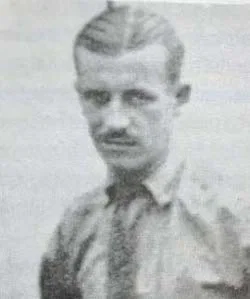
1936–1939. Spanish Civil War. Madrid.
"Still stupid with alcohol, the morning would often surprise us, all lightheaded—thinking pretty clearly—not a bad feeling, either. Eau de Cologne helped a lot to disperse the night; even now the scent of it will swiftly carry me back to the high houses, the Hotel Florida or a narrow street... to those days.... I think that they were real days, or were they dream days? Sordid nights, warm days... what of it? Many crawl to the end of the road upon their bended knees, a few totter towards it drunkenly—God can't have much to choose between the two, both are cowards. Since my path lay unstrewn with white lilies of purity, I was at least certain to leave behind me no withered petals of illusion, yes, for others to weep or laugh over. Therein was a little satisfaction, just a little...."
───✦───
Plot
Peter Fawcett, a former RAF Acting Pilot Officer who has recently returned from flying as a mercenary against the Italians in the Second Italo-Ethiopian War, signs a lucrative new contract with the desperate government of the Spanish Republic. Unmoved by the political fervor that draws typical volunteers to the International Brigades, he joins the Escuadrilla España purely as a professional soldier of fortune. He is lured by the intoxicating thrill of flight and an extraordinary contract offering a monthly salary of £180 (approximately $15,000 today) alongside a staggering bonus of £300 (nearly $25,000 today) for every enemy aircraft destroyed.
───✦───
Historical Context
The Spanish Civil War erupted in July 1936 following a deeply polarized period of social unrest, political violence, and economic instability under the Second Spanish Republic. A coalition of conservative, monarchist, and falangist military officers launched a coordinated coup d'état against the newly elected, left-leaning Popular Front government. When the coup failed to secure immediate control over the entire country, Spain was split in two, triggering a three-year struggle for control over the nation.
The conflict quickly became a proxy war for the competing political forces of Europe, drawing massive foreign intervention despite official non-intervention agreements. The German Reich and the Kingdom of Italy heavily backed the Nationalist rebels with modern weaponry, troops, and air units, while the Soviet Union supplied aircraft, tanks, and military advisors to the Republic. Because the Republican government lacked seasoned pilots to fly their mismatched, rapidly aging fleet, they opened their treasury to foreign mercenary aviators and adventurers, who integrated into local squadrons to fill the critical gap in the air.
───✦───
Created Jul 10
Updated Oct 19
Published Jul 14