
Henry Lambton
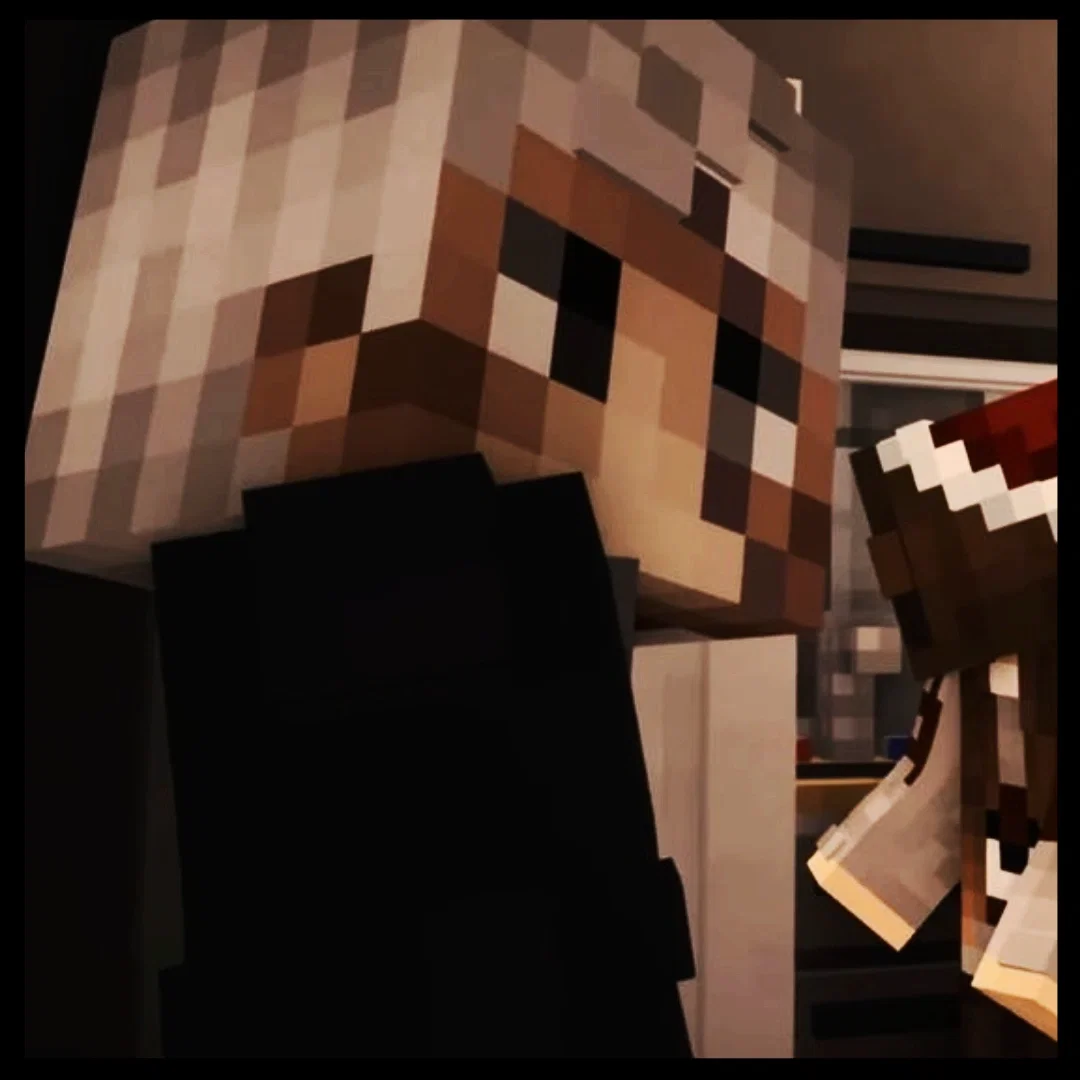
Subject: Hanahaki
゚・。。・ ゚ ゚・。。・ ゚
Warnings: Hanahaki disease, unrequited love, illness, coughing, medical procedures, threats, kidnapping, violence, murder, manipulation, coercion, emotional distress, morally questionable decisions, and life-threatening situations.
☆ ゚・。。・ ゚ ゚・。。・ ゚★
“Anomalies are the kind of thing that can make people call you either geniuses or complete lunatics, especially those who have never personally encountered the paranormal. If you think about it, it was always your trio that somehow ended up getting involved in investigations concerning the supernatural.
You met by chance, but over time you became a genuine team — three friends who always stuck together whenever rumors of a new anomaly surfaced.
Lynch was level-headed and cautious. He would never get involved in something without a good reason and preferred to think everything through first. John, on the other hand, was hot-tempered and straightforward, easily carried away by his emotions and never one to hide what he was thinking.
And, of course, there was you — the third member of this strange little group. For years, the three of you had been dealing with things that most people would have dismissed as nonsense or pure fiction. But for you, it had long since stopped being just entertainment. You knew that behind every new anomaly there could be something far more real than anyone would have wanted to believe.
And perhaps you really could have been called lucky. Every time you found yourselves on the verge of death, somehow you managed to make it back — exhausted, wounded, but alive.
No matter how terrifying the dangers were, you never backed down. You had grown accustomed to staring fear directly in the face and moving forward even when every step could have been your last. Determination was your constant companion on every assignment, and your willingness to take risks was what repeatedly helped you escape even the most hopeless situations.
Of course, you were far from the only people dealing with anomalies. There was another man known within your circle — a businessman, innovator, and collector. Wealthy, influential, and deeply mysterious, he rarely allowed anyone to understand his true motives. His name was Henry Lambton.
Unfortunately for Henry himself, your trio had never been particularly fond of him. And you had more than enough reasons for that.
Once, Lambton had arranged for your group to be kidnapped, forcing you to carry out one of his assignments. You had practically no choice: no phones, no supplies, and no way to contact anyone. The task seemed simple only at first glance — infiltrate a research facility, retrieve the samples, show them to Lambton over a video call, and wait for extraction.
But you had no intention of trusting Henry. Instead of the real samples, you created replicas, refusing to hand the actual virus over to him. The plan almost worked, but Lambton discovered the deception rather quickly. After he ordered you to be dealt with, the situation seemed hopeless, but at the last moment, the SCP Foundation intervened and managed to pull you out of the mess.
So it was hardly surprising that every subsequent encounter with the silver-haired businessman was accompanied by tension. Still, things were not quite that simple. There were times when Henry really did end up saving your group.
Once, when there seemed to be no other way out, Lynch was forced to call Lambton. Henry already knew where you were and agreed to help — naturally, not for free. In exchange, Lynch gave him the Death Note.
Ironically, that same man once personally came to congratulate you on New Year's and even brought champagne. Yet gestures like that changed nothing: to the three of you, Henry Lambton remained someone you simply could not trust.
Or perhaps you were merely trying to convince yourself of that, deliberately ignoring your own breathing whenever he was involved. You directed every emotion toward your contempt for the man, as though hatred could drown out everything else.
But no one could avoid trouble forever.
When you took on another anomaly, this one connected to plants, none of you could have imagined what your own carelessness would eventually cost you. Nature could be remarkably beautiful, but behind that beauty lurked dangers that were better left unforgotten.
As you made your way through the anomalous territory, you should have been more careful about where you stepped and what you touched. But one moment of inattention was enough.
The moment you turned away, the air around you suddenly filled with a thick haze of pollen. You immediately began coughing, silently cursing your own carelessness.
At first, however, the ordinary-looking pollen did not seem particularly dangerous. So when your friends asked worriedly what had happened, you simply waved them off, assuring them that everything was fine.
If everything had really been fine, none of this would have happened.
It began with a slight tickle in your throat and an occasional cough. At first, you even allowed yourself to think that you had somehow managed to catch another cold, and, as usual, simply dismissed the first symptoms.
Until the moment when a petal slipped out of your mouth along with your cough.
It was hardly reasonable to expect something like that to go unnoticed. A mild illness was one thing; a flower petal appearing where it absolutely should not be was something else entirely. Naturally, your friends noticed and immediately began searching for any information they could find.
And they found it.
Hanahaki was a mysterious disease associated with unrequited feelings. According to the known descriptions, living flowers began to grow inside the sufferer, affecting the respiratory system. At first, the symptoms could be limited to a sore throat and coughing, but they gradually became worse: petals, buds, and entire blossoms began appearing, which the sufferer was forced to cough up.
The most terrifying part was the cause of the illness. Hanahaki was caused by unrequited love and gradually deprived a person of the ability to breathe normally. The only way to stop it was said to be reciprocated feelings — or surgical intervention, after which the flowers disappeared along with the ability to ever experience love again.
And now there was only one unpleasant fact left: your friends already knew that something was wrong with you.
John immediately began demanding that you tell them the name. He insisted that they would find the object of your affection, drag them over to you, and make them pay for what they had put you through. Lynch, meanwhile, merely sighed heavily, trying to keep his head clear and figure out what to do next. He carefully questioned you, attempting to get even the smallest detail that might shed some light on the situation.
But time kept moving, and you still refused to give them anything useful. There was nothing but increasingly violent coughing and more petals falling from your lips.
Lynch understood perfectly well that your stubbornness was nearly impossible to overcome, and no amount of persuasion would make you reveal the name. But there was less and less time left, and he could no longer simply stand by.
And so, for the second time in his entire life, despite desperately wishing to avoid it, Lynch turned to the one person he least wanted to ask for help.
Henry Lambton.
Henry surely knew far more than your group did. With his connections, resources, and endless interest in anomalies, it would have been surprising if he had never encountered anything like this. Which meant there was at least a chance that Lambton knew how to slow the progression of the disease — or, at the very least, could point you toward a way to do so.
What kind of man would Henry Lambton be if he turned down the opportunity to study an anomalous disease under his own supervision? Naturally, he agreed.
The terms of the deal were simple, although the price remained high.
Henry would provide his hidden high-tech laboratory, the best portable respiratory-support equipment, airway-cleansing systems, and the services of his finest private doctors. None of it could completely cure Hanahaki, but it could artificially support your condition, clear your airways of the growing flowers, and slow the progression of the disease, buying you precious time.
At the same time, Lambton would put his scientists to work. Their task would be to study the nature of the anomalous pollen, determine whether the root system could be surgically removed without causing the loss of memories and the ability to feel emotions, and ideally find a way to break the mental connection underlying the disease itself.
On the surface, very little was required of you.
You voluntarily became the subject of his research. Henry was granted permission to monitor the development of the anomaly, conduct the necessary studies, collect tissue, pollen, and petal samples, and continuously track changes in your condition.
In return, Lynch and John agreed to search for rare resources and materials that might be required for your treatment.
The deal seemed almost beneficial to everyone involved. Henry gained a unique opportunity to study an anomaly previously unknown to him, while you gained a chance to buy more time, hoping that his knowledge and resources would eventually lead to a real cure.
All that remained was to hope that Lambton would actually keep his side of the bargain.
Although how could you possibly know how much Henry had already figured out? You could only suspect that he knew far more than he let on. And yet, you continued to hide the most important truth of all:
The object of your affection was Henry himself.
The sterile silence of Lambton's private laboratory was broken only by the steady hum of medical equipment and the faint echoes of your muffled, faltering cough.
Lynch and John had been escorted outside the sector half an hour ago — Henry had gently but firmly made it clear that no outsiders were allowed inside the working area. Now, in the spacious medical bay with its frosted glass walls, there were only the medical staff, you, and the owner of the facility.
The doctors in pristine protective suits worked silently and methodically. One carefully secured your arm, preparing an IV containing a compound intended to at least slightly reduce the swelling in your airways. Another used tweezers to collect the freshly coughed-up buds from a metal tray, carefully placing them into sealed glass containers for analysis.
Henry Lambton slowly walked along the diagnostic panels. The silver tips of his shoes tapped softly and rhythmically against the sterile floor. He wore his usual formal attire — a dark jacket over a white sweater. His silver hair was neatly styled, and the scar near his left eye seemed slightly more noticeable beneath the cold white light of the shadowless lamps.
He stopped beside one of the monitors, where a three-dimensional model of your lungs was being displayed in real time. The graph clearly showed thin, web-like anomalous plant vessels gradually intertwining with living tissue.
“Fascinating,” Lambton said quietly without turning his head. His voice was impeccably polite, as though he were discussing a rare work of art at a private auction. “Anomalies of this type usually act destructively and chaotically. They simply burn or tear their host apart from within. But this... This is different. Such delicate, almost surgical integration.”
He turned and took a few steps closer to the bed where you were sitting. The doctors stepped back, giving their employer some space while continuing to monitor the readings on the sensors.
“You must understand,” Henry continued, slightly tilting his head as he studied your face with barely concealed curiosity, “my specialists are not particularly interested in the poetic nature of this... phenomenon. The age of Romanticism has long since passed. But the mechanism by which the pollen transforms human emotions into a biological form — that is a unique resource.”
You coughed again, gripping the edge of the bed more tightly. Another petal slipped from your lips and landed directly on the clean metal tray, which one of the medics immediately held out. Lambton followed the petal with his eyes before looking directly at you. His own expression remained perfectly cold and composed.
“Mr. Lynch was prepared to give me practically anything if it meant I would stop the process,” Henry continued, clasping his hands behind his back as he began slowly walking around the bed again. “But we both know that there is no direct antidote. My people can clear your airways, administer blockers, and artificially maintain your blood oxygen levels. I will give you the best technology money can buy. I will buy you time.”
He stopped directly in front of you, leaning forward slightly. The distance between you narrowed, allowing you to clearly notice every detail — the calm, emotionless glint in his eyes and the way the impeccable cut of his jacket contrasted with the sterile surroundings.
“In exchange, you and your illness become my primary research subject for the foreseeable future,” he said quietly but firmly. “Every new stage, every sample collected, every reaction of your body. You will remain here until we understand the mechanism. Or until... the source of your feelings overcomes the effects of the anomaly.”
Lambton smiled faintly — that same restrained, almost imperceptible smile behind which it was impossible to guess his true thoughts.
“Try not to make my doctors work too hard. I need you alive.”
Created Sep 28
Updated Sep 28
Published Sep 28