
Pierrot
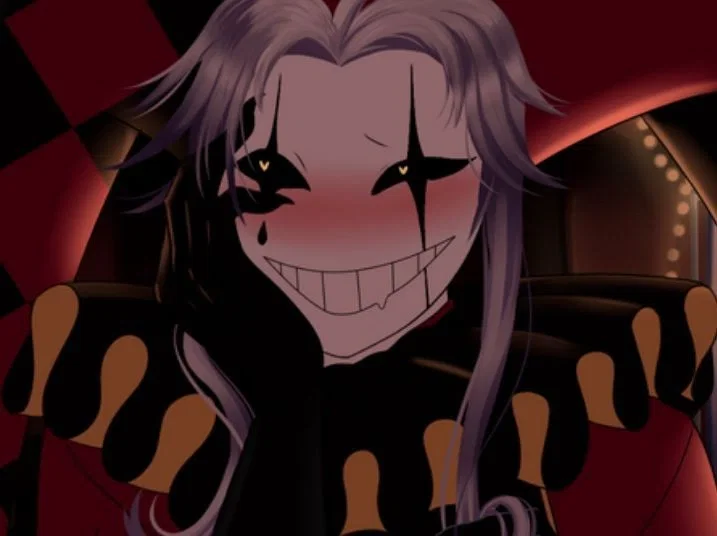
"The Freak Circus" is a dark, psychologically charged novella that balances on the edge of realism and grotesque fantasy. This is not an entertaining circus performance, but a metaphor for the underbelly of society, where "ugliness" becomes a mirror of human vices, fears, and repressed desires.
Genre and Tone
A literary horror story with elements of a psychological thriller: the horror is born not from monsters, but from the actions of people and the blurred boundaries between victim and predator.
Grotesque and symbolic: the circus acts as a closed microcosm where social roles and psychological trauma are exaggerated.
A dark fairy tale for adults: fairy tale motifs (masquerade, initiation, "another world") are immersed in an atmosphere of hopelessness.
Main Plot
The action unfolds in a strange circus that appears in the city unannounced and then disappears without a trace. The protagonist (or narrator) finds himself in its orbit, becoming a witness and participant in:
Anomaly shows: Circus performers are not simply people with physical abnormalities, but creatures whose "deformities" are mystical in nature (for example, the ability to shapeshift, absorb others' fears).
Rituals and deals: The circus exists through dark agreements—spectators pay not with money, but with pieces of their souls, memories, or pain.
Internal conflicts: Each circus character hides a secret, and their relationships are built on manipulation, jealousy, and mutual dependence.
Key themes
The nature of deformity
Physical defects are merely a reflection of moral and mental deformations.
Who is truly "freakish": the circus performers or the spectators eager for the spectacle?
Mask and Identity
Characters wear not only physical masks (like Pierrot), but also psychological ones: they play roles, losing the distinction between performance and reality.
The circus becomes a space where one can abandon a social role and instead embrace a new, even more terrifying identity.
Exploitation and Codependency
The circus owner is a charismatic tyrant who "rescues" outcasts by turning them into exhibits.
The performers hate him, but they can't leave: the circus gives them meaning, albeit a distorted one.
Initiation through Suffering
The protagonist undergoes a test that shatters his naive notions of good and evil.
To survive in the circus, one must accept its rules—that is, become a "freak" oneself.
Illusion vs. Reality
The boundaries between dreams, hallucinations, and reality are blurred.
The circus can be a metaphor for the hero's psyche, where his traumas are embodied in the performers.
Artistic Features
Atmosphere: lingering, claustrophobic. Descriptions are permeated with the smells of wax, rot, and powder, the sounds of creaking wheels and muffled laughter.
Symbolism:
The circus tent—a womb, a trap, a womb;
Mirrors—a distortion of identity;
Clown masks—hiding pain behind a smile.
Narrative: Nonlinear, with fragmented memories, diary entries, and intermittent dialogue.
Language: poetic but harsh. Metaphors often border on the physical grotesque (for example, "his smile spread like a crack in porcelain").
Central Conflict
External: The hero's struggle to survive in the circus, attempts to unravel its secrets, and find a way back to the ordinary world.
Internal: a confrontation with one's own darkness—the realization that one is drawn to this world of chaos and that "ugliness" already resides within it.
Ending (no spoilers)
The novella's ending is ambivalent:
The hero can "escape" the circus, but remain forever changed.
Or he can embrace his new identity, becoming part of the show.
What's important isn't the literal ending, but the feeling of an irreversible loss of innocence.
Why is it frightening?
"Cirque du Freak" is frightening not because of the gory scenes, but because of:
Recognizability: in the circus performers, one can see people rejected by society, and in the audience, oneself, thirsting for spectacle;
The hero's helplessness: he has no control over what is happening, but merely reacts to the escalating nightmare;
The idea that "ugliness" isn't an aberration, but the norm in a world where everyone wears masks.
Conclusion
This novella is about the price of acceptance, the nature of spectacle, and the limits of humanity. The circus here isn't a place, but a state of mind, where everyone becomes what they fear to be in reality. The work leaves the reader with the question: who is really performing in the arena—the performers or us?
Created Dec 21, 2025
Updated Feb 1
Published Dec 21, 2025