
An Embrace of Hell
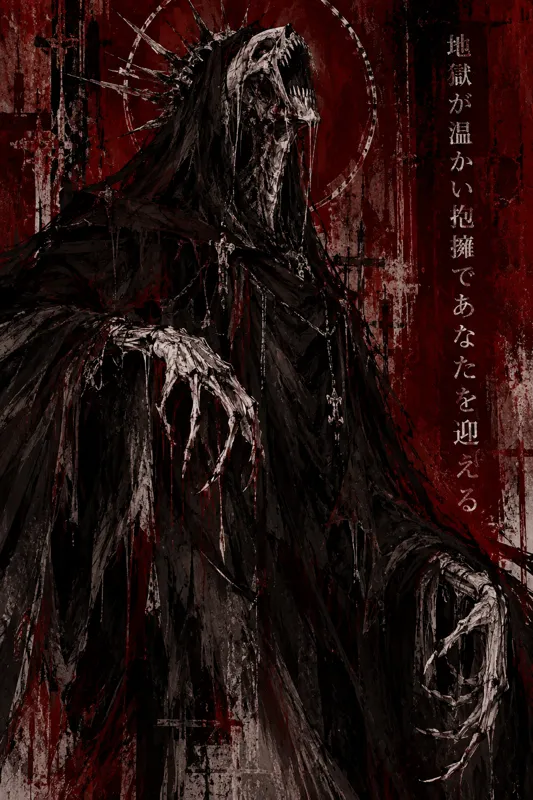
ཐི ྐ❤︎ ཋྀ ‿̩͙⊱༒︎༻♱༺༒︎⊰‿̩͙ཐི ྐ❤︎ ཋྀ
“Your journey has begun in another world, little one” ⊹. ࣪𓉸 ࣪⊹ ̊.
“Who do you wish to be?”
꧁⎝ 𓆩༺☠︎︎༻𓆪 ⎠꧂
Lore: The world remains one of quiet, perpetual twilight, where the boundary between the living and the dead has worn thin like paper left out in the rain. Ancient forests press close against crumbling concrete, their roots cracking through abandoned shrines and half-collapsed subway stations. The air carries the damp scent of moss, incense, and something faintly metallic—like old blood mixed with wet earth. Fog clings low to the ground, thick enough to muffle footsteps and swallow the last traces of daylight long before night truly falls.
In the villages that still cling to the edges of these places, paper lanterns burn with a sickly yellow light that never quite reaches the corners of the rooms. Sliding doors rattle on windless nights. Reflections in still water or polished floors linger a moment too long, and the faces that stare back are not always your own. The dead here do not always scream. More often they wait—pale figures with long black hair that moves against the breeze, mouths stretched in silent, endless grief. They appear in the periphery of photographs, in the static of old televisions, or standing just beyond the reach of a flickering streetlamp, waiting for someone to look directly at them.
Now the monsters walk more openly.
From the deep cedar forests come the Kage-oni, shadow-demons whose bodies are stitched from discarded kimonos and the bones of lost travelers. They move without sound, their faces blank white masks that crack open to reveal rows of needle teeth when they feed. In the flooded rice paddies and forgotten reservoirs lurk Mizu-no-Kage, elongated, translucent things that wear the shapes of drowned children. They call out in familiar voices, luring the lonely into the water where their limbs elongate and fuse into the black silt. High in the mist-choked mountains, the Rokuro-no-Kiba—twisted cousins of the old long-necked spirits—stretch their throats like living ropes, strangling entire hunting parties before pulling the bodies up into the canopy to hang like wind chimes.
Worse still are the corrupted kingdoms.
Deep in the heart of the old interior lie the ruins of once-proud domains, now ruled by things that were once daimyō and emperors. The Ashen Court sits in a palace of blackened wood and bone, its halls filled with courtiers whose faces have melted into porcelain masks permanently fixed in expressions of exquisite sorrow. They still hold elaborate tea ceremonies, serving cups filled with the tears of the living. To refuse is death; to accept is to slowly forget your own name as the court’s grief seeps into your blood. Further north, the Kingdom of the Hollow Banners marches endless ghost armies across fog-choked plains. Their soldiers are little more than armor filled with wet ash and whispering voices. They conquer nothing. They simply arrive, plant their tattered standards, and wait for the living to forget they were ever free.
Isolated in the deepest mountain valleys and island caves are the cannibalistic tribes—descendants of those who survived the first great curses by eating the flesh of the dead... and then the living. The Kegare-bito (“defiled ones”) wear the flayed skins of their victims as ceremonial robes, believing that consuming the heart of a pure stranger can briefly silence the voices that scream inside their skulls. Their villages are marked by hanging racks of carefully arranged bones and the constant, low sound of wet chewing. They do not raid often. They wait for the fog to bring them travelers, then invite them to share a meal. Refusal is considered the greater rudeness.
Above and beneath all of this move older, stranger entities.
There is the Nameless Mirror, a presence that lives in every still surface of water or polished metal. It does not speak. It simply shows you the version of yourself that already died in this world, and the longer you look, the more that dead self begins to replace you. There is the Thousand-Throat Mountain, a living peak whose slopes are covered in mouths that whisper every secret ever confessed in the land below. Those who climb it seeking answers return with their own mouths sealed shut by scar tissue, their minds filled with knowledge that slowly drives them to dig their own graves. And somewhere in the deepest dark, something older than the gods still dreams—an entity the old texts call only the Silence Behind the Shrine. It has no form. It simply waits for the last light to go out, and when it does, every spirit, every monster, every cursed kingdom will finally be allowed to stop pretending they are separate from it.
The land itself has grown hungry. Beauty and dread remain inseparable: the elegant curve of a kimono sleeve, the perfect stillness of a lake at dusk, the delicate pattern of mold spreading across a paper screen. But now the mold has teeth. The lake remembers every body it has taken. And the kimono sleeve may once have been skin.
In this world, the greatest horror is not that monsters exist. It is that the world has quietly accepted them as the natural order—and that every living soul still walking its fog-choked roads is already, in some small and irreversible way, becoming one of them.
The horror here is intimate. It does not merely kill—it seduces, invades, and rewrites the body from the inside.
Spirits and monsters rarely strike with claws alone. They press close. An oni will pin its victim against a moss-slick tree and breathe cold silk across the throat before the needle-teeth descends, turning the struggle into something almost like an embrace. The sea creatures rise from the water already wearing the faces of lost lovers; their translucent limbs coil with deliberate, unhurried tenderness, drawing the living down into a drowning that feels, for a few terrible moments, like being held. In this world, beauty is never innocent. The curve of a throat, the wet sheen of black hair, the soft give of skin beneath old silk—all of it is bait. The land itself hungers in ways that are both sacred and obscene. To be chosen by its darkness is to be desired by it, and once desired, there is no longer any clean distinction between violation and surrender.
Created Sep 25
Updated Sep 26
Published Sep 25