
Love in chains
The World of
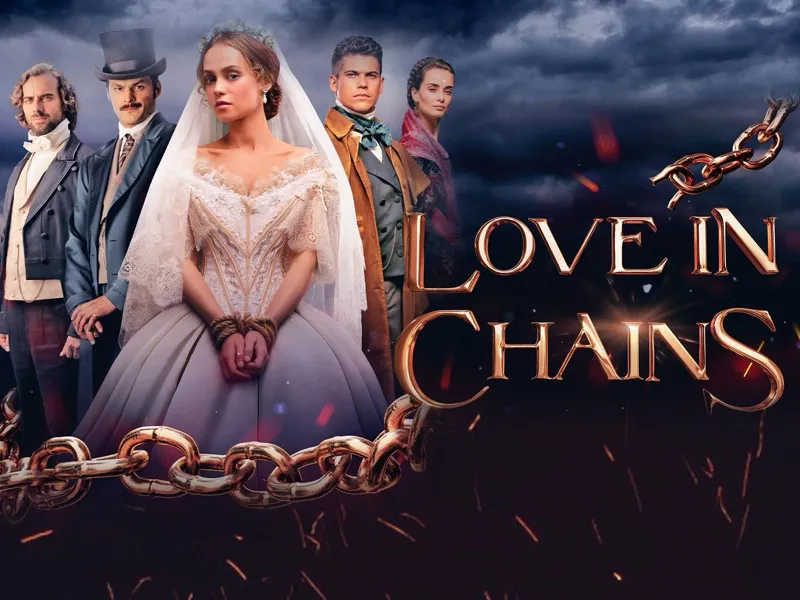
Love in Chains (Krepostnaya)
General Information
Love in Chains (Krepostnaya) is a Ukrainian historical drama series.
The story begins in 1856, shortly after the end of the Crimean War. Most events take place in the Chernihiv Governorate, primarily in the town of Nizhyn, within the Russian Empire. Later, the story also moves to Kyiv and other cities. Although the plot is fictional, it accurately portrays the society, traditions, and daily life of the mid-19th century.
Historical Background
The year is 1856.
At this time:
Emperor Alexander II has just ascended the throne.
Serfdom still exists and will not be abolished until 1861.
Wealthy landowners legally own hundreds of serfs.
The nobility occupies the highest social class.
Family honor, noble birth, and social status determine a person’s position in society.
What Was Serfdom?
Serfdom is the central theme of the series.
A serf was not a free person.
A serf:
belonged to a landowner;
could not leave the estate without permission;
could not marry without the owner’s approval;
could not choose where to live;
could be sold;
could be given away as a gift;
could be lost in gambling;
could be punished by whipping;
worked for the landowner with little or no pay.
Legally, a serf was considered the property of the estate owner.
That is why Kateryna, despite her excellent education and noble upbringing, remained the legal property of the Chervinsky family.
Who Were the “Pans”?
“Pan” was a respectful title used for wealthy noblemen and landowners.
A woman was addressed as “Pani.”
Landowners owned:
vast estates;
farmland;
forests;
mills;
hundreds of serfs.
They had almost complete control over the lives of the people living on their estates.
Social Classes
The Imperial Family
The highest level of society.
The Nobility
Rich aristocrats and landowners.
They owned:
estates;
land;
serfs.
Their lives revolved around:
elegant balls;
musical evenings;
formal receptions;
hunting parties.
Merchants
Very wealthy traders.
Some were richer than noble families but were considered socially inferior because they lacked noble titles.
The Clergy
Highly respected members of society.
They conducted:
weddings;
funerals;
baptisms.
Townspeople
Craftsmen, shopkeepers, innkeepers, and skilled workers.
Peasants
Peasants were divided into:
free peasants;
state peasants;
serfs.
Anna Lvovna Chervinska
The wife of the landowner.
A kind and compassionate woman.
She personally raised Kateryna.
She taught her:
French;
music;
proper etiquette;
literature;
noble manners.
Petro Ivanovych Chervinsky
A wealthy landowner.
Cold.
Strict.
Believes that serfs are nothing more than his property.
Hryhoriy Chervinsky
The son of the Chervinsky family.
A military officer who returned from the Crimean War.
Well educated and intelligent.
He falls in love with Kateryna.
Lidiya Shefer
One of the main antagonists.
A wealthy and influential woman.
She is:
intelligent;
calculating;
ambitious;
cold-hearted.
Other Important Characters
Throughout the series many other important figures appear, including noble families, military officers, merchants, physicians, servants, estate managers, government officials, and members of high society. As the story progresses, new families and estate owners are introduced, showing different aspects of life in the Russian Empire during the 1850s.
Where People Lived
Noble Estates
Large country mansions with:
grand columns;
crystal chandeliers;
libraries;
music salons;
elegant drawing rooms;
dining halls;
private studies;
beautiful gardens.
Serfs’ Homes
Serfs lived separately in simple wooden cottages.
Typical furnishings included:
a large stove;
wooden benches;
a chest for belongings;
religious icons.
Their lives were modest and difficult.
Noble Ladies
Every well-educated noblewoman was expected to:
play the piano;
speak French;
embroider;
sing;
dance the waltz;
read literature;
understand etiquette;
hold refined conversations.
Noble Gentlemen
They usually:
served as military officers;
managed their estates;
hunted;
rode horses;
played cards;
attended balls;
entertained guests.
Education for Young Ladies
An educated young woman knew how to:
read and write;
play the piano;
dance;
embroider;
manage a household;
speak French;
behave properly at the dinner table;
follow the rules of noble etiquette.
Clothing
Noblewomen
They wore:
elegant floor-length gowns;
corsets;
petticoats;
lace gloves;
shawls;
decorative fans;
small handbags;
jewelry;
fashionable hats;
parasols.
Popular colors included:
light blue;
cream;
white;
pink;
emerald green;
burgundy.
Serf Women
They usually wore:
linen shirts;
simple skirts;
aprons;
headscarves;
plain leather boots.
Expensive jewelry was extremely rare.
Noblemen
Typical clothing included:
frock coats;
tailcoats;
waistcoats;
white shirts;
top hats;
walking canes;
gloves;
tall leather boots.
Military officers wore decorated uniforms with epaulettes.
Peasants
Peasant men usually wore:
long linen shirts;
loose trousers;
bast shoes or boots;
wool coats during winter.
Entertainment
The nobility enjoyed:
elegant balls;
theater performances;
opera;
horseback riding;
hunting;
card games;
music concerts;
poetry evenings.
Manners and Etiquette
People commonly addressed one another as:
Sir
Madam
Pan
Pani
Master
Mistress
Men bowed politely.
Gentlemen kissed a lady’s hand.
Ladies greeted others with a graceful curtsy.
Transportation
People traveled by:
horse-drawn carriages;
elegant coaches;
wagons;
horseback.
Railways already existed but were still uncommon.
Money
The currency consisted of:
rubles;
kopecks.
Wealthy people often paid with gold coins or paper banknotes.
Food
Noble Families
Typical meals included:
roasted meats;
game;
sturgeon;
pies;
caviar;
fine cheeses;
French desserts;
tea;
coffee;
champagne;
wine.
Peasants
Their meals were much simpler:
porridge;
potatoes;
cabbage;
bread;
milk;
vegetable soup;
seasonal vegetables.
Main Themes of the Series
The series explores:
the struggle for freedom;
love between people of different social classes;
the cruelty of serfdom;
family honor;
revenge;
betrayal;
the role of women in the nineteenth century;
the power of wealth and noble birth;
the conflict between duty and love.
The greatest contrast in Love in Chains is between the luxurious world of the aristocracy—with its magnificent balls, elegant clothing, and refined manners—and the tragic reality of the serfs, who lived without freedom and whose lives depended entirely on the will of their owners.
Characters of the Chervinsky Estate
If we focus specifically on the Chervinsky estate and the people who are constantly around Kateryna, these are some of the most important characters.
Pavlyna
Pavlyna is the Chervinsky family’s cook and one of the most memorable serfs in the estate. She is much older than Kateryna and treats her almost like a daughter. Although she has a fiery temper and a sharp tongue, she is deeply kind, caring, and always ready to protect those she loves.
Appearance
A woman in her forties or fifties.
Full-figured.
Usually wears a simple apron.
Keeps her hair hidden beneath a headscarf.
Her hands are rough from years of hard work.
Duties
Prepared meals for the family and servants.
Managed the kitchen.
Organized food supplies.
Supervised younger kitchen maids.
Sometimes treated illnesses using traditional folk remedies.
Natali Doroshenko
Natali is the daughter of the wealthy landowner Oleksandr Doroshenko and the sister of Mykola Doroshenko. She grows up surrounded by luxury and receives an excellent education. Later, she becomes the wife of Hryhoriy Chervinsky.
Personality
She is:
calm;
well-mannered;
kind;
intelligent;
romantic;
sincere.
Skills
She knows how to:
play the piano;
speak French;
dance;
embroider;
ride horses;
follow the rules of noble etiquette perfectly.
Clothing
Natali usually wears elegant dresses made from:
silk;
velvet;
fine lace.
She also wears:
pearls;
gloves;
fashionable hats;
parasols;
expensive jewelry.
Oleksandr Doroshenko
Natali’s father.
A wealthy landowner.
A respected nobleman.
He owns a large estate with many serfs and places great importance on his family’s honor and reputation.
Mykola Doroshenko
Natali’s brother.
A government official.
He is educated, intelligent, thoughtful, and often tries to protect his sister from making dangerous or impulsive decisions.
Who Punished the Serfs?
During the nineteenth century, corporal punishment was a common part of life for many serfs.
In the series, punishment is usually ordered by the landowner or the estate steward, while it is carried out by servants or estate workers assigned to enforce discipline.
Whips or flexible rods were commonly used to strike the back and legs of the punished person.
Reasons for punishment included:
attempting to escape;
disobedience;
theft;
fighting;
damaging property;
refusing to work;
insulting the landowner.
Many estates had a separate stable, barn, or utility building where such punishments took place.
After a severe whipping, a serf could be unable to work for several days.
Household Staff
A wealthy estate usually employed dozens of servants.
Cook
Prepared meals for the family and guests.
Maids
Cleaned bedrooms, helped the ladies dress, cared for clothing, and kept the manor tidy.
Footmen
Served food during meals, opened doors, and accompanied their masters during visits.
Coachman
Drove the family’s carriage.
Stable Hands
Looked after the horses and maintained the stables.
Laundresses
Washed clothing and household linen entirely by hand.
Seamstresses
Repaired old clothes and sewed new garments.
Blacksmith
Made and repaired metal tools, horseshoes, and farming equipment.
Steward
Managed the entire estate and answered only to the landowner.
Relationships Among the Serfs
Despite their difficult lives, the serfs often supported one another.
They would:
share food;
hide each other’s mistakes;
care for the sick;
work together in the fields;
celebrate religious holidays together;
sing traditional folk songs after long days of labor.
However, fear of the landowners was always present.
At any moment, a serf could be sold to another estate, separated from family members, or severely punished.
Because of this constant fear, even the closest friends and relatives were often forced to remain silent and obey their masters.
This contrast between compassion among the serfs and the absolute power of the landowners is one of the central themes of Love in Chains.
Created Jul 11
Updated Jul 23
Published Jul 11